
If you walk into a staff room or an administrative meeting in any forward-thinking school today, you are bound to hear the words "hybrid learning" and "blended learning." Education has shifted. We are no longer debating if technology belongs in schools; we are figuring out the best way to use it.
However, there is a persistent issue: the terms are often used interchangeably. You might hear an institution’s leader talk about a "hybrid model" when they might mean "blended," or vice versa. While both fall under the umbrella of modern pedagogy and rely on a digital classroom setup, they are fundamentally different approaches with distinct goals.
Mixing them up isn't just a semantic error; it can lead to confusion in scheduling, technology purchasing, and teacher training.
In this guide, we will remove the jargon and clarify exactly how these two models differ, so you can determine which strategy best serves your students.
What Is Hybrid Learning?
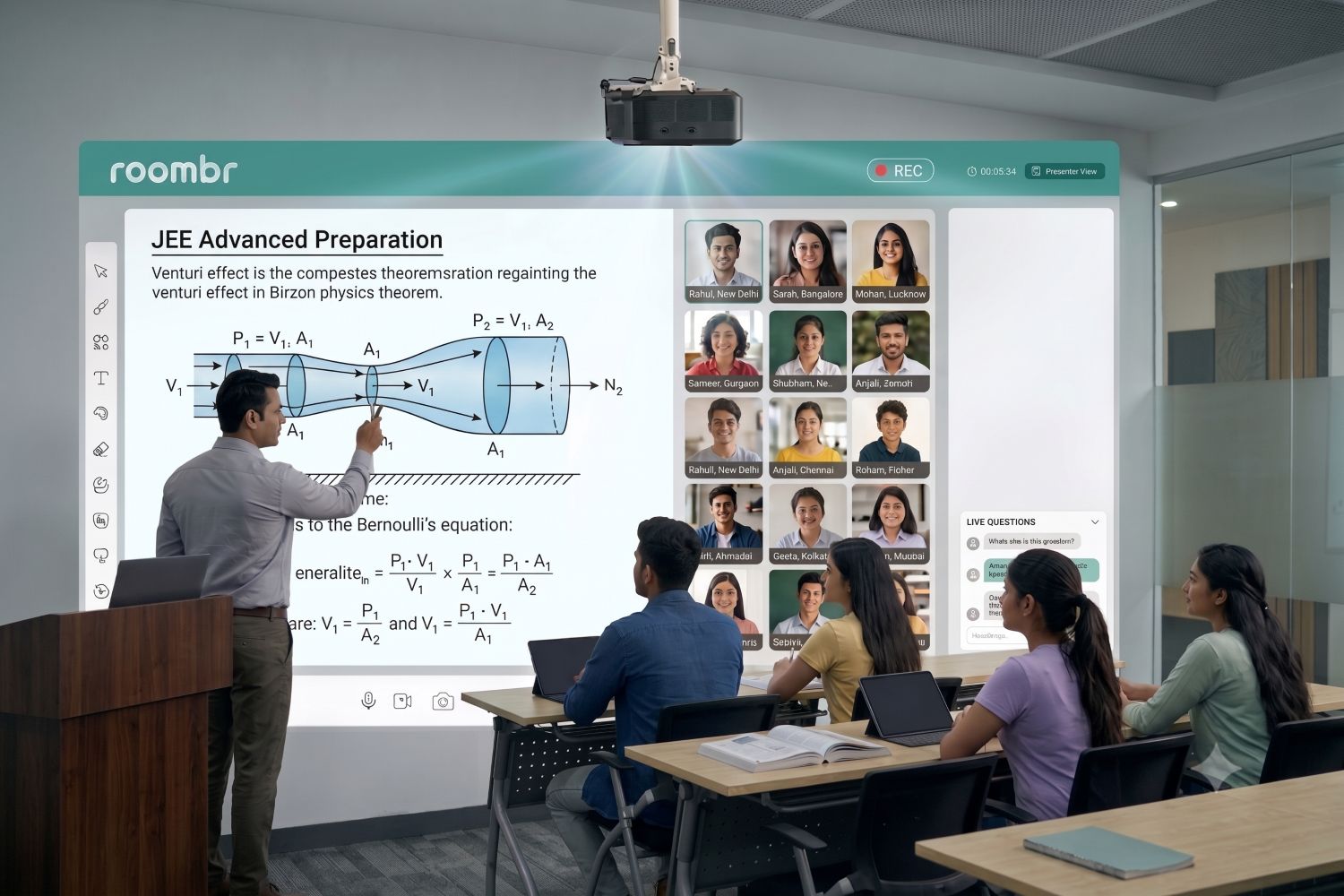
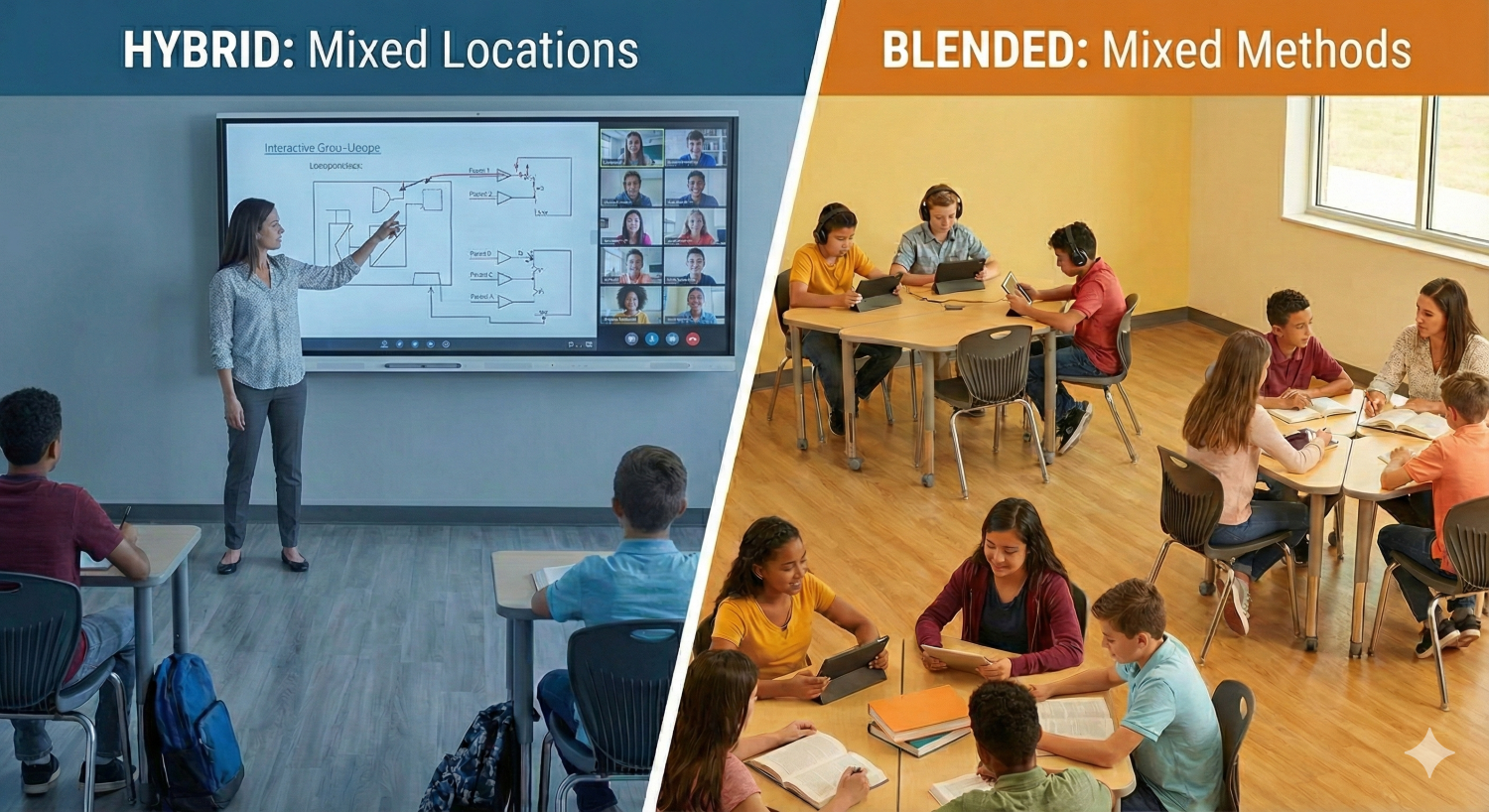
Hybrid learning is exactly what it sounds like: a hybrid of physical and remote attendance. It is an educational model where some students attend class in person, while others join virtually from home at the same time.
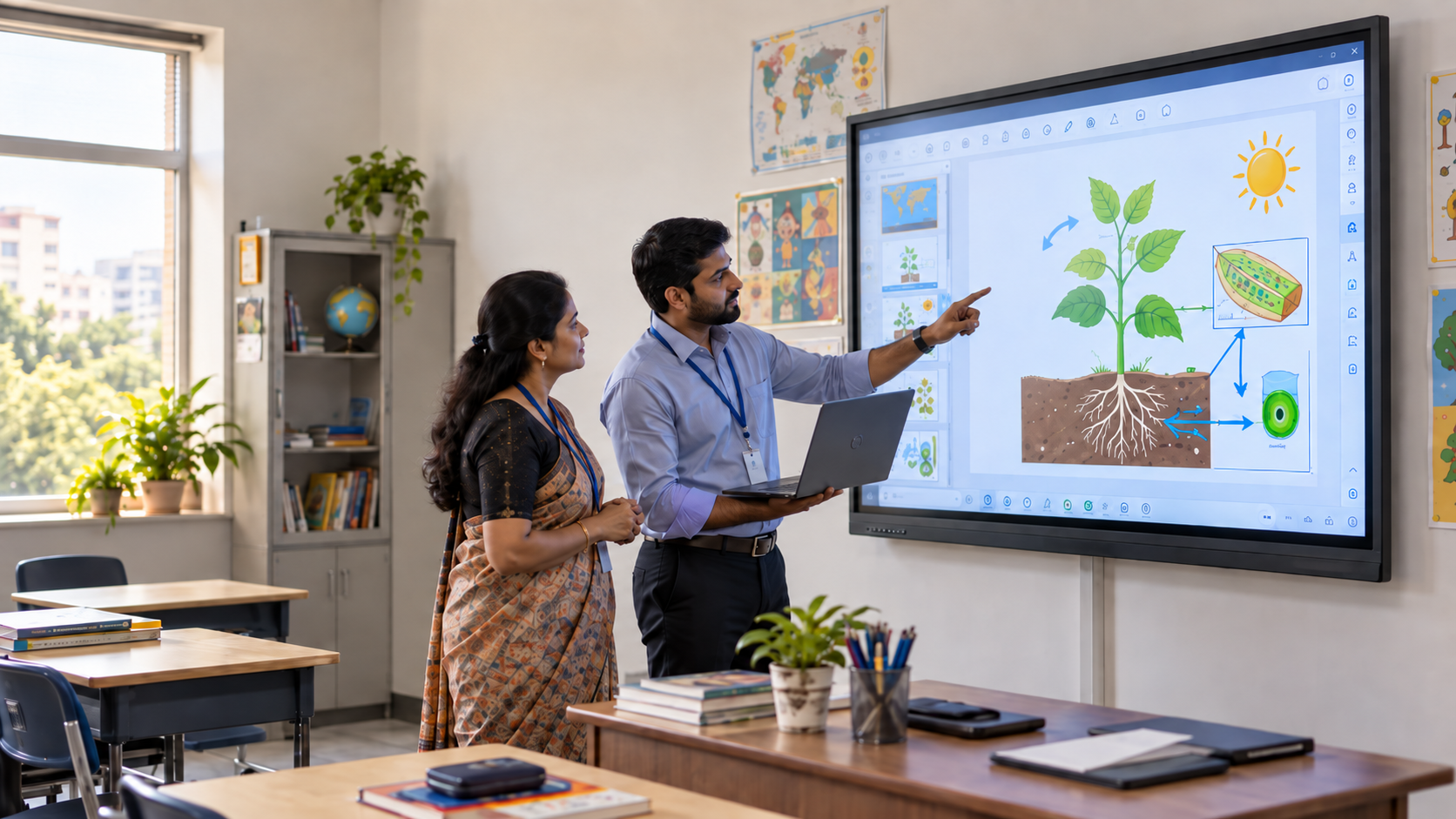
In a true hybrid scenario, the teacher is instructing both groups simultaneously using synchronous tools. This requires a robust smart classroom setup. The teacher might be standing in front of an interactive display, writing notes that are visible to the students in the room and instantly mirrored to the screens of remote learners via video conferencing software.
This model gained fame out of necessity during the pandemic, but it has remained popular because it offers incredible flexibility. It relies heavily on live video and real-time audio communication.
Benefits of Hybrid Learning
- Accessibility: It is the ultimate tool for continuity. If a student is ill, traveling, or facing transport issues, they don't miss the lesson.
- Flexibility: It allows schools to navigate unpredictable schedules or spacing constraints without halting education.
- Real-Time Connection: Unlike pre-recorded lessons, remote students can ask questions and interact with peers in the moment.
Challenges of Hybrid Learning
- The "Split Attention" Problem: Teachers often report feeling mentally exhausted trying to engage students in the room while monitoring a chat box on a screen.
- Tech Reliability: If the internet drops or the audio fails, half the class is instantly cut off.
- Classroom Management: Fostering collaboration between a student at a desk and a student on Zoom can be logistically messy.
What Is Blended Learning?
Blended learning is an instructional strategy, not a logistical fix. In this model, students are usually all physically present in the school building. The "blend" refers to the mix of traditional face-to-face instruction and high-tech online learning activities.
It’s not about beaming a lesson to a remote location; it’s about using technology to shift control to the student. A classic example is the "Flipped Classroom," where students might watch a lecture video as homework and use class time for active discussion or projects.
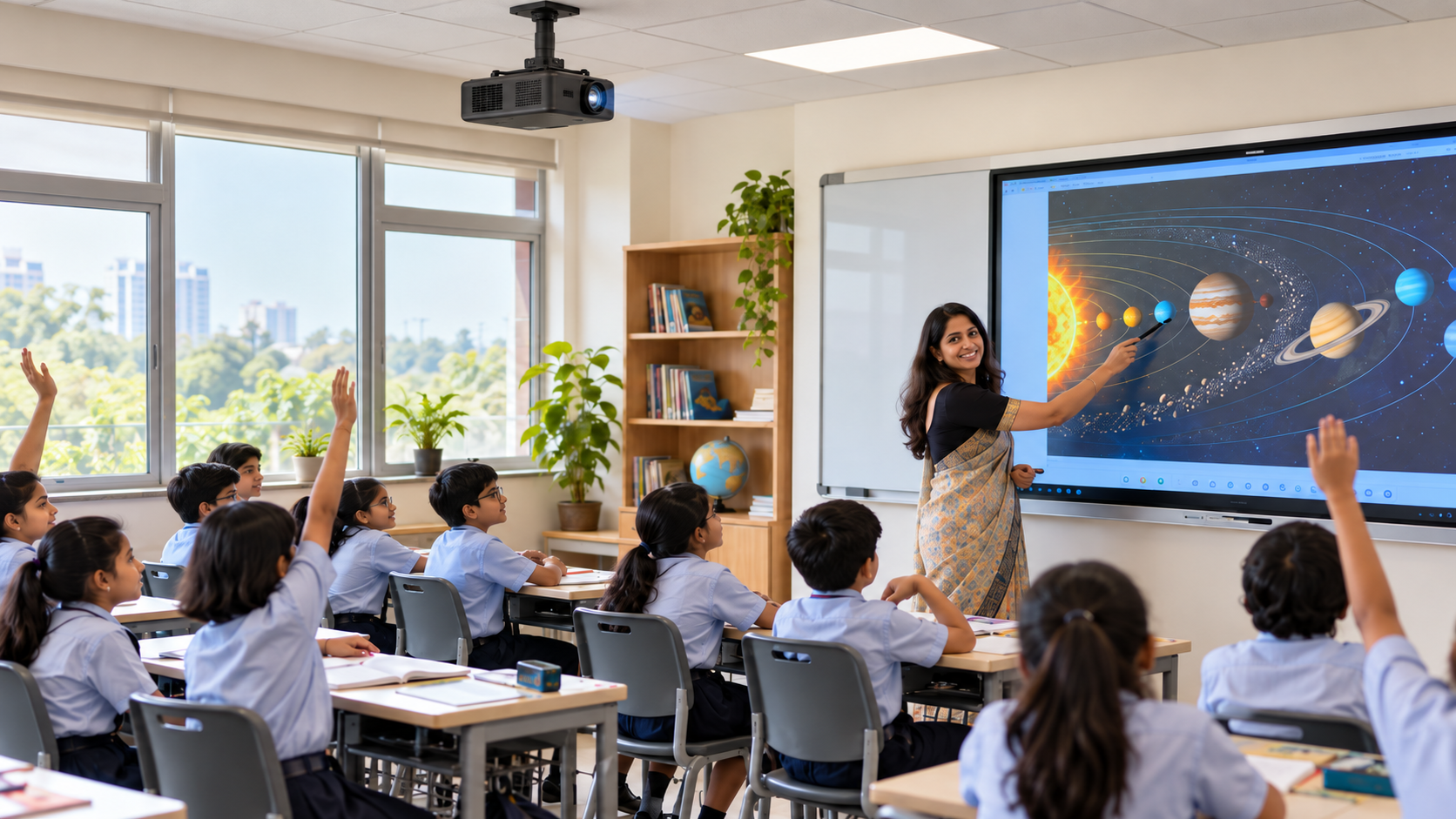
In this environment, a smart board for the classroom isn't just for broadcasting. It becomes a station for collaborative group work. The blended model depends on learning design, how the teacher sequences the digital and analog parts of the lesson, rather than just the hardware.
Benefits of Blended Learning
- Pacing: Students can often move through digital content at their own speed, pausing or rewinding videos as needed.
- Targeted Support: Because the "lecture" part often happens via software, teachers are freed up to move around the room and help small groups.
- Active Retention: Class time is used for doing and discussing, rather than just passive listening, which boosts retention.
Challenges of Blended Learning
- Prep Time: Teachers need significant time to curate or create high-quality digital materials before the lesson starts.
- Student Self-Regulation: Without a teacher guiding every minute, some students may lose momentum or get distracted during independent digital work.
- Resource Access: It requires consistent access to devices and platforms within the school; a lack of hardware can bottleneck the process.
Hybrid vs Blended Learning: Deep Comparison
This is where the distinction becomes critical for school administrators planning their infrastructure. While both require a digital classroom, the demands they place on your network, your hardware, and your teachers are different.
Location of Learners
- Hybrid Learning: Learners are separated by distance. The goal is to make the remote student feel present.
- Blended Learning: Learners are typically together. The goal is to use digital tools to enhance the physical experience.
Timing (Synchronous vs Asynchronous)
- Hybrid Learning: Heavily synchronous. The magic happens live. If the live stream fails, the model fails.
- Blended Learning: A mix. It utilizes asynchronous (self-paced) elements alongside synchronous (live) teacher guidance.
Technology Requirements
- Hybrid Learning: Focuses on communication hardware. You need excellent microphones, tracking cameras, and reliable conferencing software.
- Blended Learning: Focuses on LMS, content libraries, and individual student devices (tablets/laptops).
Instructional Workflow
- Hybrid Learning: The teacher is a broadcaster and facilitator simultaneously. They are managing two distinct "rooms."
- Blended Learning: The teacher is a designer and a guide. They build a lesson path, and during class, they circulate to offer support.
Student Experience
- Hybrid Learning: The experience varies depending on location and technology used. Remote students need to work harder to feel "seen."
- Blended Learning: The experience is generally uniform for the class, with a structured path of checkpoints and activities.
Teacher Workload
- Hybrid Learning: The workload is heaviest during the lesson (cognitive load).
- Blended Learning: The workload is heaviest before the lesson (planning and content creation).
Examples That Make the Difference Clear
Sometimes, theory is hard to visualize. Let’s look at two concrete examples.
Hybrid Learning Example

Imagine a Grade 10 History class. 20 students are sitting at their desks, and 5 are at home due to various individual reasons. The teacher stands at the front. When she speaks, a lapel mic captures her voice clearly for the home users. When a student in the back row asks a question, a room mic picks it up. The teacher writes on the interactive display, and the notes appear instantly on the home students' laptops. Both groups take the same lesson at the same time.
Blended Learning Example

Consider a Grade 6 Math class studying fractions. The teacher does not lecture for 30 minutes. Instead, the class is divided into groups.
- Group A uses tablets to watch a 5-minute interactive video tutorial and complete a digital quiz.
- Group B works together at the smart board for the classroom to drag and drop fraction blocks.
- Group C sits with the teacher for hands-on help with worksheets.
Every 15 minutes, the groups rotate. Everyone is in the room, but the lesson path is blended.
How Schools Decide Between Hybrid Learning and Blended Learning
Which model is right for you? It depends on the problem you are trying to solve.
- Choose Hybrid Learning if: Your primary challenge is attendance, distance, or capacity limits. If you need to connect people who physically cannot be in the same room, a hybrid model is the solution.
- Choose Blended Learning if: Your primary challenge is engagement or differentiated instruction. If your goal is to replace old-school teaching methods with personalized instruction, the blended model is the solution.
Many modern schools actually use both. They use blended methods within a hybrid setup to ensure that remote learners aren't just watching a boring lecture, but are actively participating.
Where Roombr Fits in Modern Teaching Models
Whether you are leaning toward blended or hybrid learning, the common denominator is the need for a seamless digital classroom.
The biggest friction point for teachers in both models is "tech fatigue." Setting up projectors, connecting cables, managing audio, and logging into multiple software platforms can eat up 15 minutes of 45 minutes.
This is where a holistic solution like Roombr becomes essential. Rather than piecing together a webcam from one brand and a screen from another, Roombr acts as a central classroom hub.
- For Hybrid Model: Roombr’s integrated digital classroom solution ensures that video conferencing is native to the room, reducing latency and audio echoes that usually plague hybrid lessons.
- For Blended Model: It creates a space where digital content flows easily from the teacher’s dashboard to the students' devices, allowing for the smooth transitions required in rotation models.
To make modern pedagogy work, the technology needs to be invisible. It should work so smoothly that the teacher can focus entirely on the students, not the IT.
Final Thoughts
The debate between blended and hybrid learning is a menu of options. As we move further into the 21st century, the lines between physical and digital spaces will continue to blur.
Understanding the difference empowers you to build a strategy that works. Whether you are bringing remote students into the fold or blending digital tools into your daily lessons, the goal remains the same: using modern tools to create meaningful human connections and deeper learning experiences.
Whether you choose a hybrid, blended, or mixed learning model, you need technology that adapts. Explore how Roombr’s unified platform makes managing any modern pedagogy effortless.

Foziya Abuwala
Share
Step Into the future of
Education with Roombr