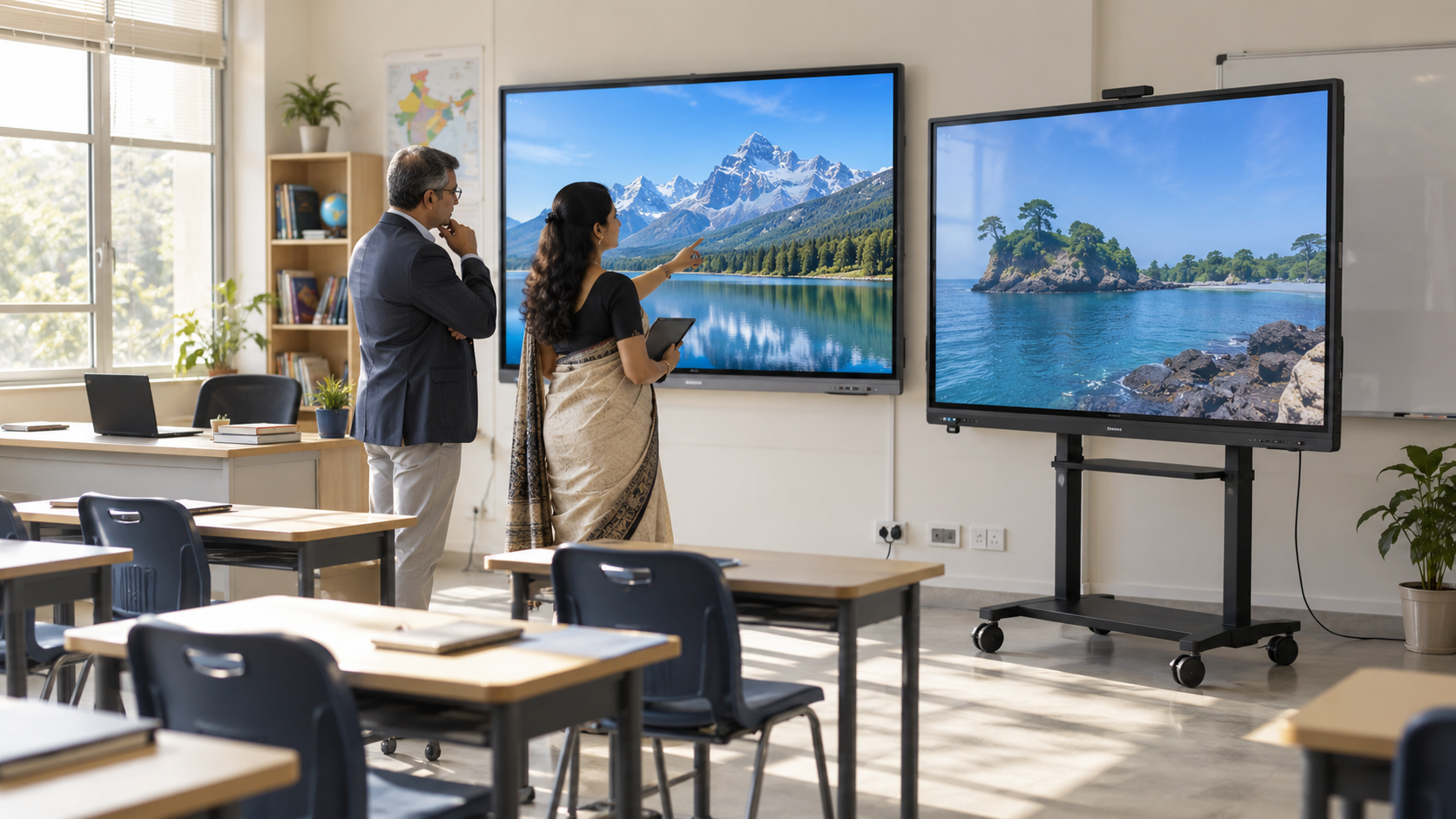

An interactive flat panel may look impressive in a demo. Yet its real test begins after installation. Can students read normal lesson text from the last row? Can teachers use it smoothly without repeatedly zooming or rearranging content?
The right choice must fit the room, content, teaching style, and long-term plan.
A flat panel is a fixed touch display. Vendors may also call it an interactive board, digital board, or smart board. Features differ between systems. This guide compares display sizes. It helps you choose the right option for your classroom.
Interactive Flat Panel Size Comparison at a Glance
Fixed classroom panels commonly come in 65, 75, and 86-inch sizes. Use this table to narrow down the most suitable options. Then test each option in your room.
Fixed classroom panels commonly come in 65, 75, and 86-inch sizes. Use this table to narrow down the most suitable options. Then test each option in your room.Student count alone cannot decide screen size. Room shape and seating matter too.
Five Factors That Determine the Right Display Size
1. Distance to the Farthest Student
Measure from the display wall to the last seat. Test the smallest text used during real lessons.
The AVIXA DISCAS framework links image height with viewing distance and content detail. This is more reliable than using student count alone.
For a 16:9 display, multiply the required image height by 2.04 to estimate its diagonal. A 42-inch image height, for example, needs about an 86-inch diagonal.
2. Type of Teaching Content
Videos may work on a smaller screen. Formulas, code, spreadsheets, and detailed diagrams need more space. Test split-screen teaching because each item becomes smaller.
3. Room Layout
Check room depth, width, pillars, tiered seating, and side angles. For projection-based systems, installation distance also affects image size.
4. Teacher Interaction
Teachers should use key controls with ease. Ask them to write, erase, drag objects, and switch tools at the center and edges of the display. Check for lag, missed touches, or accidental palm marks that could interrupt the lesson.
5. Light and Glare
Run the demo during normal teaching hours with classroom lights on. Test actual slides instead of a bright promotional video.
Is a 65-Inch Interactive Flat Panel Enough?
A 65-inch panel can work in a compact classroom. It may also fit a language lab or small coaching room. It is easier to place and may cost less. However, dense slides can become hard to read in a deep room. Test normal lesson content from the farthest seat.
When Should You Choose a 75-Inch Panel?
A 75-inch panel offers more viewing area without taking over the front wall. Test body text, labels, and equations from the last seat. Frequent zooming may signal a need for an 86-inch panel or another format.
Is an 86-Inch Interactive Flat Panel Better for Larger Rooms?
An 86-inch panel provides more room for diagrams, annotation, and side-by-side content. It can suit large classrooms and university teaching spaces. However, it remains a fixed size. A long lecture hall may need a larger image or another display format.
Fixed Interactive Flat Panel vs Roombr’s Configurable 50–200-Inch Display
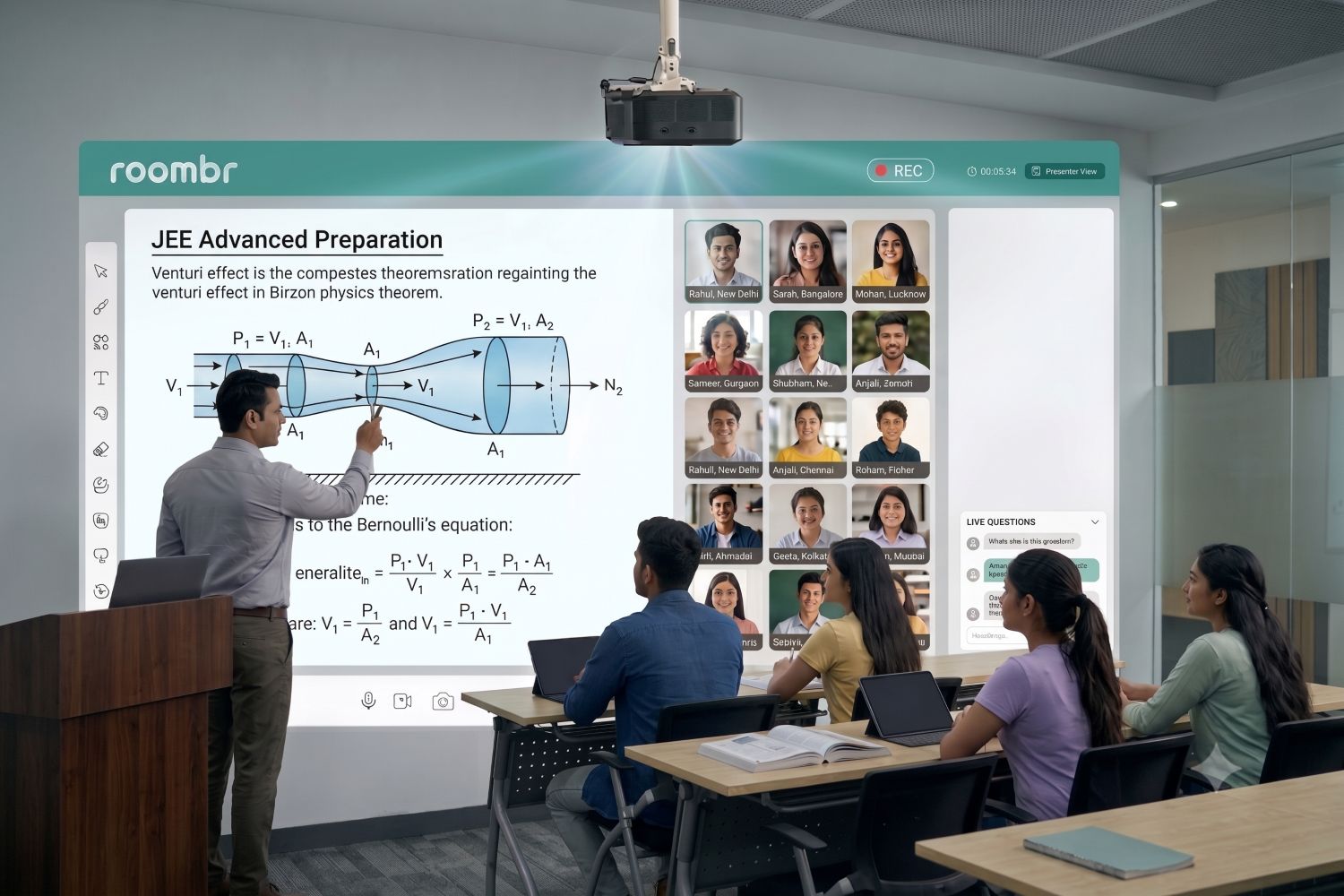
A fixed panel locks the buyer into one screen size. Roombr takes a more flexible approach. Its projection system turns a suitable wall into an interactive display.
The distance between the Roombr unit and the wall determines the final screen size. When positioned at the right distance, Roombr creates a clear Full HD interactive display from 50 to 200 inches.
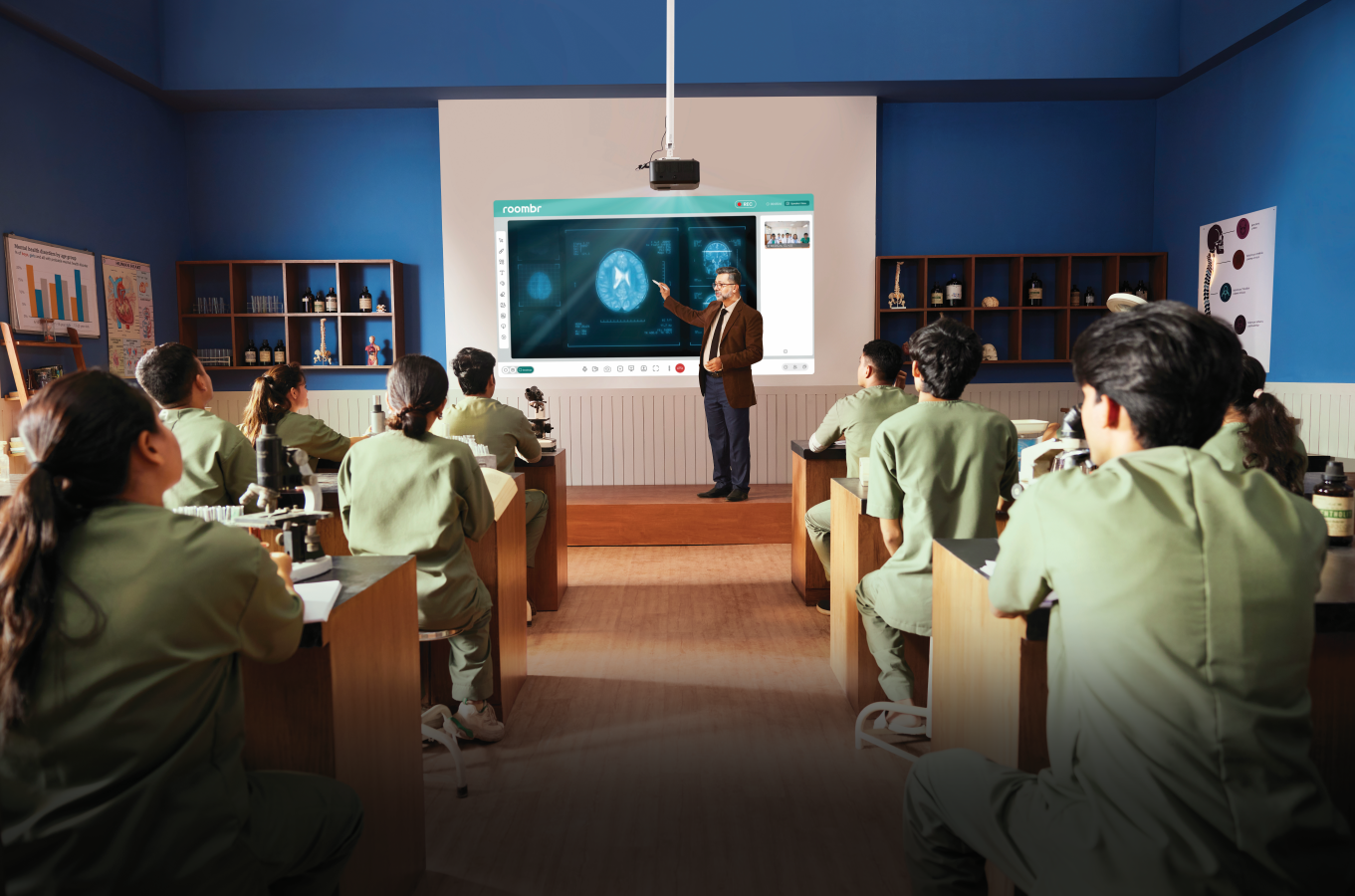
This flexibility helps institutions match the display to each teaching space. A smaller classroom may need a compact image. A lecture hall may benefit from a display closer to 200 inches.
Roombr is not a fixed panel. It is an integrated digital classroom solution. One system combines projection, computing, cameras, microphones, speakers, touch, and teaching software.
Ask for a live demonstration on the wall. Check clarity under normal light and test the full teaching workflow.
For cost planning, compare the complete setup rather than the screen alone. This interactive flat panel price guide explains common add-ons. They can change the final investment.
Interactive Display Demo Checklist

Before approving an interactive panel for classroom use, the vendor should be able to demonstrate:
- Normal lesson text from the last seat
- Detailed diagrams, formulas, or spreadsheets
- Writing accuracy across the display
- Visibility with classroom lights on
- Laptop connection and wireless sharing
- Camera and microphone performance
- Recording, saving, and reopening a lesson
- Every accessory needed for daily use
Also ask a teacher to start the system without vendor help. A good interactive display for a classroom should not require technical support before every lesson.
Final Verdict: Which Display Size Should You Shortlist?
There is no universal best size. Fixed 65, 75, and 86-inch panels suit different rooms. Roombr’s 50–200-inch display offers an advanced solution. It lets institutions match the screen to each space. Test the farthest seat, real content, lighting, and full workflow before choosing.
Frequently Asked Questions
1. What is the best interactive flat panel size for a classroom?
The right size depends on room depth, seating, and teaching content. Test 65, 75, and 86-inch panels using normal lesson text from the last seat. If fixed sizes do not suit every room, Roombr offers a configurable 50–200-inch Full HD interactive display that can be matched to the teaching space.
2. Is a 75-inch panel better than a 65-inch panel?
A 75-inch panel provides more viewing area. It is better only when the room, content, mounting position, and budget support it.
3. Is roombr an interactive flat panel?
No. Roombr is a projection-based digital classroom solution. Its installation distance from the wall determines the display size. When positioned at the right distance, Roombr creates a clear Full HD immersive interactive display from 50 to 200 inches.
4. What should schools check besides screen size?
Check touch accuracy, computing, software, audio, cameras, recording, connectivity, installation, training, warranty, and support. Troubleshoot common risks with this interactive flat panel problems guide.
See the Right Display Size in Your Classroom
Choosing the right display should not depend on a catalog alone. Room size, seating layout, viewing distance, lighting, and teaching content all affect what students can see and how smoothly teachers can use the system.
Roombr’s advanced projection-based solution can create a clear Full HD interactive display from 50 to 200 inches when positioned at the right distance from the wall. Share your classroom dimensions, seating capacity, and teaching needs with our team. During a room-specific demo, you can test visibility, touch response, lesson content, recording, and the complete teaching workflow before making your decision.
Book a Room-Specific Demo Now!

Foziya Abuwala
Share
Step Into the future of
Education with Roombr