

For far too long, achieving education for millions of girls and women in rural India has been an uphill struggle, blocked by formidable social, geographical, and economic barriers. The risk and distance involved in commuting to school, the pressure of societal norms demanding that household duties take precedence, and the stark lack of quality resources in local educational institutions are some of the daily realities. This combination has created a persistent cycle of early dropouts and limited educational opportunities.
However, we are witnessing a powerful counter-trend fueled by technology. The development and deployment of the modern digital classroom is now presenting a viable, flexible solution. By effectively bringing high-quality instruction and rich learning materials closer to the student, often directly into their community or home, digital learning is bridging the massive gaps in accessibility, resources, and flexibility that once seemed impossible to overcome.
In this piece, we will examine the precise nature of the educational challenges facing rural women, dissect the practical models of the digital smart classroom, and discuss the profound, tangible benefits these tools offer in driving gender equity and long-term empowerment.
Current Challenges Faced By Girls/Women In Rural India’s Education System
To grasp the full impact of digital intervention, we must first deeply understand the complex hurdles technology is designed to clear.
Social and Economic Barriers:
In many rural communities, deep-seated cultural expectations dictate that a girl's primary role is domestic. This often means educational pursuits are viewed as secondary and are frequently cut short by the demands of household chores or societal pressure for early marriage. Economically, when families face tough financial choices, the education of boys often receives priority, perpetuating a system where female educational achievement is disproportionately compromised.
Infrastructure Barriers:
Beyond the typical lack of resources within rural schools, a significant obstacle is the physical journey itself. The long distance from a girl's home to a school, coupled with the absence of safe, reliable public transport, introduces daily safety concerns that often lead parents to withdraw their daughters. Many existing schools lack even basic digital resources for contemporary learning, which further adds to the challenge.
Digital Divide & Gender Divide:
In the digital age, a critical challenge is the glaring disparity in access. Women in rural areas statistically have significantly lower rates of internet access and proficiency in using digital tools compared to men. This creates a challenging scenario where the introduction of a modern digital classroom model requires not only teaching the curriculum but also dedicating resources to fundamental digital literacy training just to ensure participation.
What Modern Digital Classroom Means in Rural India: Models & Tools

The concept of a modern digital classroom is not monolithic in a rural context. It must be resilient, affordable, and highly adaptable to function effectively despite limited infrastructure.
Online Classes and E-Learning Platforms
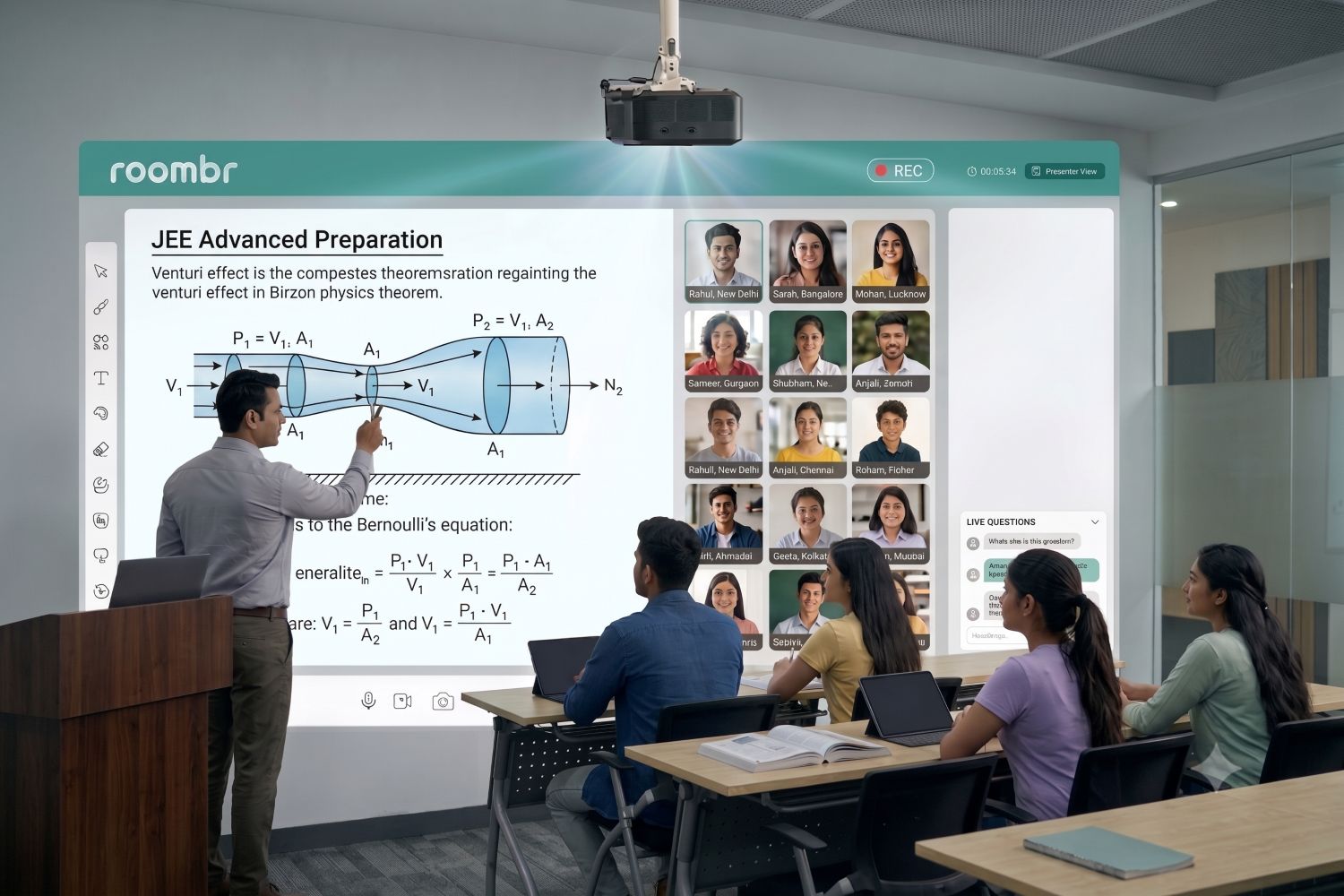
The most effective delivery mechanism often involves the widely available smartphone. Mobile-based learning, accessible via apps and e-learning platforms, provides video lessons and structured content that can be accessed flexibly, eliminating the rigid requirement for daily attendance at a physical location.
ICT-Enabled Classrooms In Rural Schools
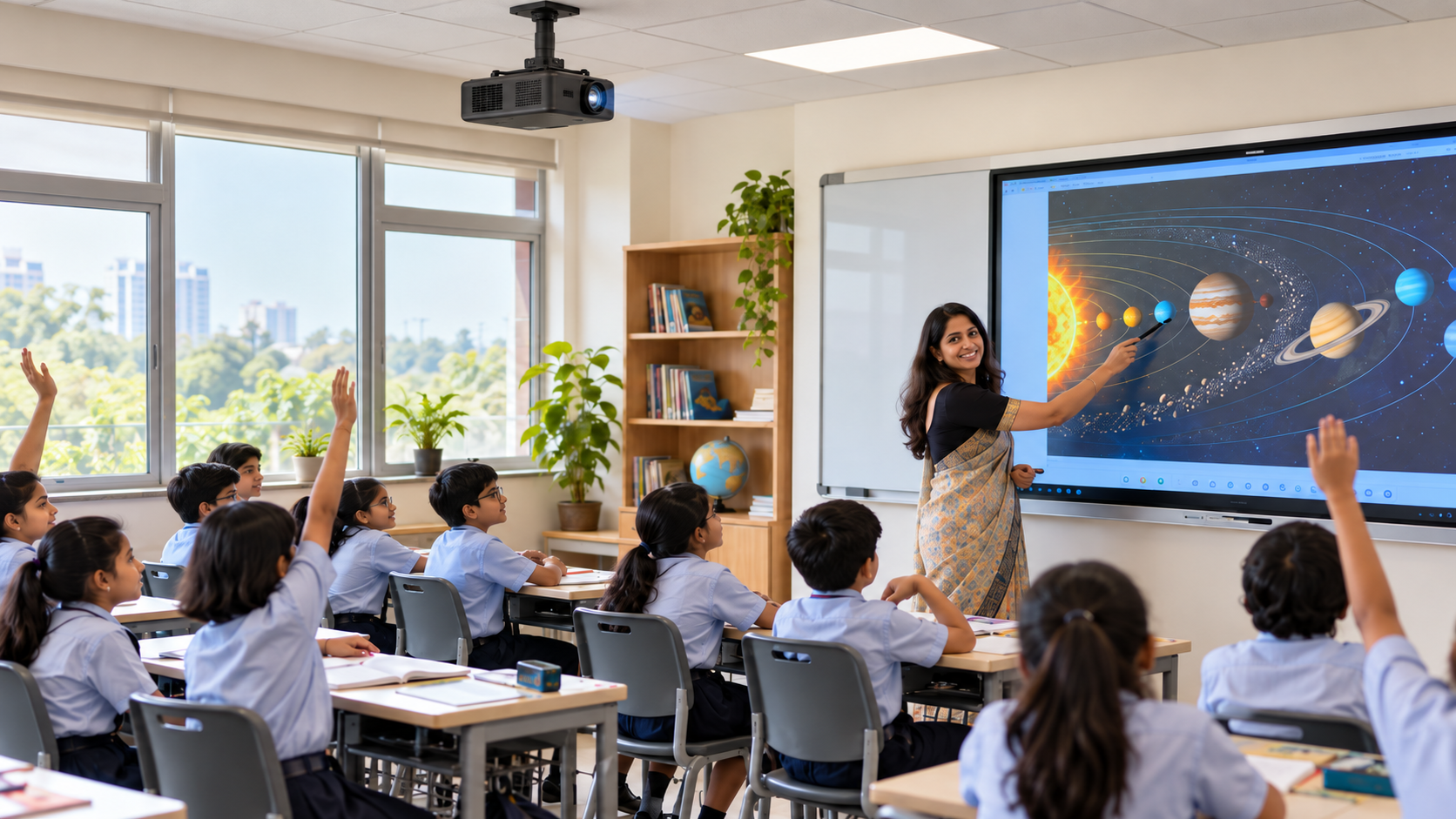
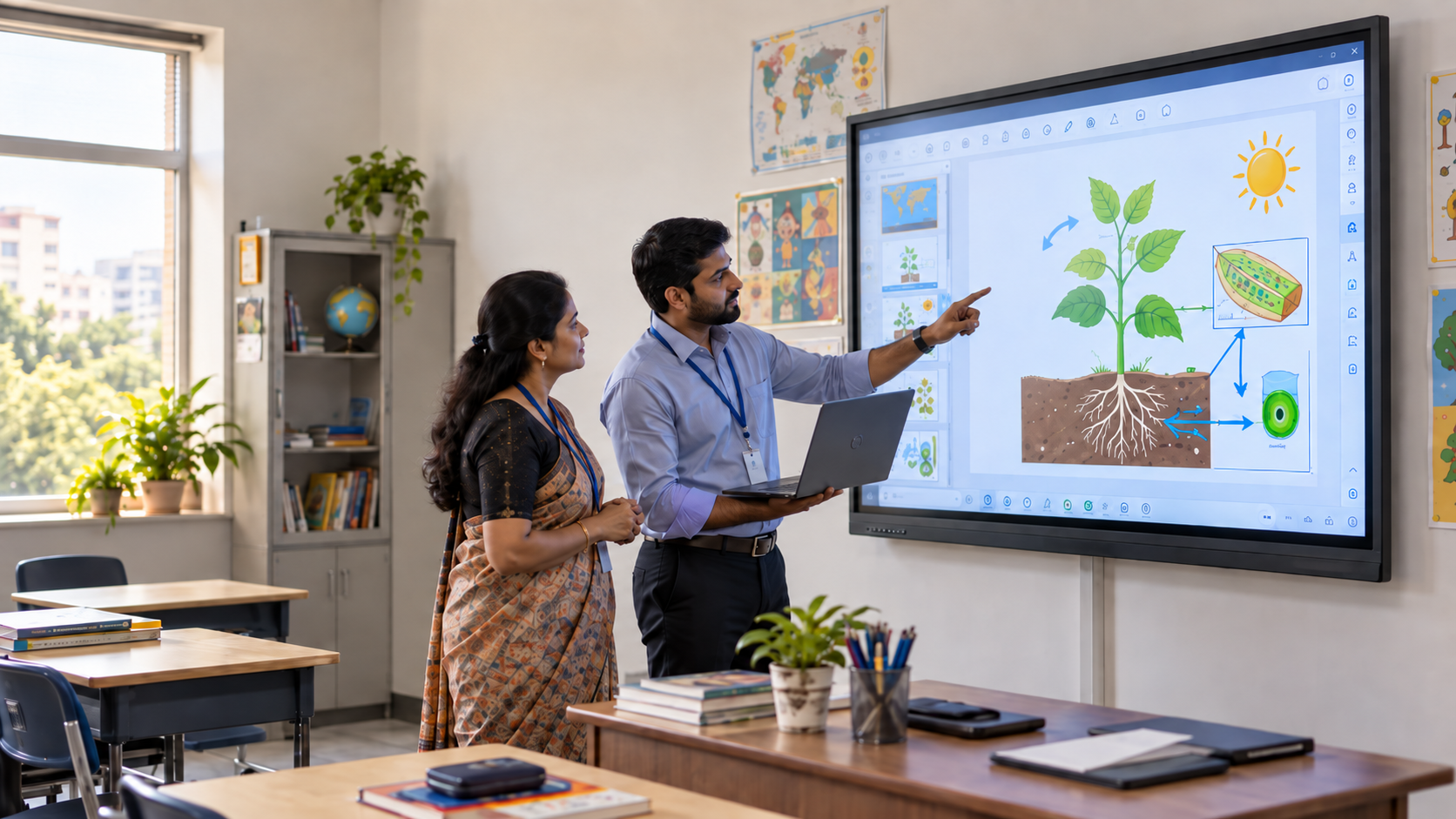
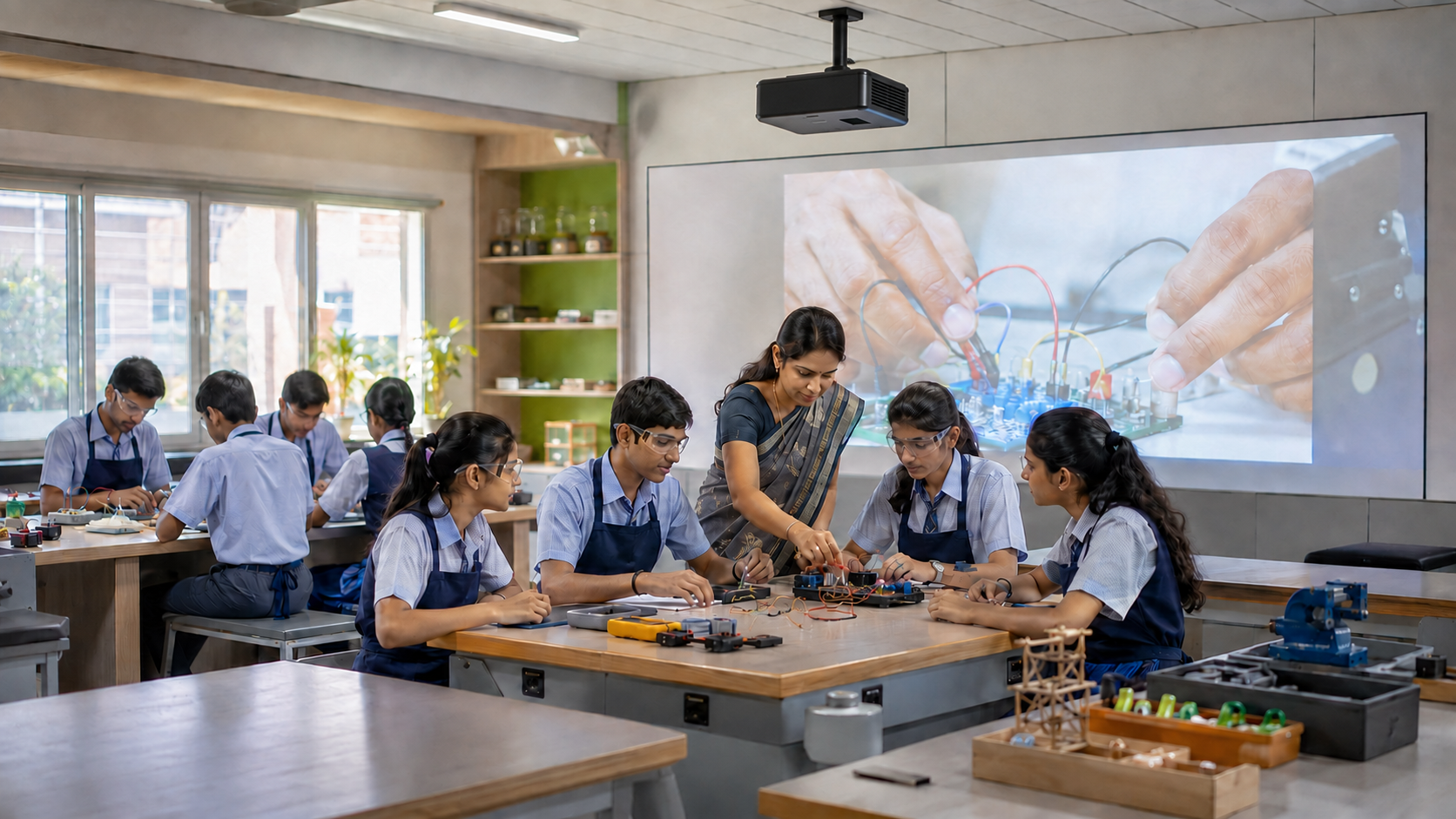
A physical smart class typically involves a manageable setup in an existing space, such as a projector, a screen, and a few durable tablets. This low-cost, ICT-enabled environment allows teachers to deliver multimedia-rich content and interactive lessons, upgrading the quality of instruction far beyond what traditional textbooks alone can offer.
Low-Cost Mobile-Device-Based Solutions
To counter unreliable connectivity, the focus is on solutions that provide content designed for low bandwidth or access through offline content that can be downloaded once. Crucially, successful digital learning platforms offer material in multiple local languages, ensuring the educational content is immediately understood and culturally relevant to the student.
Community-Driven Digital Literacy Initiatives
To ensure widespread adoption, many effective models establish local Digital Learning Centres and focus on training local women to become digital-literacy facilitators. By empowering these community members to teach their peers, these initiatives successfully address the digital skills gap and the gender divide simultaneously.
How Modern Digital Classrooms Help Overcome Barriers for Rural Women
The shift to a smart classroom environment provides clear, life-altering benefits that directly tackle the historic obstacles facing female education.
Accessibility & Flexibility:
For girls restricted by family responsibilities or safety issues related to commuting, the flexibility is revolutionary. The ability to attend classes or access content from home or a nearby, safe digital centre removes the "physical presence" barrier. This means education can continue even when external circumstances would traditionally force a dropout.
Personalized & Self‑Paced Learning:
Digital platforms allow students to learn and progress at their own individual speed. For learners who have significant gaps in their schooling or who must manage external duties, the option to repeatedly revisit lessons, pause videos, and review difficult concepts ensures genuine comprehension and builds confidence that traditional, fast-paced classrooms often fail to provide.
Access to Quality Resources:
The persistent lack of highly qualified teachers in many rural schools is a serious impediment. The modern digital classroom provides a consistent, high-quality substitute. By delivering professionally developed e-content, expert video lectures, and multimedia tools, it effectively gives rural girls access to resources that mirror those available in urban settings.
Digital Literacy and Broader Skills:
Learning within a modern digital classroom environment inherently builds critical digital literacy. Interacting with devices and online tools equips students with skills essential for future employment. This provides empowerment that goes beyond the school curriculum.
Social Empowerment and Confidence Building:
Achieving educational success and mastering digital tools fundamentally transforms a girl’s self-perception. This empowerment, facilitated by the smart class, provides them with a better economic condition and the confidence to advocate for themselves, participate in community life, and ultimately challenge restrictive gender norms.
What Still Needs Attention Before Digital Classrooms Can Truly Empower Rural Women
While the progress is inspiring, a practical view requires acknowledging the realistic limitations that still require strategic intervention.
- Infrastructure Gaps: The primary issue remains the chronic inconsistency of reliable electricity and stable internet access. While offline content helps, leveraging the full potential of interactive learning requires investment in fundamental rural educational infrastructure.
- Digital Literacy Gap: Effective usage of technology relies on comprehensive, continuous training for students, parents, and existing educators to ensure the tools are integrated effectively, rather than abandoned due to a lack of know-how.
- Socio‑Cultural Resistance: In certain conservative settings, familial anxieties about girls engaging with online/digital platforms can lead to outright resistance. Addressing these deep-seated cultural concerns demands community involvement and sensitivity.
- Need for Content in Local Languages: If the digital content is generic or not available in the specific local languages of the region, its ability to engage and educate will be significantly compromised.
- Sustainability and Scalability Challenges: Setting up a modern digital classroom is only the beginning. Long-term success requires robust funding, continuous technical support, and scalable models for maintenance and teacher training to ensure the initiatives endure and expand.
Practical Recommendations for Educational Institutions
To move from isolated success stories to a system of widespread, equitable access, stakeholders must adopt practical, actionable strategies.
- Invest in low-cost, mobile-based digital classroom models (e.g., shared tablets) rather than expensive, fixed computer labs, prioritizing reach and portability.
- Combine modern digital classrooms with community-driven training, training local women as facilitators to bridge the digital skills gap.
- Create or use teaching materials that come in multiple local languages.
- Provide continuous teacher training that focuses equally on digital pedagogy and fostering a supportive, gender-inclusive learning environment.
- Implement hybrid learning to manage infrastructural challenges and provide social support.
- Engage communities and families through deliberate awareness campaigns to build trust and address cultural concerns about girls using digital platforms.
- Work together with NGOs, government, and CSR to combine resources, scale infrastructure, and ensure long-term maintenance of digital access points.
How Roombr Can Make a Difference
Roombr, as a holistic digital classroom provider, offers solutions designed for these critical rural needs:
- We provide affordable, easy-to-implement modern digital classroom solutions built to be effective in low-bandwidth environments, with strong offline capabilities.
- We offer comprehensive training and onboarding for local staff and teachers, ensuring they can effectively manage the smart classroom technology and pedagogical delivery.
- We support the integration and development of localized content and promote inclusive pedagogy focused on female learners.
- We champion hybrid and inclusive models focused on maximizing access and improving outcomes for women and girls in marginalized communities.
Learn more about how Roombr can support your school or NGO in rural areas.

Foziya Abuwala
Share
Step Into the future of
Education with Roombr