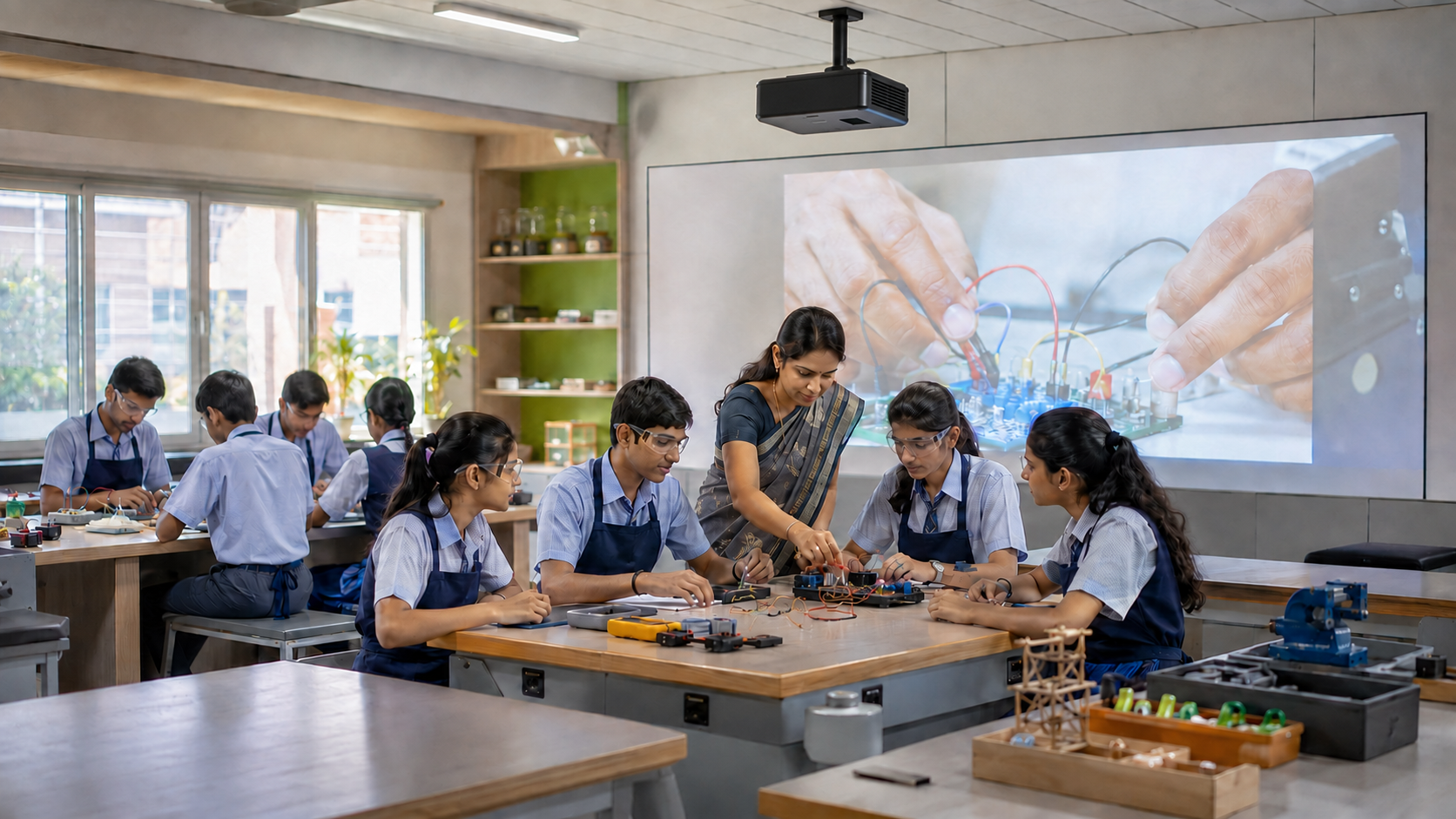


Subjects in higher grades come packed with abstract ideas, detailed diagrams, and processes that are tough to explain with chalk and board alone. Many educators begin their search with terms like smart board for school or interactive smart board, hoping to find the right mix of clarity, interactivity, and long-term value.
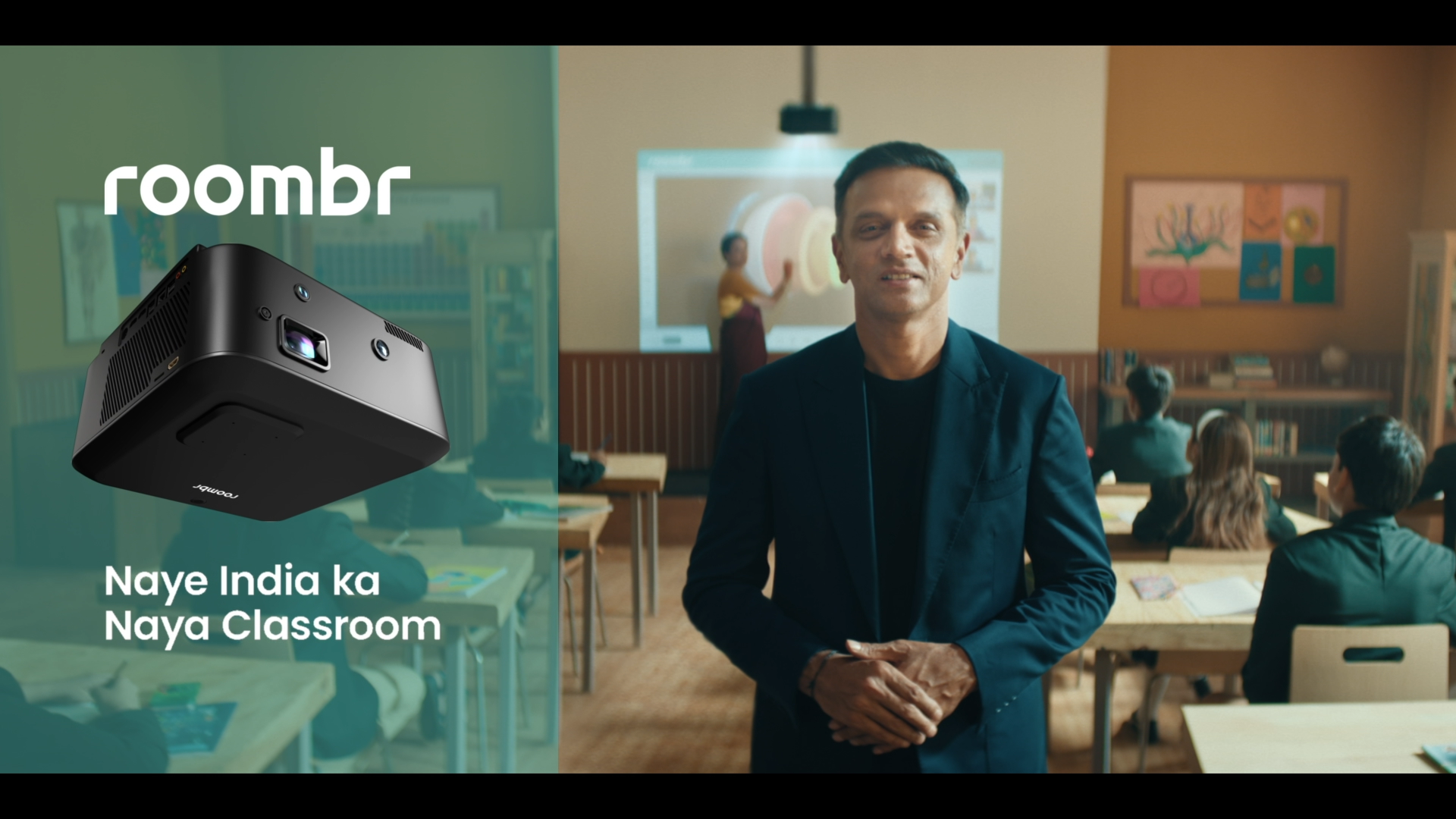
However, traditional smart boards usually stop at flat visuals and simple touch functions. They cannot handle depth-rich lessons or heavy 3D content. That’s where Roombr stands apart. Roombr isn’t a smart board. It works as a single integrated classroom unit that transforms any wall into a bright, large interactive display, giving teachers the space and clarity to show complex ideas in true 3D.
This difference matters, especially for schools looking for infrastructure that actually strengthens learning outcomes in middle school, senior secondary, and college-level classrooms.
Why Tough Concepts Need Better Visualization
Teachers often struggle to balance time, clarity, and student engagement when tackling topics that involve multiple layers or invisible processes. A few examples include:
- The path of light through convex and concave lenses
- Molecular structures and how bonds shift during reactions
- The internal movement of blood through the chambers of the heart
- Transformations of 3D geometric shapes
- Plate tectonics, soil layers, and landform formation
Explaining these with drawings, static images, or 2D animations limits understanding. Students see the parts, but not the relationships between them. They try to memorize what they cannot properly visualize.
Schools that initially look for a smart board for school soon find that depth-heavy subjects demand more than a panel with touch features. They need a system that can display large 3D models, handle smooth rotation and zooming, and support teacher-led interaction.
That’s what Roombr is built for.
How Roombr Delivers True 3D Learning, Not Just 3D Playback
Most tools labeled as a digital smart board for the classroom depend on external CPUs or limited graphics support. Roombr, on the other hand, comes with an integrated computing unit powered by Intel i5/i7 processors, 16GB RAM, and a 1TB SSD. This matters because smooth 3D rendering requires processing strength, not just a bright surface.
Roombr projects a 120- to 200-inch HD display onto the classroom wall using DLP technology and a powerful 1500-lumen RGB 4-LED light source. The result is a large, immersive surface where teachers can open a 3D object and adjust it as naturally as turning a physical model in their hands.
Students get a clear, life-size view of the structure or process. Teachers get the freedom to teach without switching devices or relying on external content players.
And unlike typical boards, Roombr combines projection, computing, audio, cameras, and interactive tools in a single plug-and-play device.
How Teachers Use Roombr to Explain Difficult Topics
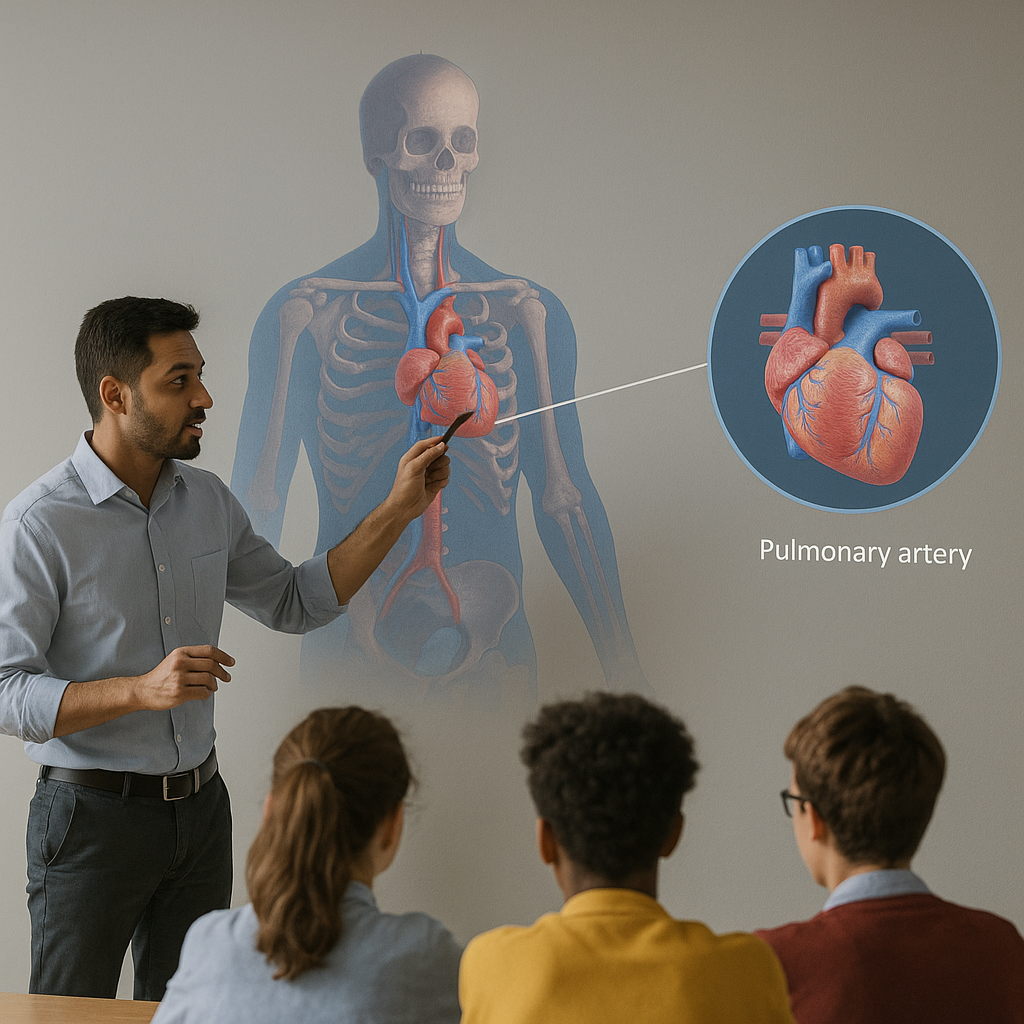
Roombr gives teachers a powerful way to break down concepts that once took multiple diagrams and long explanations. Here are some subject-wise examples of how 3D support changes classroom learning.
Physics
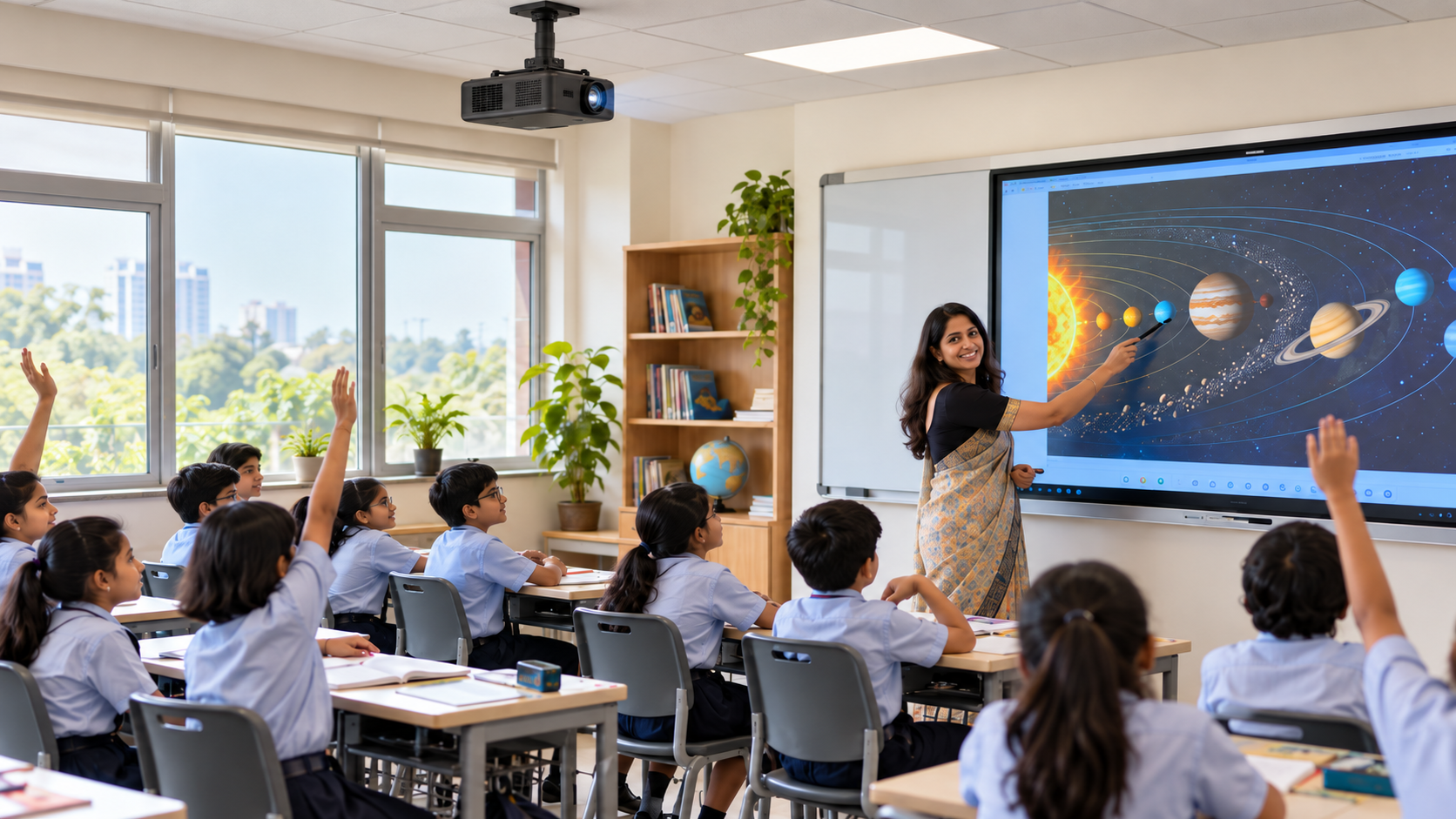
Motion, circuits, waves, magnetism, and optics become easier to grasp when students can see them in depth and motion. A light ray diagram, for instance, transforms from a flat sketch into a 3D path showing how angles shift when the medium changes. Students understand not just what happens but why.
Chemistry
Molecules, lattices, and bonding models often confuse students when presented in 2D. With Roombr, teachers can rotate molecules, zoom into structures, isolate atoms, and show how bonds form or break during reactions. The visuals help students retain concepts that normally require repeated revision.
Biology
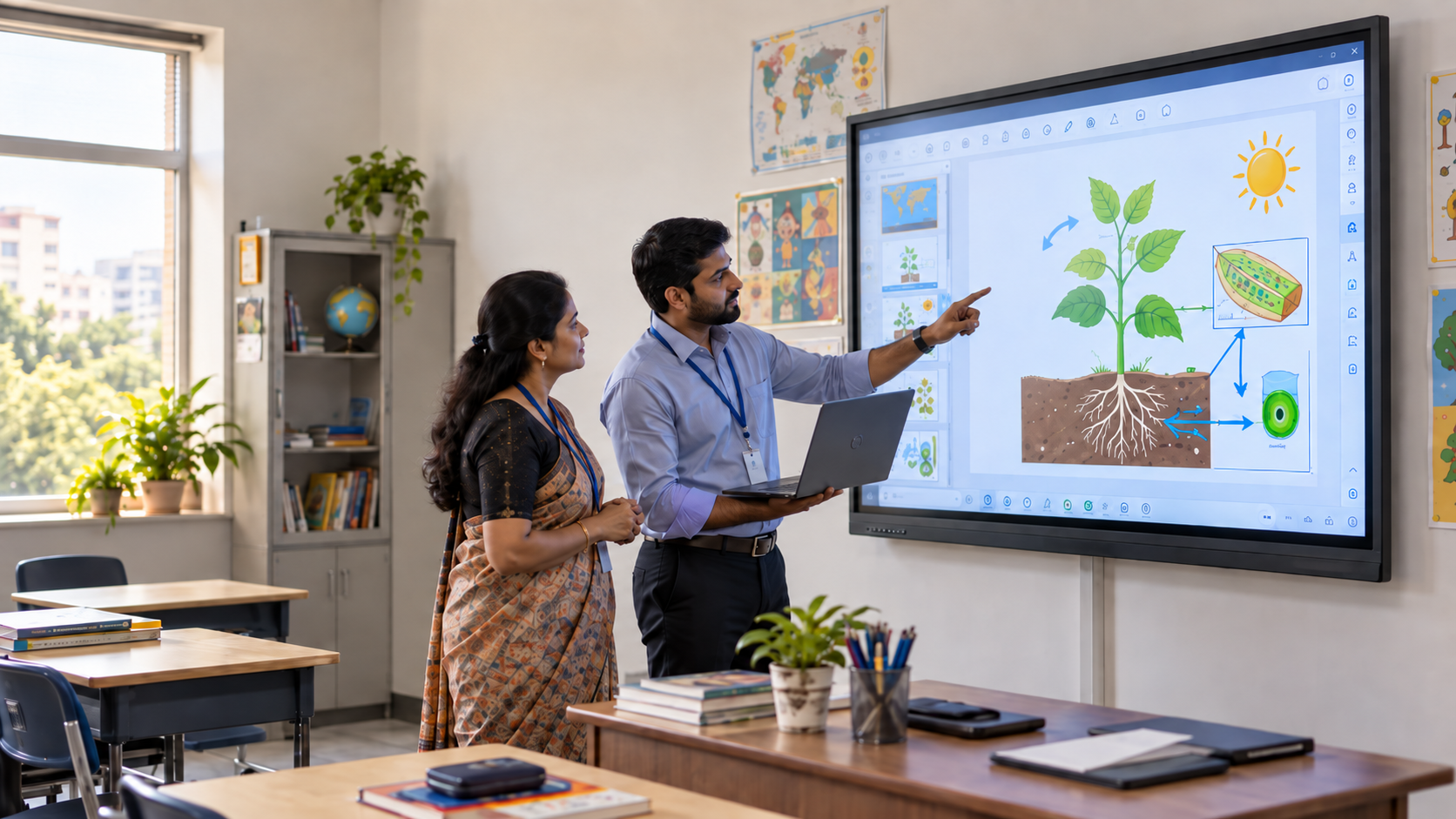
Human organs, cells, tissues, and entire body systems become far more intuitive when learners see them from multiple angles. A 3D heart showing the beat cycle, or a cross-section of a leaf showing stomatal behavior, makes textbook explanations feel real.
Math
3D geometry gains new clarity when solids can be turned, sliced, reshaped, or compared in size right in front of the class. Teachers can demonstrate the difference between two similar-looking solids without relying on imagination alone.
Geography and Environmental Science
Landforms, soil layers, tectonic plates, water systems, and climate interactions are easier to understand when students see scale and motion. Roombr’s large-format projection allows the entire class to observe subtle changes that typical boards cannot display clearly.
These real classroom situations show why schools searching for a smart board for school often discover Roombr as a stronger alternative once they compare capabilities.
Why Roombr Outperforms Most Smart Boards When It Comes to 3D
Roombr’s advantage comes from its hardware design, not from add-on features. Here are the factors that make its 3D teaching experience stronger than what typical digital boards offer.
Strong Brightness and Clarity
1500 ANSI lumens and 1080p resolution allow even fine 3D details to stay visible in well-lit classrooms.
Large Projection Area
Most smart boards for schools limit the teacher to a fixed size. Roombr expands from 120 to 200 inches, giving teachers room to demonstrate bigger models without crowding the class.
High-Quality Audio and Microphones
3D lessons often involve narration. Roombr’s speakers and sensitive mic array ensure clear communication, whether the teacher is near the wall or moving around.
Stable, Fast Interaction
The IR pen and touch support let teachers rotate, mark, and annotate 3D objects without lag. This blends traditional teaching with advanced digital interaction naturally.
These strengths make Roombr a far better fit for deep, concept-driven teaching than standard interactive boards.
An Extra Advantage: Recording and Revisiting 3D Lessons
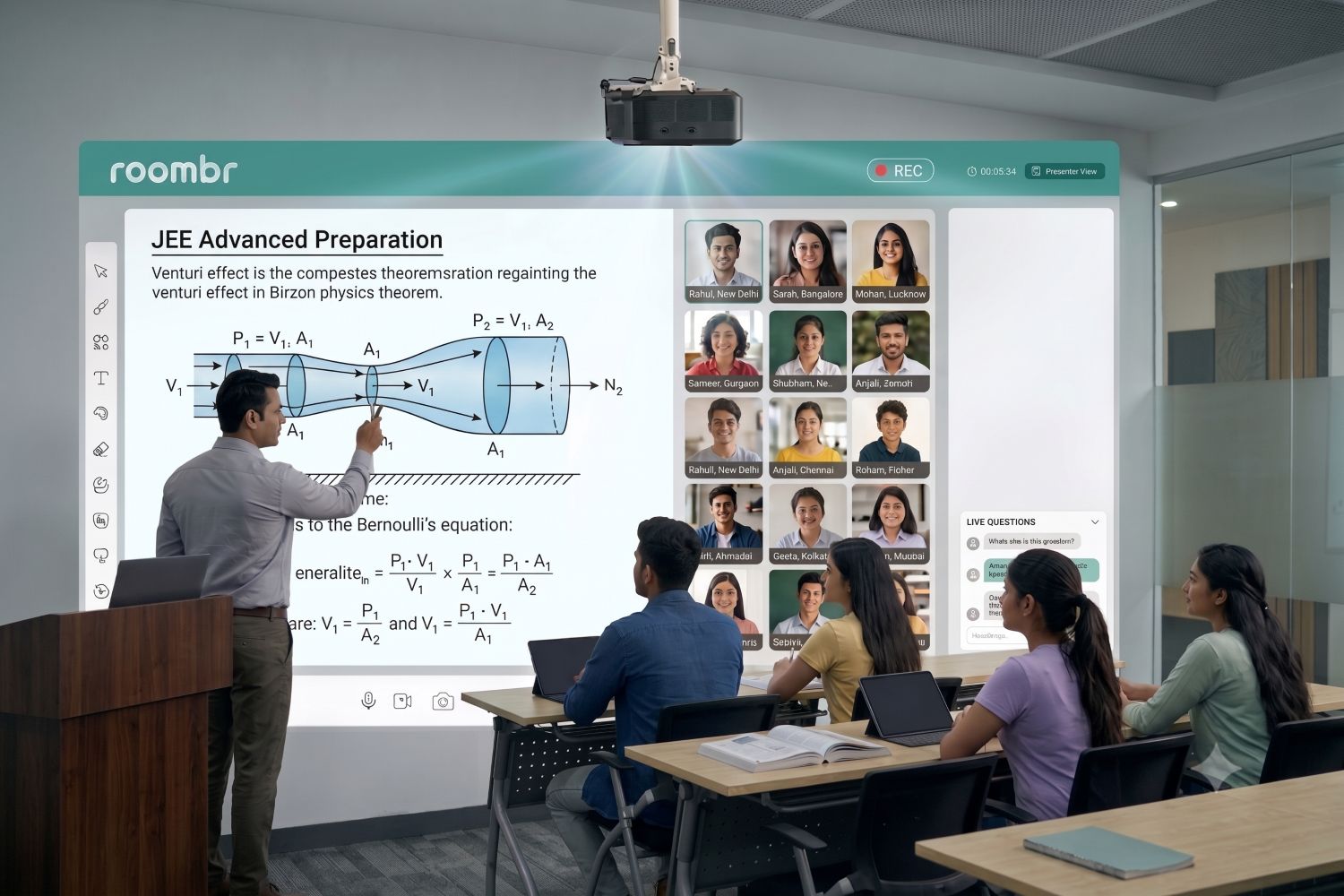
Roombr can record every session, including 3D demonstrations, teacher explanations, and annotations. Students can watch these lessons later, pause them, or replay tricky parts before exams. Teachers can refine, archive, and reuse their best lessons instead of repeating them every year.
For administrators, this becomes proof of value. Every 3D lesson builds long-term teaching resources for the school.
Why Roombr Is a Stronger Infrastructure Upgrade Than Typical Smart Boards
Schools investing in a digital smart board for classrooms often worry about managing multiple devices, cables, maintenance issues, and compatibility problems. Roombr removes that complexity by combining everything into one wall-mounted unit.
It replaces:
- The smart board
- The projector
- The PC
- The speaker system
- The microphone system
- The camera setup
One device. One remote. One installation. One support provider.
For a school thinking seriously about infrastructure upgrades that improve teaching and student understanding, this is a major advantage.
Final Thoughts
Teaching tough concepts becomes much easier when educational institutions choose tools built for depth and clarity. Many administrators searching for a smart board for school soon realise they need something stronger. Roombr steps into that gap with a powerful, all-in-one system that turns any wall into a large interactive display. With true 3D support and smooth, hands-on interaction, teachers can break down complex topics with confidence while students understand lessons faster and more clearly.
See Roombr Bring Tough Concepts to Life in Your Classrooms
If your school is planning an upgrade and you want more than a basic display, Roombr gives you a smarter way forward. Its large 3D-ready interactive wall, powerful computing unit, and all-in-one design help teachers explain complex topics with clarity that standard boards can’t match. Give your students a learning experience that feels real, engaging, and future-ready.
Take the next step and request a live demo for your school. You can also reach us at +91 9686659444 or send an email to learn@roombr.com to begin the process.

Foziya Abuwala
Share
Step Into the future of
Education with Roombr