

Every year, right around the time the new academic session begins, school principals and parents go through a similar ritual. Parents often request, sometimes quite insistently, that their child be placed in a specific section. Why? Because "that teacher" is better, or because "Section B always finishes the syllabus on time."
This creates a massive challenge for school management. In one room, a teacher might be using incredible analogies to explain physics, while in the room next door, the experience might be strictly textbook-heavy.
This is the hidden challenge of academic inconsistency. When different sections of the same grade receive vastly different qualities of instruction, it doesn't just hurt student grades. It creates a sense of unfairness and erodes parental trust.
Today, the stakes are higher than ever. With the focus shifting toward conceptual clarity, schools are realizing that they can no longer leave the quality of education to chance. This is precisely where a modern smart class in school becomes more than just a tech upgrade. It becomes the glue that holds the academic standard together.
What Academic Consistency Really Means in a School Environment
When we talk about consistency, we are talking about ensuring that every student has access to the same depth of knowledge.
In a practical school setting, consistency means that if two students in Grade 7 are learning about the Indian Constitution, they should both walk away with the same level of understanding, regardless of who taught them. Currently, gaps begin to form because of:
- The Depth of Explanation: One teacher might dive deep into the "why," while another only covers the "what."
- The Teaching Pace: Some sections end up three chapters ahead, while others are rushing through the syllabus in February.
- The Resources Used: A student in a room with a digital smart classroom sees a 3D model of a heart, while another is just looking at a 2D sketch on a blackboard.
This disparity creates "learning silos." For multi-branch schools or those with multiple sections per grade, this inconsistency makes it nearly impossible to set a uniform exam that is fair to everyone.
The Role of Smart Classrooms in Standardising Teaching Delivery
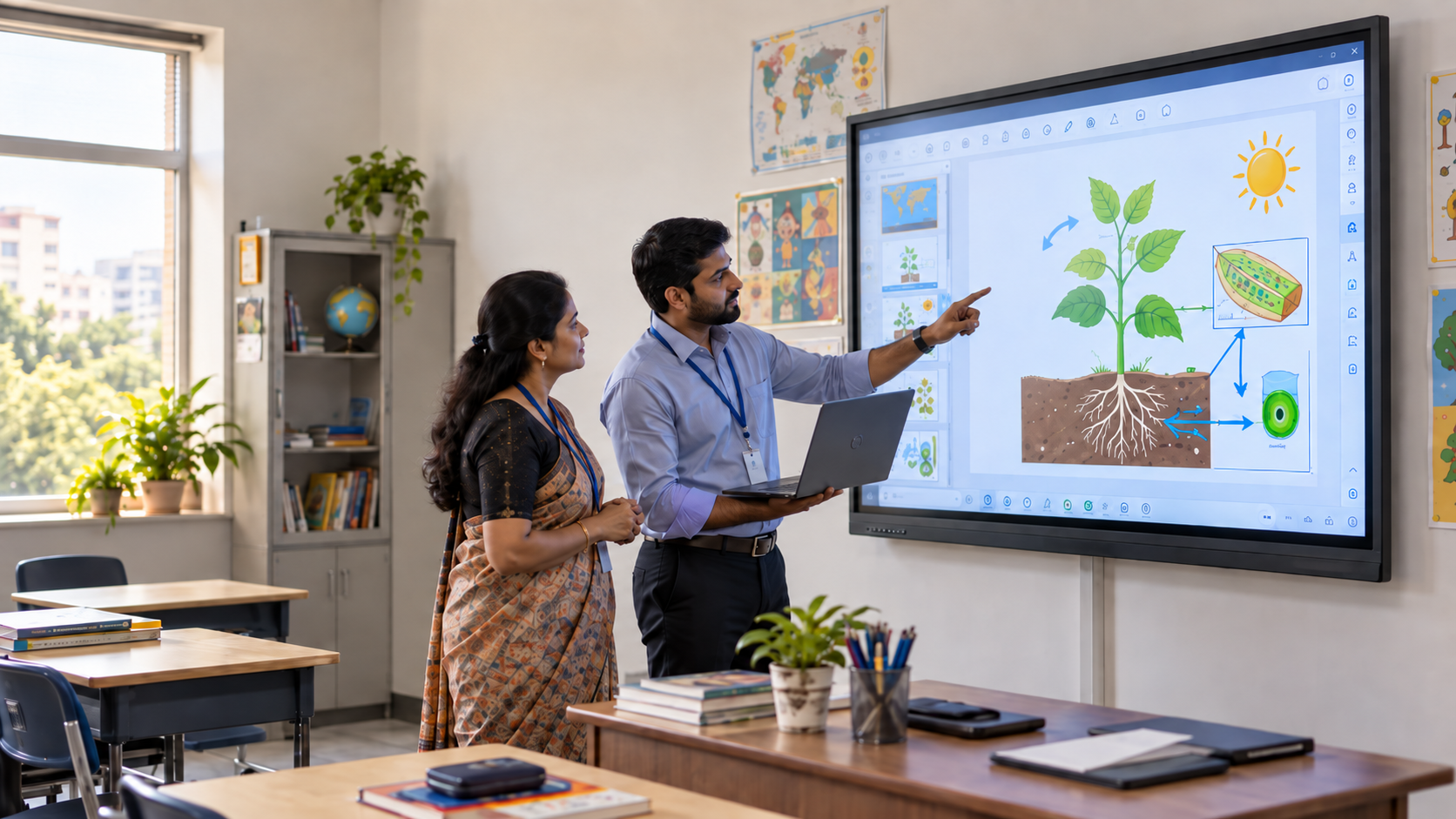
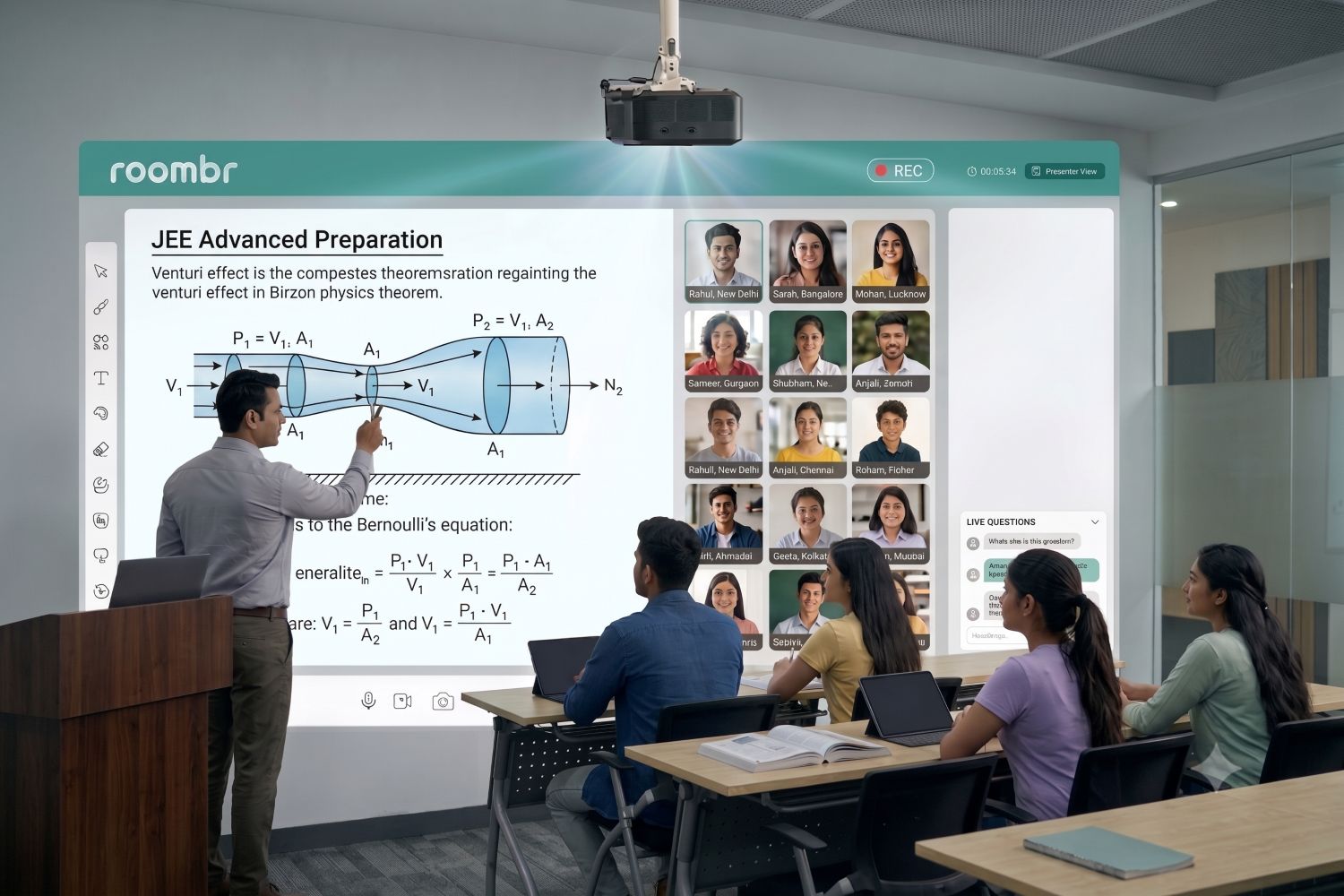
If you think of smart classrooms as just "big screens," you’re missing the bigger picture. In a well-implemented smart class for schools in India, the technology acts as a central nervous system for teaching. It provides a standardized framework that supports every educator.
A smart class ensures that the "core" of the lesson is delivered uniformly. Every teacher has access to the same high-quality animations, mapped videos, and interactive modules. This means:
- A Unified Visual Language: Complex concepts are explained using the same high-standard visuals across all sections.
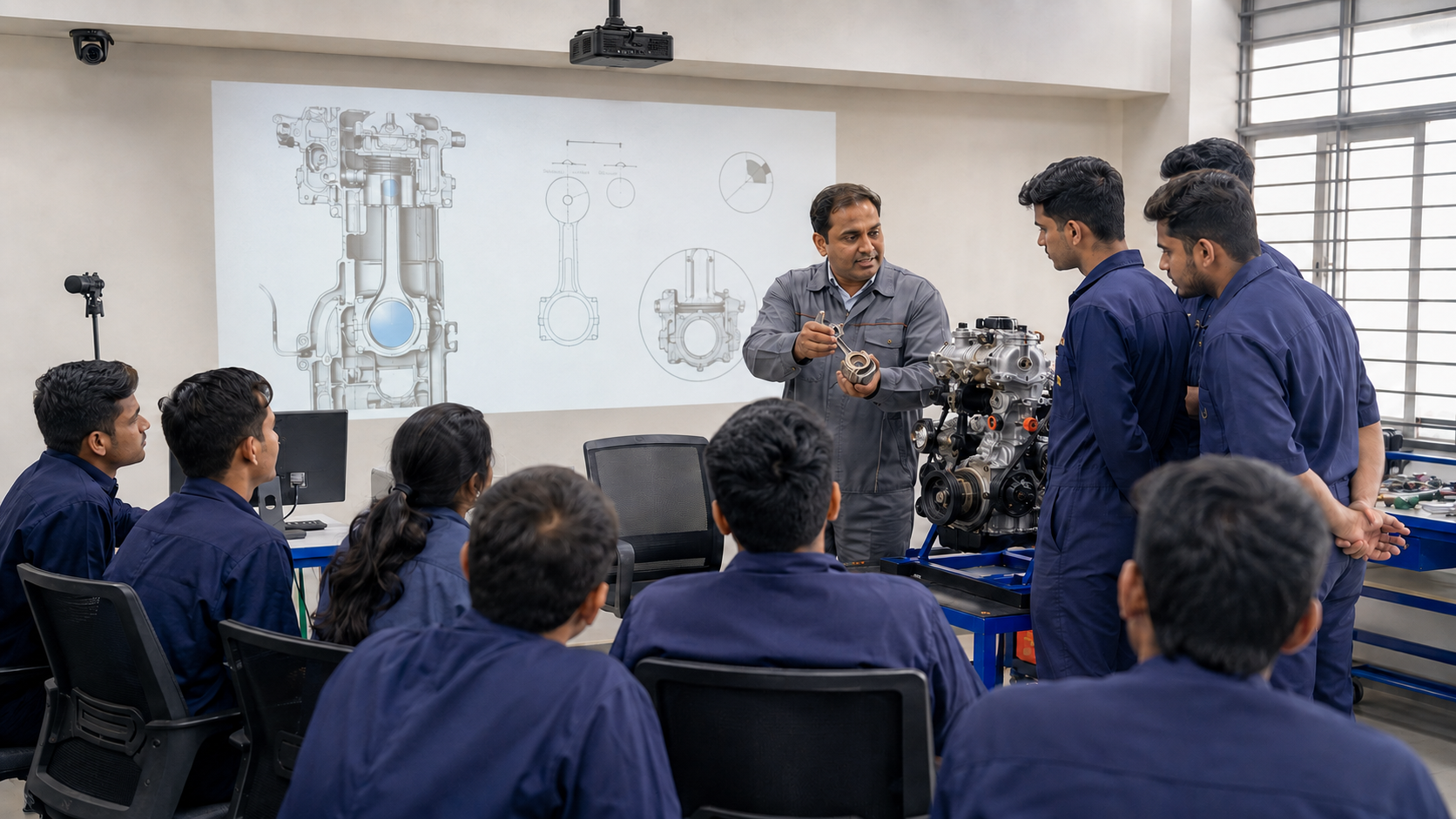
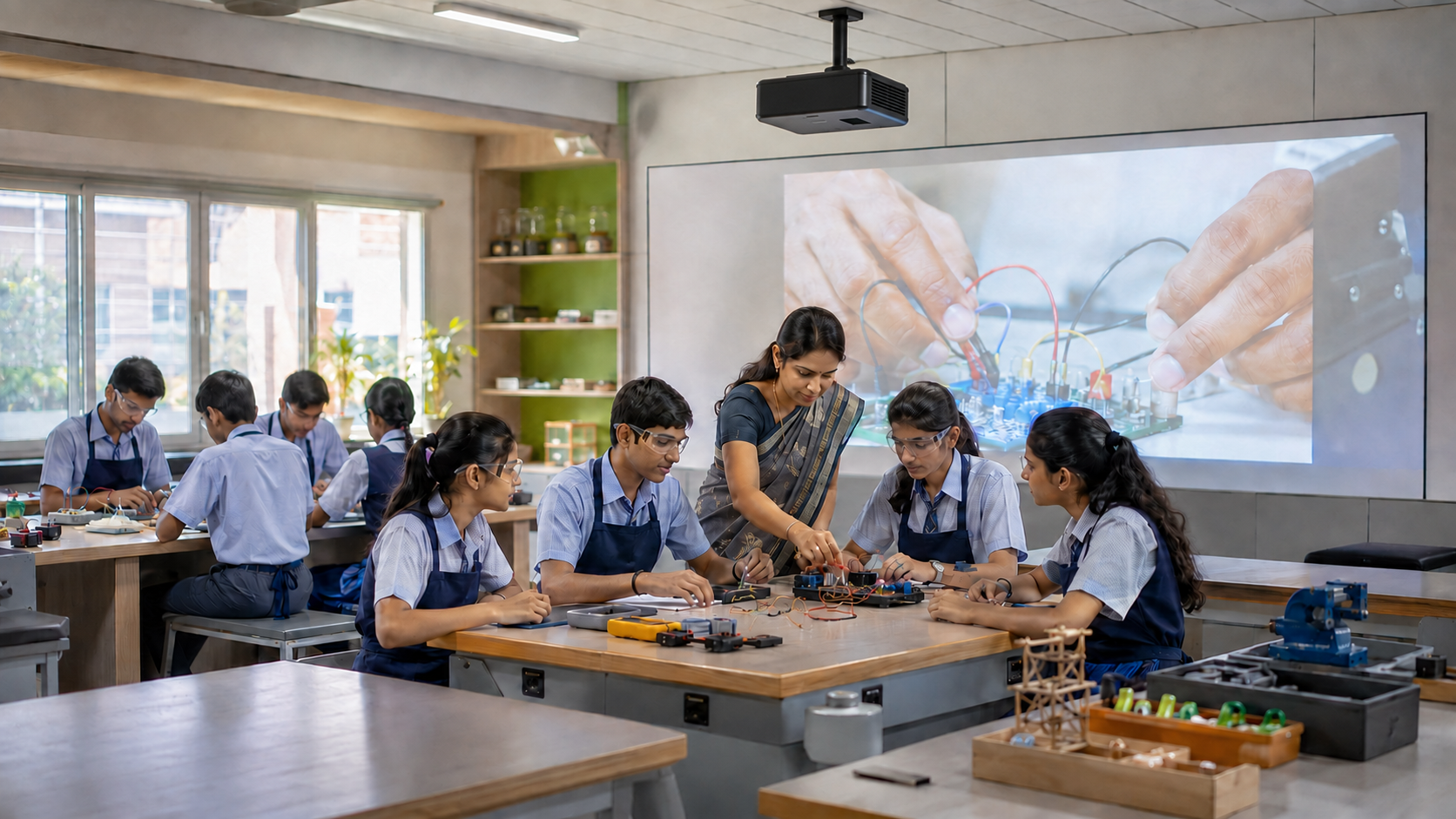
- Content Equality: Every student sees the same experiments and the same case studies.
- Reduced Dependency on Style: While the teacher’s personality still shines, the factual and conceptual delivery is anchored by the digital learning solutions provided by the school.
By using a digital smart classroom, the school sets a quality benchmark. No matter how tired a teacher might be or how new they are to the profession, the technology ensures that the lesson never falls below a certain standard.
How Smart Classrooms Support Teachers Without Restricting Them
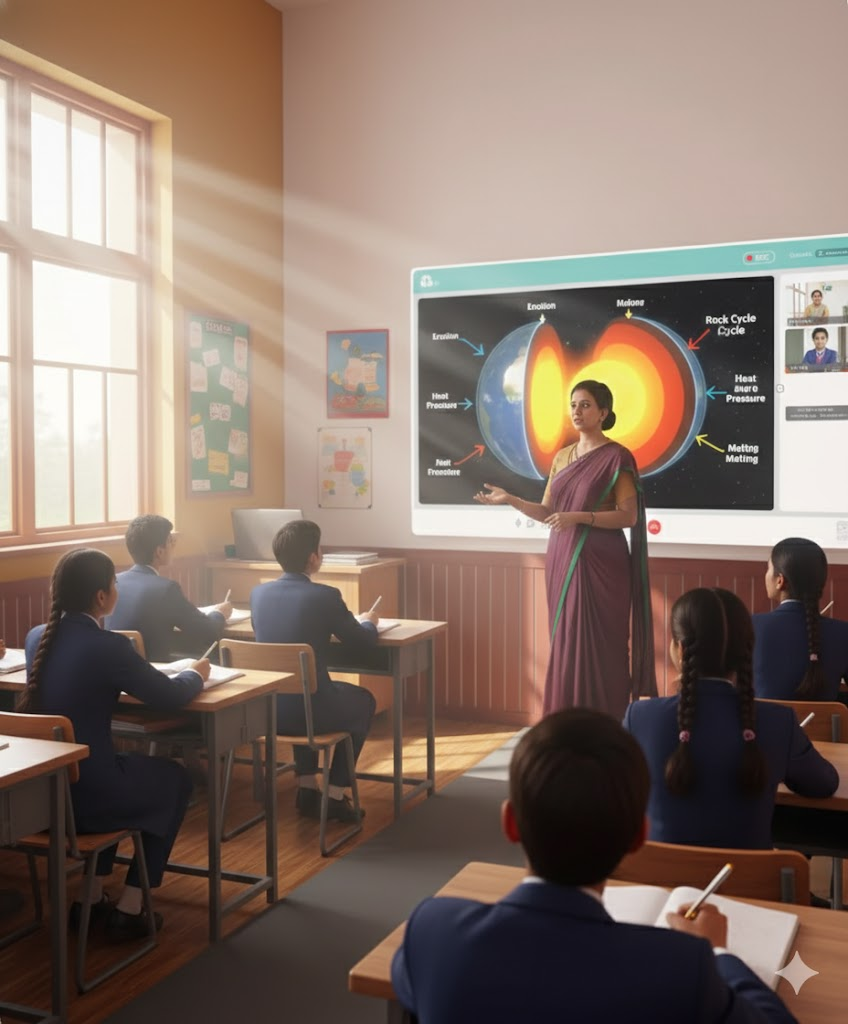
One of the biggest fears teachers may have is that a digital classroom setup will turn them into "video players" rather than educators. This couldn't be further from the truth. In reality, smart classrooms are designed to do the heavy lifting of content preparation, freeing teachers to do what they do best: mentor and inspire.
Think of it this way: Instead of spending 20 minutes drawing a complex diagram of the internal structure of Earth on the board, the teacher uses the smart class to pull up a functioning 3D model in five seconds. This saved time is then used for a high-level discussion or to help students who are struggling.
Furthermore, digital learning solutions help maintain syllabus uniformity. When a teacher is sick, and a substitute has to step in, they don't have to guess where the class left off. They can simply log into the system and see exactly what has been covered, ensuring the students don't lose a single day of progress.
Ensuring Consistent Learning Outcomes Across Grades
Consistency is ultimately measured by what the students actually learn. When a school adopts a smart class, the measurable gap between sections begins to close.
When you have a digital smart classroom in every room, you are essentially giving every child a front-row seat to the best possible explanation of a topic. Because the visual reinforcement is the same, students across different divisions are more likely to have a synchronized learning moment. This leads to:
- Equality in Assessments: If everyone were taught using the same high-quality smart class resources, the exam results would become a truer reflection of student effort.
- Reduced Remedial Load: When the initial explanation is clear and visual, fewer students fall behind, making the year-end "revision rush" much more manageable.
Smart Classrooms and Curriculum Alignment
Managing a curriculum is like conducting an orchestra; everyone needs to be on the same page. In many Indian schools, "completing the syllabus" becomes a frantic race. A smart class for schools in India helps solve this by mapping digital content directly to the curriculum (CBSE, ICSE, or State Board).
With a robust digital classroom setup, the school can:
- Track Progression: Ensure that all Grade 9 Science teachers are covering "Atoms and Molecules" during the same week.
- Standardise Examples: Ensure that the examples used in class are aligned with the learning objectives set by the board.
- Sequence Mastery: Prevent teachers from skipping difficult modules by making those modules an integral part of the smart class daily flow.
How School Leaders Track Academic Uniformity
For a principal or academic coordinator, knowing what exactly is the teaching and learning flow in every classroom is a constant struggle. Smart classrooms provide a layer of transparency that was previously impossible.
Through a modern smart class in school, leadership can get real-time insights:
- Usage Logs: Are the digital learning solutions being used, or is the screen just gathering dust?
- Pacing Dashboards: Which sections are lagging behind the academic calendar?
- Resource Planning: Identifying which subjects need more digital support based on teacher feedback and student performance.
Leaders can use the data from the digital smart classroom environment to make informed decisions and provide targeted support to teachers.
Impact on Students: Equal Learning Opportunities for All
We often talk about "educational equity" between different schools, but what about equity within the same school? Every student pays the same fee and deserves the same quality of instruction.
A smart class in school is the great equalizer. It ensures that:
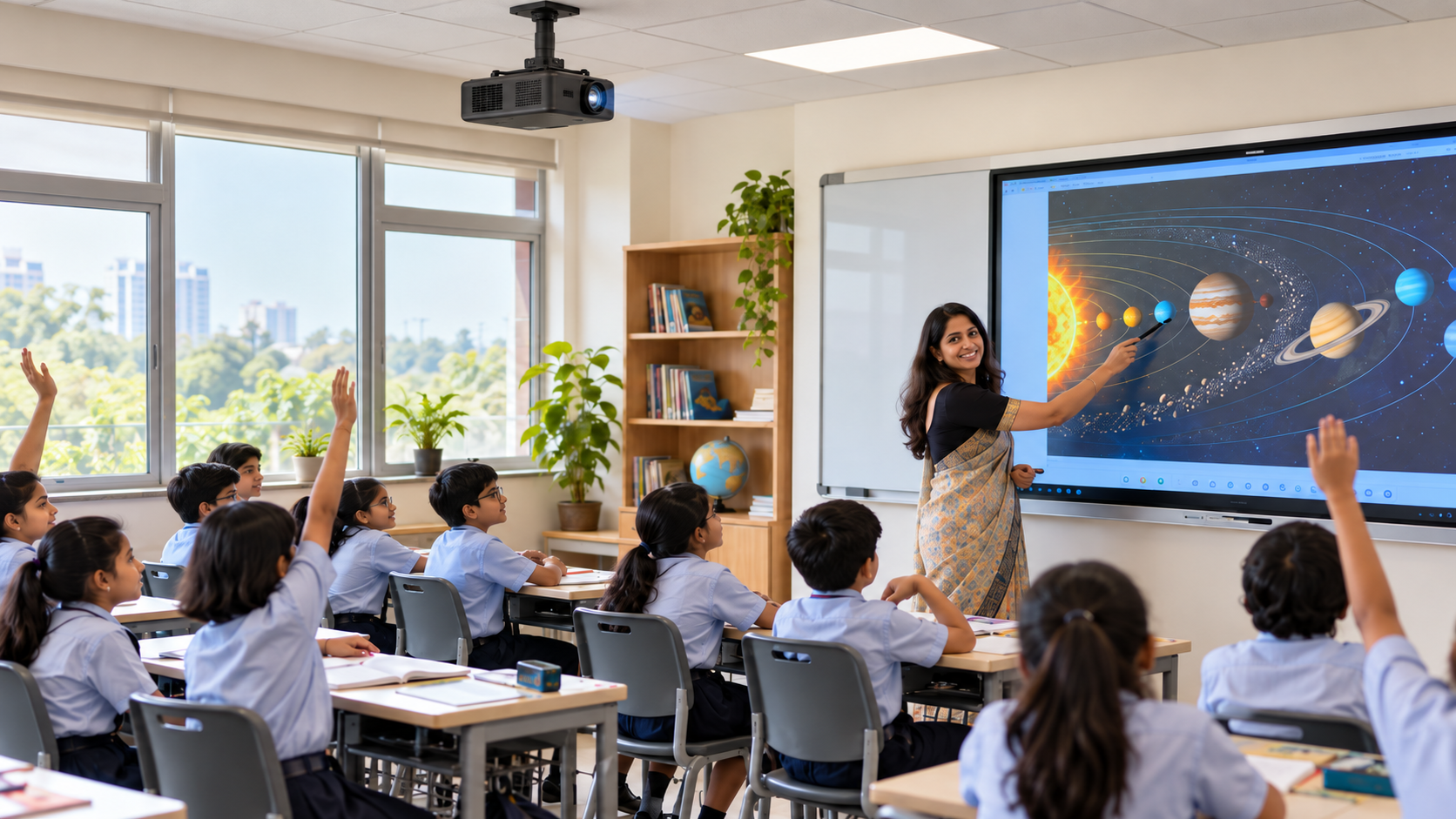
- No Child is Left Behind: The student in the last section gets the same brilliant 3D animation of the solar system as the student in the front section.
- Increased Engagement: Interactive smart classrooms cater to different learning styles including visual, auditory, and kinesthetic. This makes sure that no matter how a student learns, they are being reached.
- Confidence in Testing: When students know they have been taught the same material as their peers, they approach exams with much higher confidence.
Long-Term Benefits for School Reputation and Outcomes
In the competitive world of Indian education, a school’s reputation is built on its consistency. A school that produces two to three toppers is good, but a school where every student shows consistent growth is considered great.
Investing in a digital classroom setup yields long-term dividends:
- Parental Trust: When parents see a uniform, tech-enabled approach, their anxiety about section allocation disappears.
- Predictable Results: With standardized teaching through digital learning solutions, your school's average performance becomes more predictable and easier to improve year-over-year.
- Teacher Retention: Teachers feel more supported and less burnt out when they have high-quality smart class tools at their disposal.
Ultimately, the goal is to create a school where the quality of education is a brand promise, not a variable.
Key Takeaways for School Decision-Makers
As you look toward the future, remember that technology is not an end in itself, it is a vehicle for academic excellence. Today, smart classrooms are the most effective way to scale the talent of your best educators across your entire institution.
If you are a school leader, consider these points:
- Consistency is a Choice: It requires a systemic change, not just a few workshops.
- The Right Tools Matter: A smart class in school must be intuitive and curriculum-aligned to be effective.
- Start with the "Why": Shift the conversation from adopting technology to ensuring every student gets the same high-quality lesson.
Schools that embrace a smart classroom strategy today are not just buying equipment. They are building a foundation of stability that will serve their students for decades to come.
At Roombr, we specialize in helping schools across India achieve this level of academic synchronization. Our digital learning solutions are built to empower teachers and standardize excellence.
Would you like us to show how Roombr Digital Classroom can help you overcome academic inconsistencies? Learn more here.

Foziya Abuwala
Share
Step Into the future of
Education with Roombr