

Today, classroom management is about creating engagement at scale across every single section of your school. For a Principal or Director, this shift presents a unique challenge. You cannot be in 50 rooms at once. You cannot personally oversee every lesson or ensure that every student is paying attention. Traditional methods relied on physical walkthroughs and reactive discipline. Today, leadership requires a digital framework that acts as your eyes and ears.
The goal of this post is simple. We are providing a strategic checklist to help you evaluate new technology. This list ensures your school’s tech empowers leadership rather than just adding more screens. It will help you choose tools that truly upgrade your classroom management strategy.
Principal’s Checklist to Evaluate Digital Tools for Classroom Management

1. Ability to Provide Remote Academic Supervision
The biggest shift in modern education is moving from reactive to observational management. Traditional management waits for a complaint to reach the Principal's office. Modern management identifies gaps before they become problems.
The Checklist Item: Does the tool allow for live classroom walkthroughs without a physical presence?
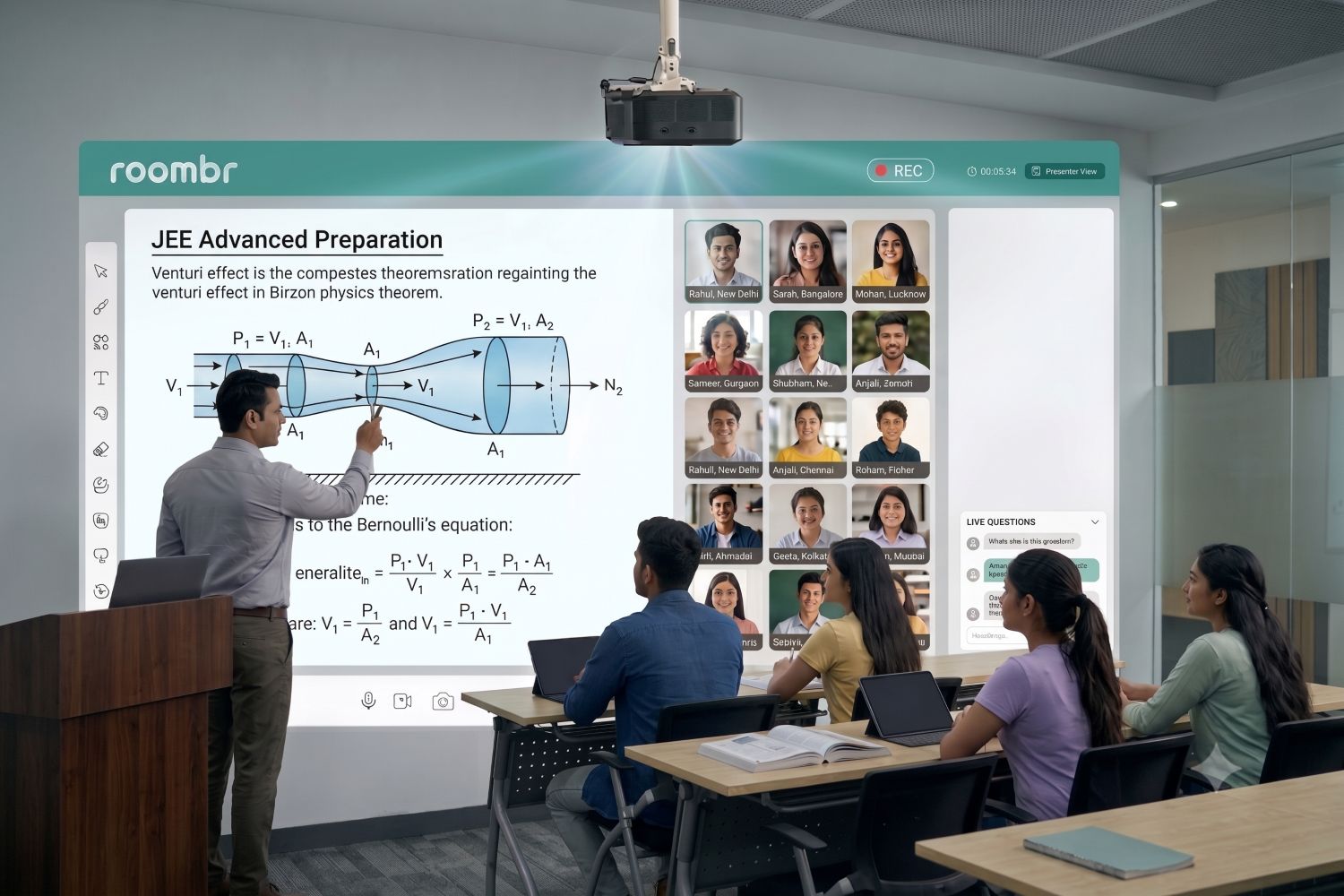
Why it Matters: A Principal needs the ability to drop in on a class digitally. This provides quality control. When you can view a live feed or a real-time dashboard of lesson progress, you can evaluate teacher performance instantly. You can see which classes are falling behind and which are excelling.
This capability ensures that classroom management standards are consistent across the entire institution. You no longer have to rely on hearsay or scheduled observations where everyone is on their best behavior.
2. Support for Pedagogical Standardization Across the Institution
Every school faces the experience gap. One teacher manages a class perfectly with high energy. Another teacher in the next room struggles to keep students focused. This creates an unequal learning experience for your students.
The Checklist Item: Does the technology provide a standardized interface that guides the lesson flow?
Why it Matters: Consistency is the key to a strong school brand. A fragmented approach where every teacher uses different tools leads to chaos. You need a smart classroom solution that offers a unified structure.
When the technology guides the lesson flow, it acts as a guardrail. It ensures that every teacher, regardless of their experience level, follows the same high-quality instructional design. This reduces the management burden on individual teachers. It makes classroom management a systemic success rather than an individual struggle.
3. Access to Real-Time Student Engagement Analytics
Disengaged students are the root cause of almost all behavioral issues. When a student is bored or lost, they disrupt the class. Therefore, managing behavior actually means managing engagement.
The Checklist Item: Can you view school-wide data on which subjects or classes have the lowest student participation?
Why it Matters: You cannot fix what you cannot measure. A standard interactive flat panel might show a video, but it rarely tells you if students are paying attention. You need a tool that tracks interaction.
This data allows a Principal to intervene with coaching or curriculum changes before behavior issues escalate. If the data shows that 8th-grade math has low engagement every Tuesday, you know exactly where to focus your support. It moves the school from disciplining students to engaging them.
4. Alignment with NEP 2020 Holistic Progress Tracking
In India, the National Education Policy (NEP) 2020 has changed the rules. It requires schools to provide proof of competency and active participation. It emphasizes holistic progress over rote memorization.
The Checklist Item: Does the classroom tool automatically document student interactions and digital work for portfolios?
Why it Matters: Managing a classroom in 2026 means managing the data of that classroom. Teachers spend hours manually compiling reports to meet NEP standards. This takes time away from teaching.
A Principal needs a tool that makes this administrative task invisible. The right technology automatically captures student work and participation data. It turns classroom management into an automatic documentation process. This ensures your school is always audit-ready and compliant without burdening your staff.
5. Reducing Teacher Burnout via Automation
The number one reason for poor classroom management is an exhausted teacher. When teachers are buried under administrative work, they have less energy for their students. Their patience wears thin, and the classroom environment suffers.
The Checklist Item: Does the tool automate repetitive tasks (attendance, lesson planning, report generation) to save teachers 30+ minutes daily?
Why it Matters: Technology should be an assistant, not a burden. Many schools make the mistake of buying complex school management software that actually adds to the teacher's workload.
You must look for tools that automate the mundane. When a teacher does not have to spend 15 minutes on attendance or report creation, they gain that time back for instruction. A rested, focused teacher is the best asset for effective classroom management. This directly improves teacher retention rates and keeps your best staff happy.
6. Capacity for Seamless Parent-Teacher Transparency
Parents are the ultimate stakeholders in your school. They want to know that their children are in good hands. Trust is built through transparency.
The Checklist Item: Can the tool easily broadcast or record Excellence Sessions to show parents the quality of management and learning?
Why it Matters: In the past, parents only heard from the school when something went wrong. This created a negative association with classroom management.
Modern tools allow you to flip this dynamic. You can easily share highlights of great classroom interactions. When parents see the high level of digital maturity and control in the classroom, institutional trust increases. They see that the school is managed professionally and that learning is happening safely and effectively.
Key Takeaway
Choosing the right technology is one of the most critical decisions a Principal will make. It is not just about buying hardware like an interactive flat panel or installing new software. It is about choosing a partner that understands the ecosystem of a school.
Your goal is to build a scalable, efficient, and engaging environment. By using this checklist, you ensure that your investment delivers real returns. You move beyond basic teaching aids and build a robust system for classroom management.
Prioritize tools that offer supervision, standardization, and automation. Look for solutions like Roombr that integrate these features into a single, unified experience. When you empower your teachers and engage your students, you secure the future and reputation of your institution.
Frequently Asked Questions
1. How much should a school budget for annual maintenance (AMC)?
Plan for about 10–15% of the hardware cost annually once your warranty expires. For a standard interactive flat panel, that’s roughly ₹15,000–₹25,000 per unit.
Pro tip: Negotiate an all-inclusive AMC upfront that covers the screen, the computer (OPS), and on-site visits so you don’t get hit with surprise bills later.
2. What do I need to know about student data privacy laws now?
With India’s new DPDP Act, you can't just collect data blindly. You need clear parental consent. Stick to tools that practice data minimization (only asking for what’s needed) and store everything on local Indian servers. This keeps your classroom management strategy safe and legal.
3. Will these smart boards run on our school’s existing inverters?
Mostly yes, but check the load. A big 75-inch screen pulls about 200–250 watts (for peak usage). You need a UPS with pure sine wave output to stop flickering or damage. If your area sees frequent power cuts, look for newer panels with built-in battery backups or eco-modes. On the other hand, as a holistic digital classroom solution, Roombr consumes only ~150W, making it much easier to run on standard school inverters and UPS systems compared to heavy, power-hungry interactive flat panels.
4. Are there specific certifications my teachers should get?
Absolutely. Beyond basic training, look for Microsoft Educator or Google for Education badges—they add real credibility. It validates that your staff knows how to use school management software to actually improve learning, not just display slides.
5. How can we afford a full upgrade without emptying our corpus funds?
You don’t always have to buy outright. Edtech partners such as Roombr offer Hardware as a Service, which turns a huge one-time cost into a manageable monthly fee. Also, if you are a government-aided school, check for ICT grants under the Samagra Shiksha Abhiyan scheme to help cover costs. Roombr offers a flexible subscription that covers your hardware, AI software, and maintenance in one small regular fee, so you don't have to pay everything upfront.
6. Do smart classrooms actually help with new admissions?
They definitely do. Parents in Tier-1 and Tier-2 cities are looking for future-readiness. When you show off a fully active smart classroom during a campus tour and explain how it personalizes learning, it justifies your fee structure and can be the deciding factor for many families.
Start Investing in Intelligence with Roombr Digital Classroom
Your checklist is ready, but is your current edtech partner? Most smart class vendors sell you a screen and walk away. You are left with depreciating hardware, while classroom management struggles remain unsolved.
It’s time to demand more.
Roombr is the world’s first wall-to-wall smart classroom solution designed specifically to pass the Principal’s Checklist. We don’t just hang a panel on the wall. We integrate school management software, real-time student analytics, and teacher automation into a single, seamless ecosystem.
Don’t let your next technology investment become an expensive piece of furniture. Upgrade to a system that acts as your eyes, ears, and strategic partner.
Ready to see the difference between a digital board and a digital classroom?
Schedule Your Strategy Session with Roombr Today.

Foziya Abuwala
Share
Step Into the future of
Education with Roombr