

We have all seen it happen. A student sits in the back row, quiet and disengaged. He knows the answer. If you asked him in Marathi or Tamil, he would tell you immediately. But the textbook is in English. The question is in English. So he stays silent.
He isn't failing because he doesn't understand the concept. He is failing because the language has become a wall.
Remedial teaching often tries to fix this by repeating the same English lessons louder or slower. But that rarely works. If the language is the barrier, more English isn't the solution. We need a bridge.
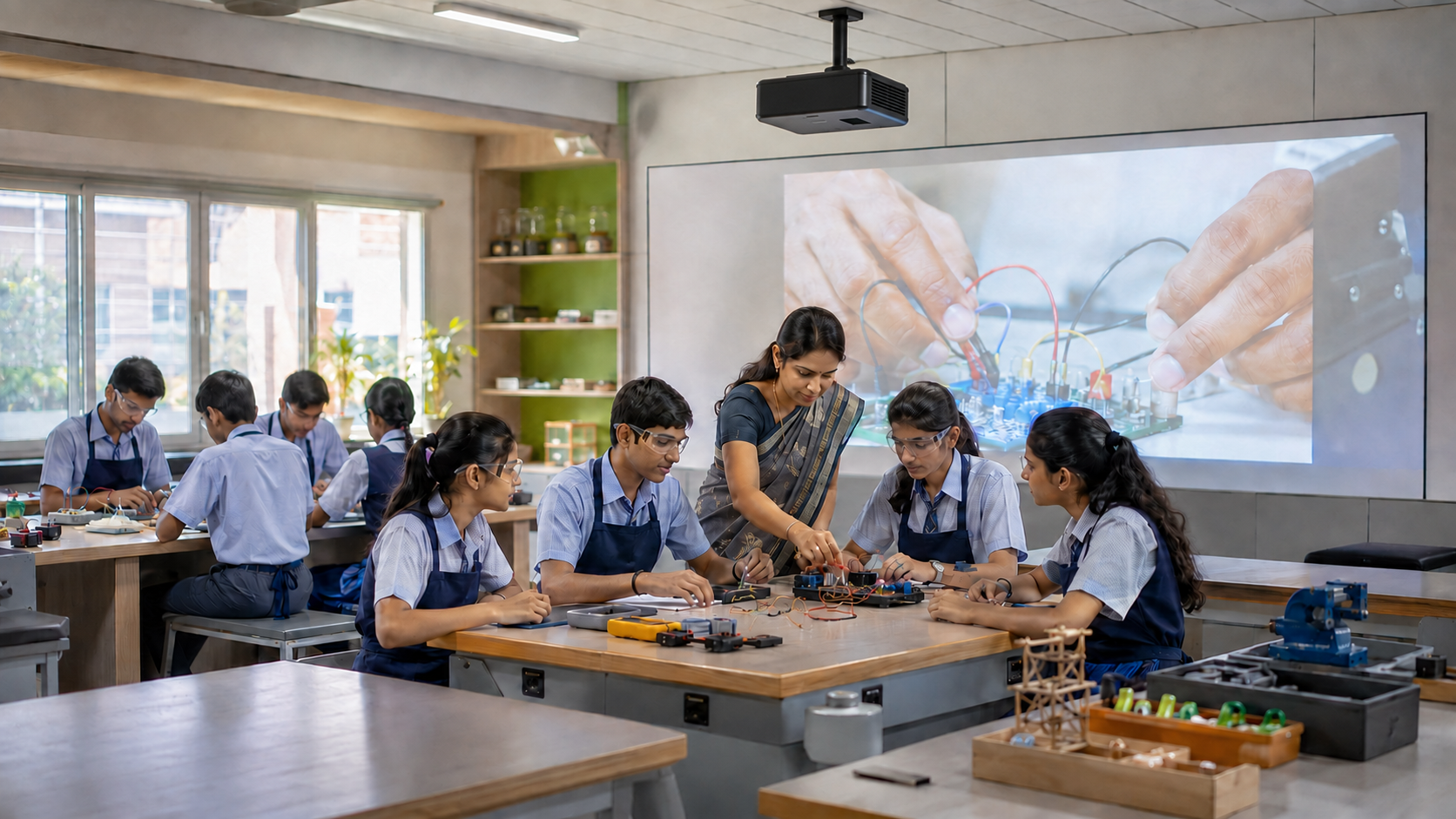
This is where a smart classroom becomes more than just a fancy screen. It becomes a translator. It changes the way we explain things. It allows us to step past the language barrier and get straight to the learning.
Here is how you can use smart classroom tools to help students who are struggling with the medium of instruction.
Pictures Speak Every Language
Think about how we learn naturally. We see a tree before we know the word tree. Our brains are wired for images first and words second.
In a traditional class, you might spend twenty minutes explaining a complex term like precipitation. For a student weak in English, those twenty minutes are just noise. They get lost in the vocabulary.
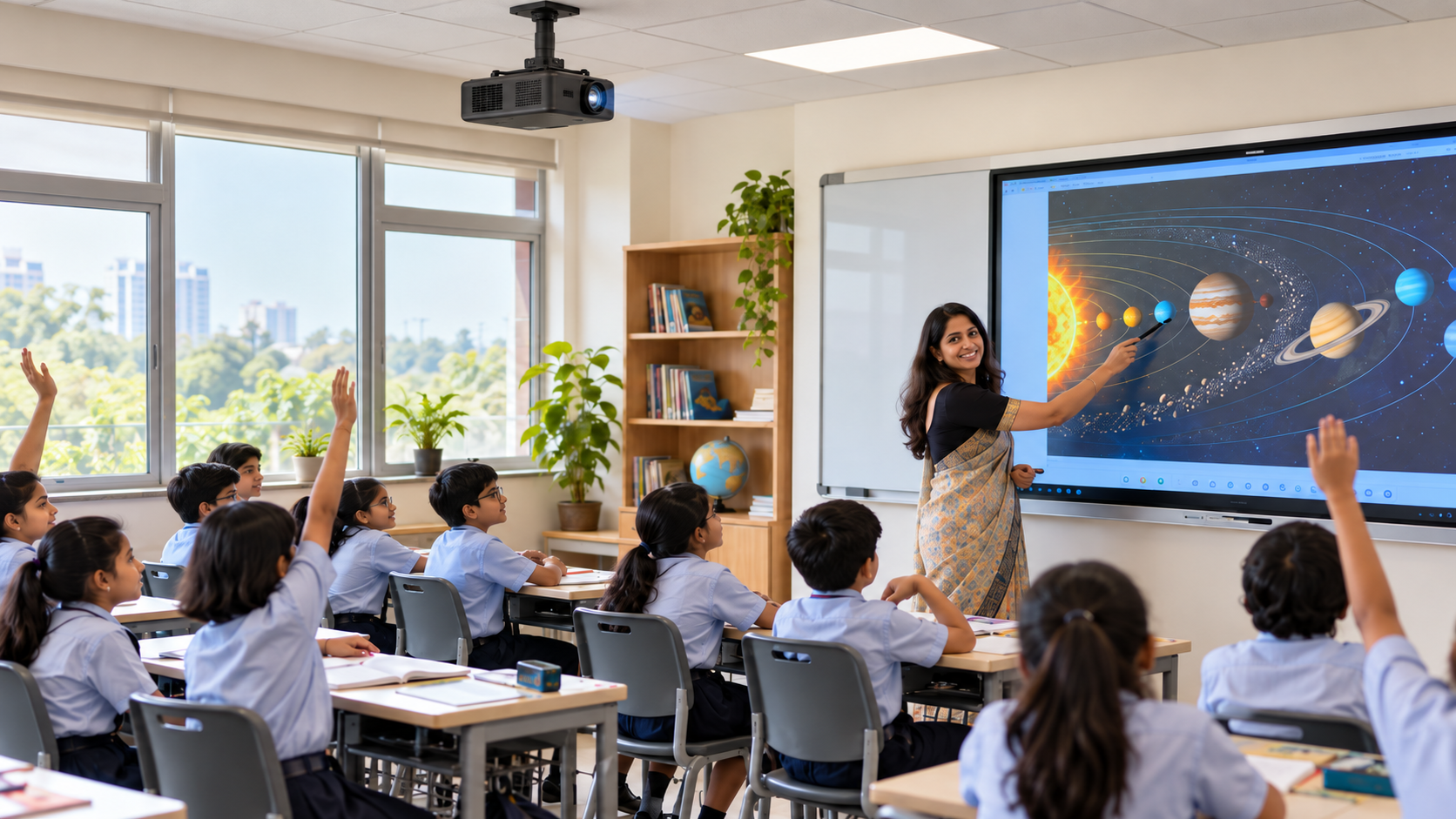
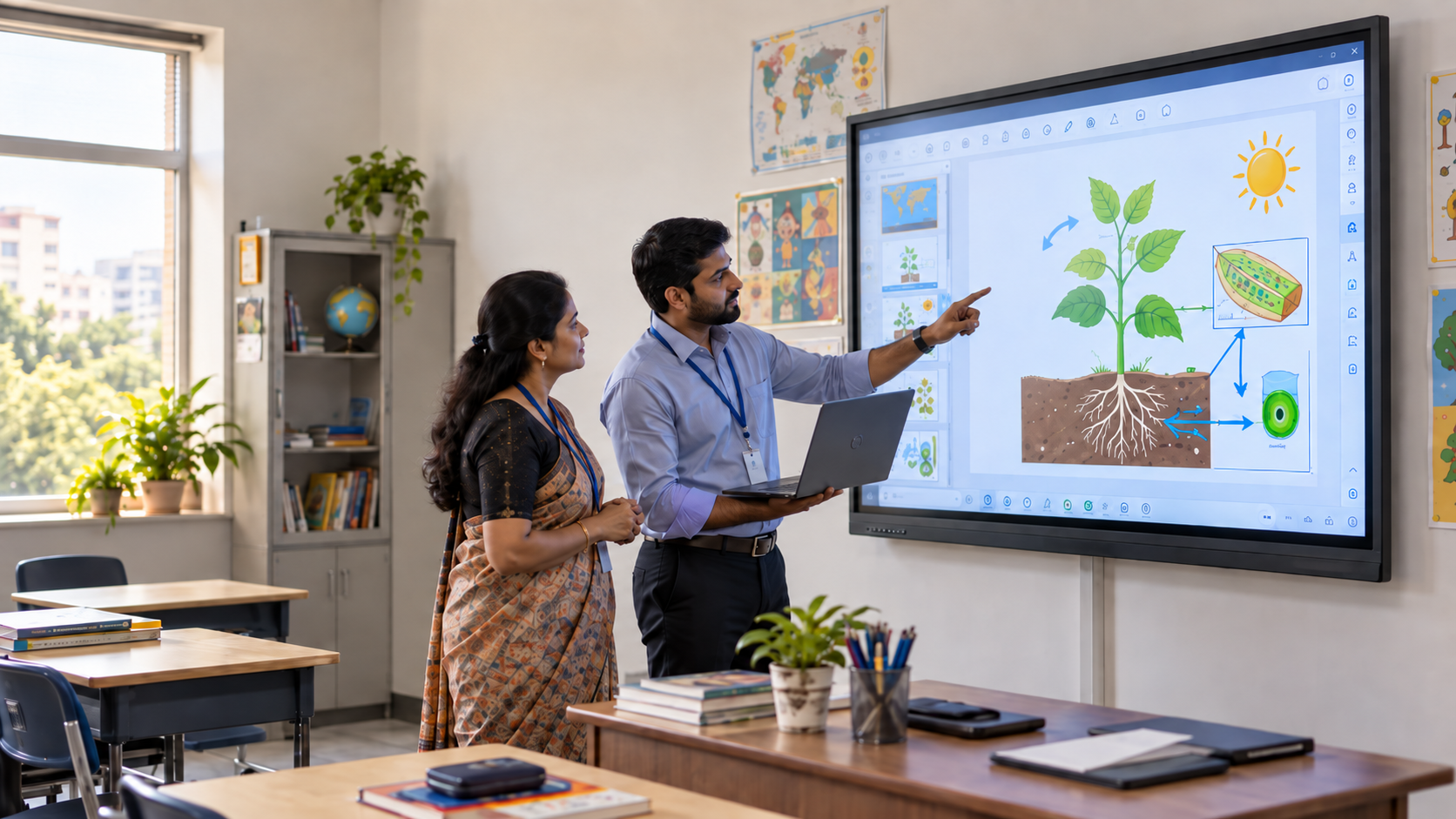
In a modern digital classroom, you don't have to rely on words alone. You can show a video of rain forming in clouds. The student sees the process. The concept clicks instantly. The language doesn't matter anymore because the visual has done the heavy lifting.
Once they understand the "what," you can introduce the English word for it. The fear is gone because the understanding is already there.
Taking the Fear Out of Pronunciation
Language gaps often start with shame. Students are terrified of saying a word wrong. They don't want to be laughed at, so they stop participating.
A smart classroom gives them a safe way to practice.
You can use audio tools to play the correct pronunciation of a word. The student can listen to it ten times if they need to. They can whisper it along with the recording until they feel ready. It’s a private practice in a public space.
You can also use text-to-speech features. If a paragraph looks intimidating, let the system read it out loud. Hearing the rhythm of the sentence helps them decode the meaning much faster than staring at a silent page.
The Power of Real-Time Translation
One of the most practical smart classroom solutions is the ability to write directly over the lesson.
Imagine you are teaching a history lesson. The text is full of difficult dates and terms. Instead of stopping to check a dictionary, you can write the local translation right on the board, on top of the English word.
This creates a bilingual experience. You aren't replacing English. You are supporting it. You are validating their mother tongue and using it as a ladder to reach the new language. It shows the student that their home language is an asset, not a hurdle.
Reducing the Fatigue of Repetition
Remedial teaching is exhausting work. You often have to teach the same topic five different ways to make it stick. It drains your energy.
A smart classroom can carry some of that weight.
Teachers can access a library of content in regional languages. If a science concept is just too hard to explain in English, play a quick explainer video in Hindi or Kannada. Let them get the concept clear first.
This saves your voice and your time. It ensures the student isn't just memorizing English words but actually understanding the subject.
Letting Them Watch It Again

Slow learners need time. In a normal class, once you say a sentence, it's gone. If they missed it, they missed it.
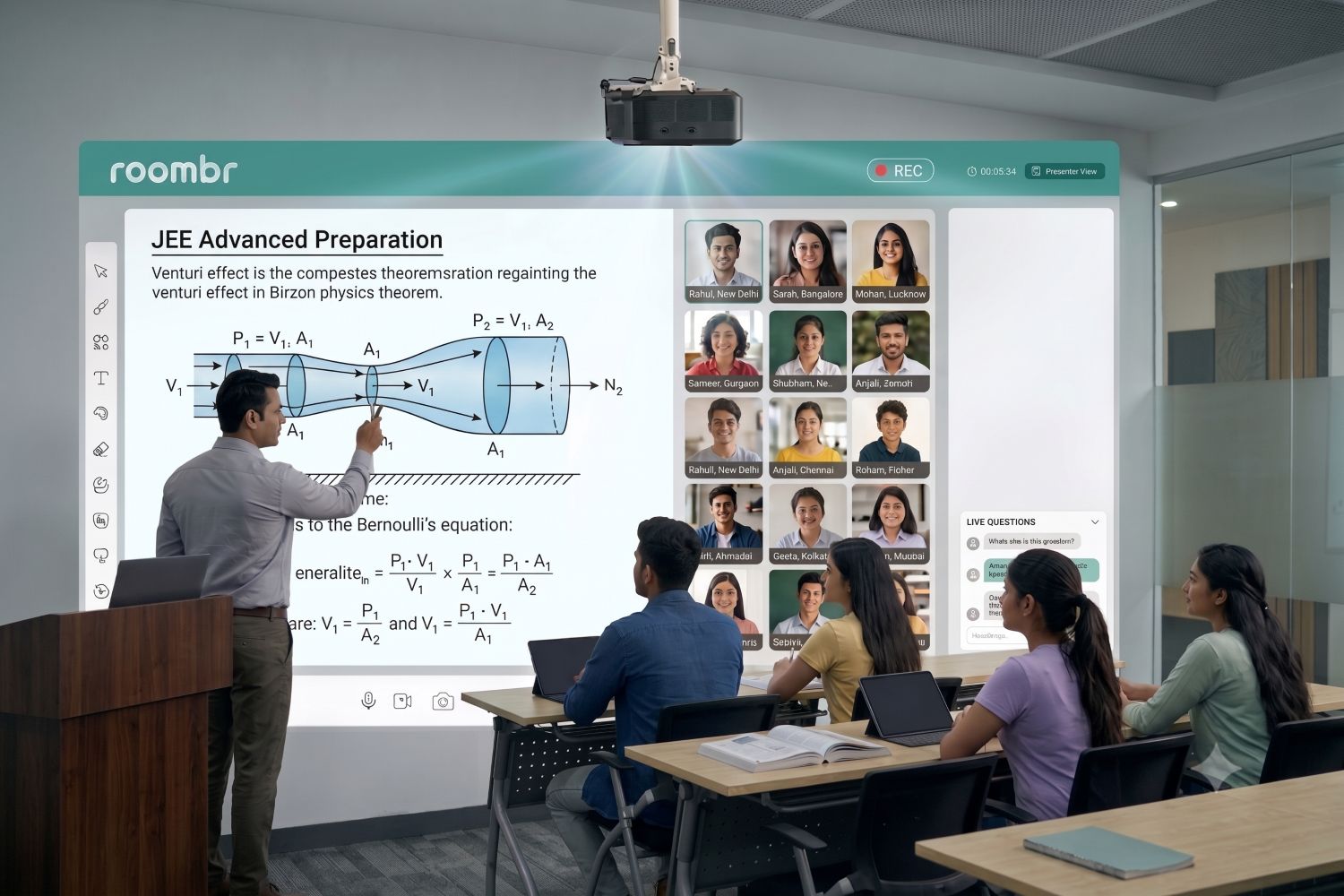
A digital classroom changes that. You can record your remedial sessions.
This is a game-changer for students who process information slowly. They can go back and watch the recording. They can pause you. They can rewind and listen to your explanation in their local language as many times as they need. It gives them control over their own learning pace.
Building a Space Where Everyone Belongs
The goal of remedial teaching isn't just better test scores. It is about confidence.
When a student sees their own language on a high-tech smart classroom screen, it sends a message. It tells them they belong here. It tells them that technology is for them too.
They stop seeing themselves as weak students. They start seeing themselves as capable learners who just needed a different path.
The Bottom Line
The language barrier is one of the biggest reasons students fall behind in Indian schools. It pushes bright kids into the remedial pile. But we don't have to accept that.
We can use technology to turn language from a wall into a bridge. We can use visuals, audio, and bilingual support to make learning accessible. When we do that, we aren't just teaching a syllabus. We are making sure no child is left behind because of the words we use.
Frequently Asked Questions
1. How does a smart classroom help with regional languages?
It allows teachers to display content in both English and local languages. They can also use audio tools to help with translation and pronunciation.
2. Is a digital classroom expensive for rural schools?
Not necessarily. Many smart classroom solutions, such as Roombr Digital Classroom, are designed to be low-cost and energy-efficient. They work well even with basic infrastructure.
3. Can these tools help with English fluency?
Yes. By connecting English words with regional meanings and visuals, students learn English faster and with less stress.
4. Do teachers need special training for this?
Basic training is enough. Most systems are designed to be intuitive and easy to use for any educator.
Don't let language hold your students back. See how Roombr creates an inclusive, modern digital classroom that speaks everyone’s language. Visit our website to learn more.

Foziya Abuwala
Share
Step Into the future of
Education with Roombr