

In 2026, the landscape of Indian education is undergoing a seismic shift. From K-12 schools to premier universities, the one-size-fits-all lecture is being replaced by a more fluid, responsive model. As institutional leaders strive to meet the ambitious mandates of NEP 2020, two terms have emerged as the frontrunners of this transformation: personalized learning and adaptive learning.
While they are often used interchangeably, they represent two distinct pillars of a modern digital smart classroom. Understanding the difference is no longer just a technical requirement for IT departments. It is a strategic necessity for any educator aiming to improve student outcomes and institutional reputation.
The Shift Toward Individualized Education
The traditional factory model of education was designed for a different era. In a typical 20th-century classroom, a single teacher delivered a uniform lesson to a diverse group of students, hoping to reach the average. However, recent neuroscientific research has confirmed what educators have long suspected: the average student is a myth. Every learner possesses a jagged profile of strengths and weaknesses that a standardized curriculum simply cannot accommodate.
In 2026, the smart class evolution has moved beyond simple digitisation. It is now about precision. High-performing institutions are increasingly adopting innovative teaching methods that treat every student as an individual. This transition is not just about technology. It is about a fundamental shift in how we define academic success. By moving toward a student-centered model, institutions can reduce mental dropout rates and ensure that every learner, regardless of their starting point, reaches their full potential.
What Is Personalized Learning
At its core, personalized learning is a pedagogical philosophy that places the student at the center of the educational ecosystem. It is an approach where instruction, pace, and the learning environment are tailored to the unique needs, interests, and aspirations of each learner.
Unlike traditional models, personalized learning gives students voice and choice. It acknowledges that while the destination (the learning objective) may be the same for the entire class, the route taken can vary. In a personalized environment, students are not passive recipients of information. They are active participants who take ownership of their learning. This might involve choosing between different project topics, selecting a preferred medium for a presentation, or working at a pace that allows for deep mastery rather than just superficial coverage.
What Is Adaptive Learning

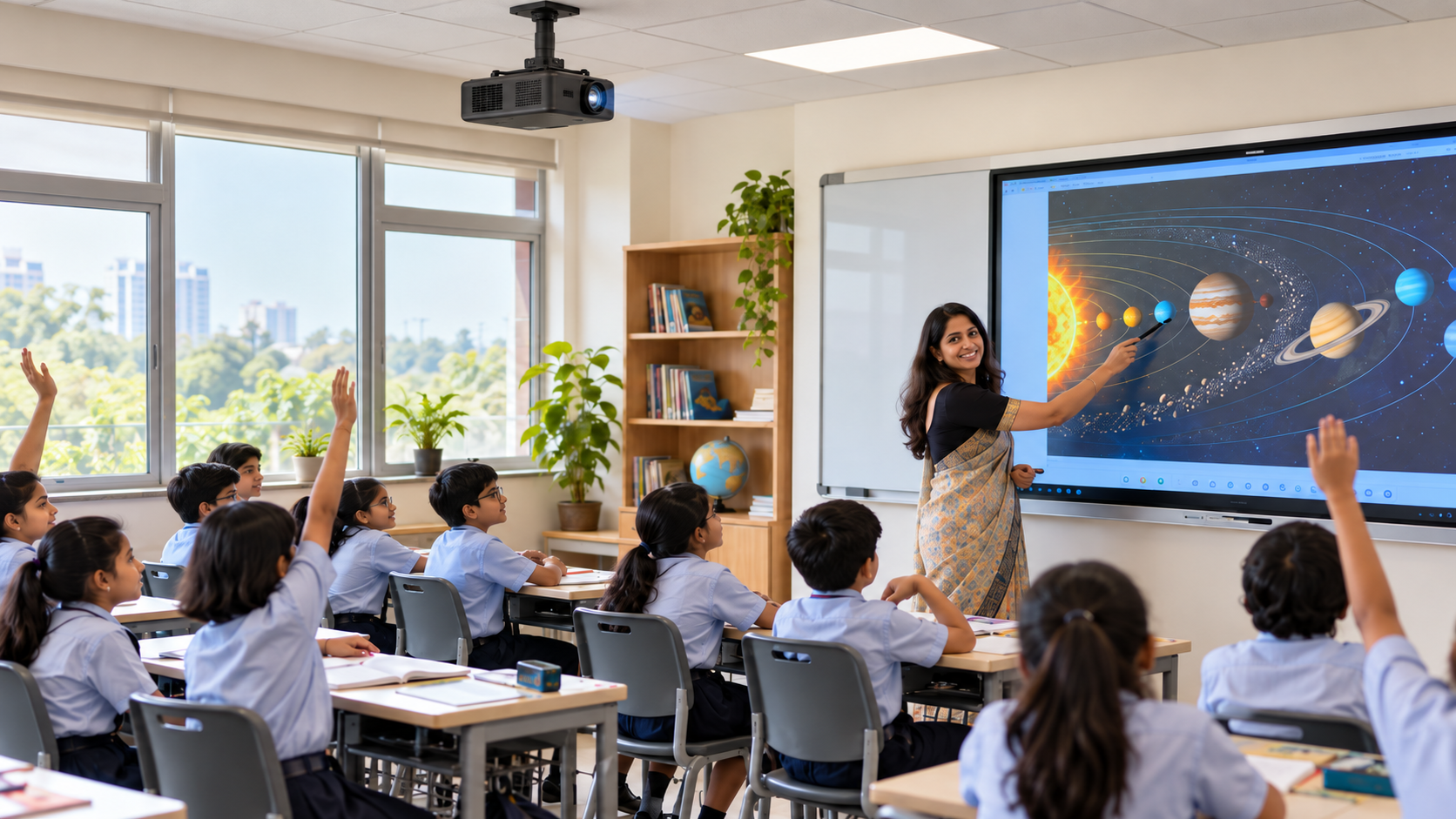
Source: Freepik
If personalization is the philosophy, adaptive learning is often the high-powered engine that makes it scalable. Adaptive learning is a technology-driven method that utilizes sophisticated AI algorithms to adjust the difficulty, sequence, and type of content in real-time based on a student’s performance.
Think of it as a high-speed GPS for education. As a student interacts with a digital smart classroom platform, the system gathers thousands of data points. If a student answers a question incorrectly, the system doesn't just move on. It adapts by offering a remedial video, a simpler practice problem, or a different pedagogical explanation. This happens instantaneously, providing the kind of one-on-one attention that was previously only possible with a private tutor.
Primary Benefits of Personalized Learning
The move toward personalized learning offers transformative benefits that extend far beyond simple academic scores.
- Fostering Student Agency: When students have a say in how they learn, their intrinsic motivation skyrockets. They stop asking "Why am I learning this?" and start seeing education as a tool for their own goals.
- Reduced Anxiety and Stigma: In a personalized setting, progress is private. A student who needs more time on a concept can take it without the public embarrassment of falling behind the rest of the class.
- Preparation for the Future Workforce: The modern economy values self-regulation, critical thinking, and independent problem-solving—all skills that are naturally developed in a personalized environment.
- Multimodal Engagement: It allows for effective teaching strategies that cater to visual, auditory, and kinesthetic learners simultaneously, ensuring that no student is excluded due to their learning style.
Primary Benefits of Adaptive Learning
Adaptive learning provides the technical infrastructure to make individualization possible in large, diverse Indian classrooms.
- Efficiency at Scale: Managing a class of 40 or a lecture hall of 200 is challenging. Adaptive systems handle the repetitive drill and practice and remedial needs, allowing the teacher to focus on high-impact mentorship.
- Standardizing Mastery: It ensures that every student reaches a baseline of competency. No one is allowed to move to Unit B with a shaky foundation in Unit A.
- Data-Driven Transparency: For institutional leaders, the importance of AI in education lies in the data. Educators receive a real-time pulse check on the entire class, identifying exactly which students are struggling with which concepts before the exam day arrives.
- Inclusivity: These systems can automatically adjust for language barriers or accessibility needs, providing a more equitable experience for first-generation learners and physically-challenged students.
How Personalized Learning Works
Implementing personalized learning effectively requires a blend of cultural change and structural flexibility.
- Learner Profiles: It begins with a deep understanding of each student—not just their grades, but their interests, cultural background, and career aspirations.
- Personalized Learning Pathways: Teachers and students collaborate to set individual goals. A student interested in engineering might explore physics through a different set of projects than one interested in sports science.
- Competency-Based Progression: The calendar no longer dictates the curriculum. Students move forward based on proven mastery. This often involves innovative teaching methods like Choice Boards or project-based learning, where students document their own growth.
- Flexible Learning Spaces: Whether in a physical room or a virtual classroom, the environment is designed to support different activities, quiet individual study, peer-to-peer tutoring, and teacher-led seminars, all happening at once.
How Adaptive Learning Works
The mechanics of adaptive learning are rooted in data science and cognitive psychology.
- The Pre-Test (Identifying Gaps): Most adaptive systems start by identifying a student's unconscious incompetence. This is the stuff they think they know but actually don't.
- Continuous Data Collection: As the student works, the system tracks everything—how long they take to read a paragraph, which hints they click on, and where they hesitate.
- Algorithmic Adjustment: Based on this data, the AI makes a decision: "Does this student need a harder challenge or a simpler explanation?"
- The Feedback Loop: The student receives instant feedback. This tight feedback loop is critical for building confidence and ensuring that errors are corrected in the moment of learning, not weeks later during a graded assessment.
Why Institutions Need a Strategic Blend of Both
In 2026, the most successful Indian institutions are not choosing one over the other. Instead, they are finding that the importance of AI in education is best realized when adaptive technology and personalized learning pedagogy work in tandem.
Adaptive technology provides the speed and the data. It acts as the tutor that handles the foundational skills and rote practice. This frees the human educator to do what a machine cannot: provide empathy, inspire creativity, and facilitate collaborative learning.
When you combine the two, you create a digital smart classroom that is both high-tech and high-touch. The machine ensures that the student has the "know-how," while the teacher ensures they have the "know-why" and the "know-how-to-apply." This blend is the only way to meet the diverse needs of the Indian student population while staying within the logistical realities of modern schooling.
Effective Teaching Strategies for 2026
To thrive in this new environment, educators must adopt a new toolkit of effective teaching strategies.
- Flipped Classroom 2.0: Use adaptive platforms for home-study of theoretical concepts. Use valuable class time for active debate, hands-on labs, and collaborative projects.
- Dynamic Grouping: Use the data from your smart class hub to group students not by age, but by current mastery level or common interests for a specific afternoon.
- Facilitation over Dissemination: The teacher's role shifts from being the sage on the stage to a guide. This involves asking the right questions rather than just providing all the answers.
- Integrating Collaborative Learning: Personalization does not mean isolation. Use group-based tasks where students must combine their individual strengths to solve a complex, real-world problem. This ensures that social and emotional skills are built alongside academic ones.
Final Insights
The evolution of the smart class in 2026 and beyond is a journey from technology-as-a-tool to technology-as-an-enabler. While adaptive learning provides the data-driven precision to ensure no student falls behind, personalized learning provides the human-centered framework to ensure every student can lead.
For institutional leaders, the message is clear: the future of education is not about the hardware on your walls, but about the flexibility of your pedagogy. By embracing innovative teaching methods and recognizing the importance of AI in education, you can transform your institution into a hub of 21st-century excellence. In this new era, the goal is simple yet profound. It is to create an environment where every student is seen, every student is heard, and every student is given a unique path to success.
Frequently Asked Questions
1. What is the primary difference between personalized and adaptive learning?
The main difference lies in the driver of the learning path. Adaptive learning is technology-led, using AI algorithms to automatically adjust content based on real-time data. In contrast, personalized learning is student-led, empowering learners to customize their goals, pace, and style of delivery with teacher guidance.
2. How does the importance of AI in education impact Indian schools in 2026?
The importance of AI in education has shifted from a luxury to a necessity for scaling NEP 2020 mandates. In 2026, AI acts as a smart tutor, allowing a single teacher to manage 40+ individual learning paths by automating remedial interventions and providing real-time analytics on student mastery.
3. Can a digital smart classroom support both adaptive and personalized learning?
Yes. A modern digital smart classroom acts as the central hub where both models converge. While adaptive software handles micro-adjustments in content difficulty, the digital hub allows teachers to implement effective teaching strategies like flipped classrooms and peer-led collaborative learning projects simultaneously.
4. What are some innovative teaching methods for a personalized classroom?
Top innovative teaching methods in 2026 include Mastery-Based Progression, where students advance only after proving deep understanding, and Flipped Classroom 2.0, which uses adaptive platforms for home theory-study and reserves campus time for active problem-solving and mentoring.
5. How do effective teaching strategies reduce teacher burnout in 2026?
By integrating personalized learning with automated tools, teachers transition from content providers to mentors. Effective teaching strategies now use AI to generate tests and track learning gaps, saving educators up to 10 hours per week that were previously spent on manual grading and administrative tasks.
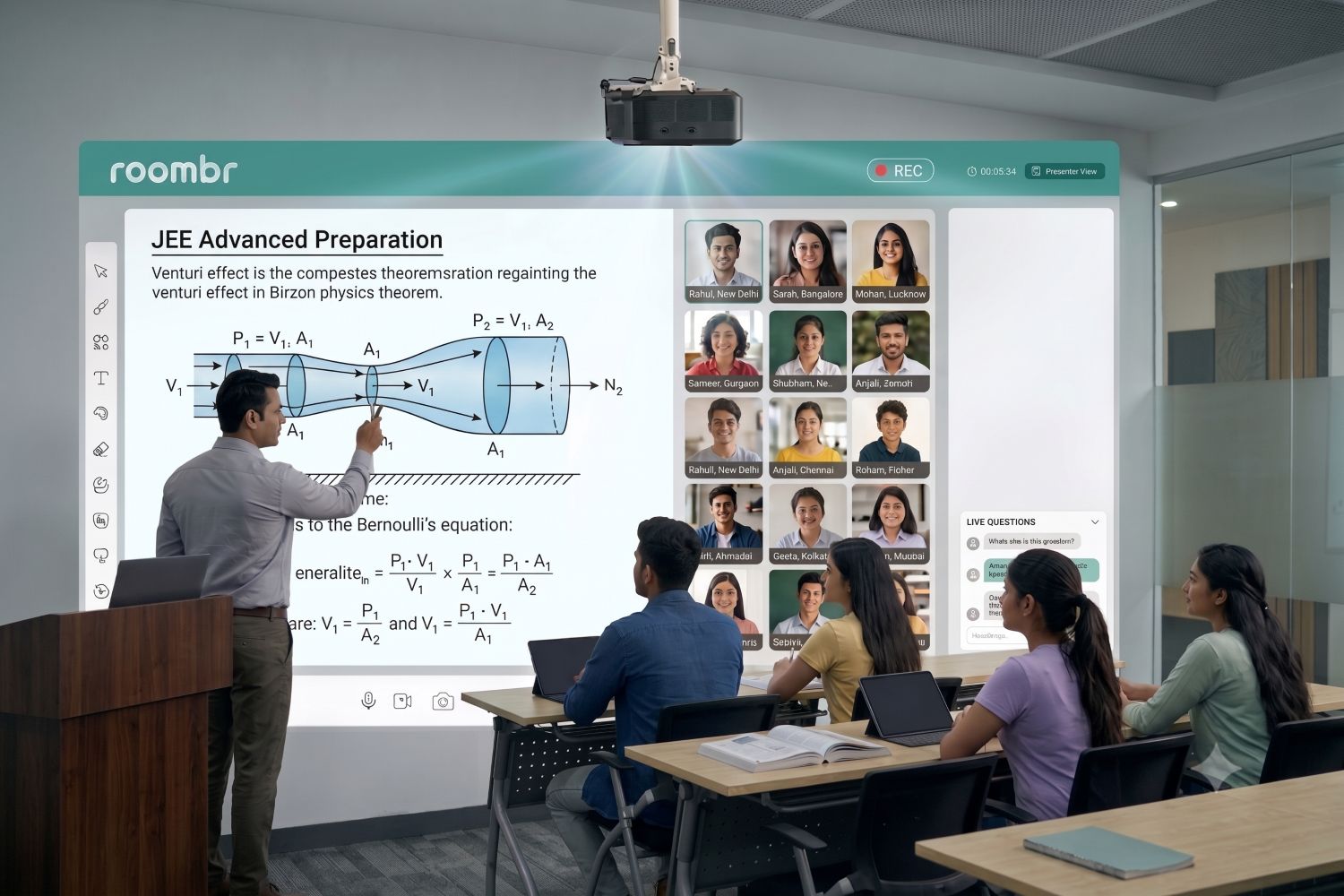
Witness how the smart class evolution makes personalization scalable for your institution. Explore how Roombr integrates these innovative teaching methods into a single, seamless digital ecosystem today.

Foziya Abuwala
Share
Step Into the future of
Education with Roombr