

Teachers often use terms like cooperative learning and collaborative learning interchangeably, assuming they mean simply "putting students in groups." But for a school leader or an academic coordinator, understanding the difference is crucial. These are two distinct pedagogical strategies with different goals, different structures, and different requirements.
More importantly, the success of both strategies depends heavily on your classroom infrastructure. In a traditional setup with fixed benches and small blackboards, group work often fails because the physical space fights against the pedagogy.
This guide explores the nuances of these methods and shows how modern technology can turn fleeting student interactions into permanent institutional assets.
What Is Cooperative Learning in the Classroom?
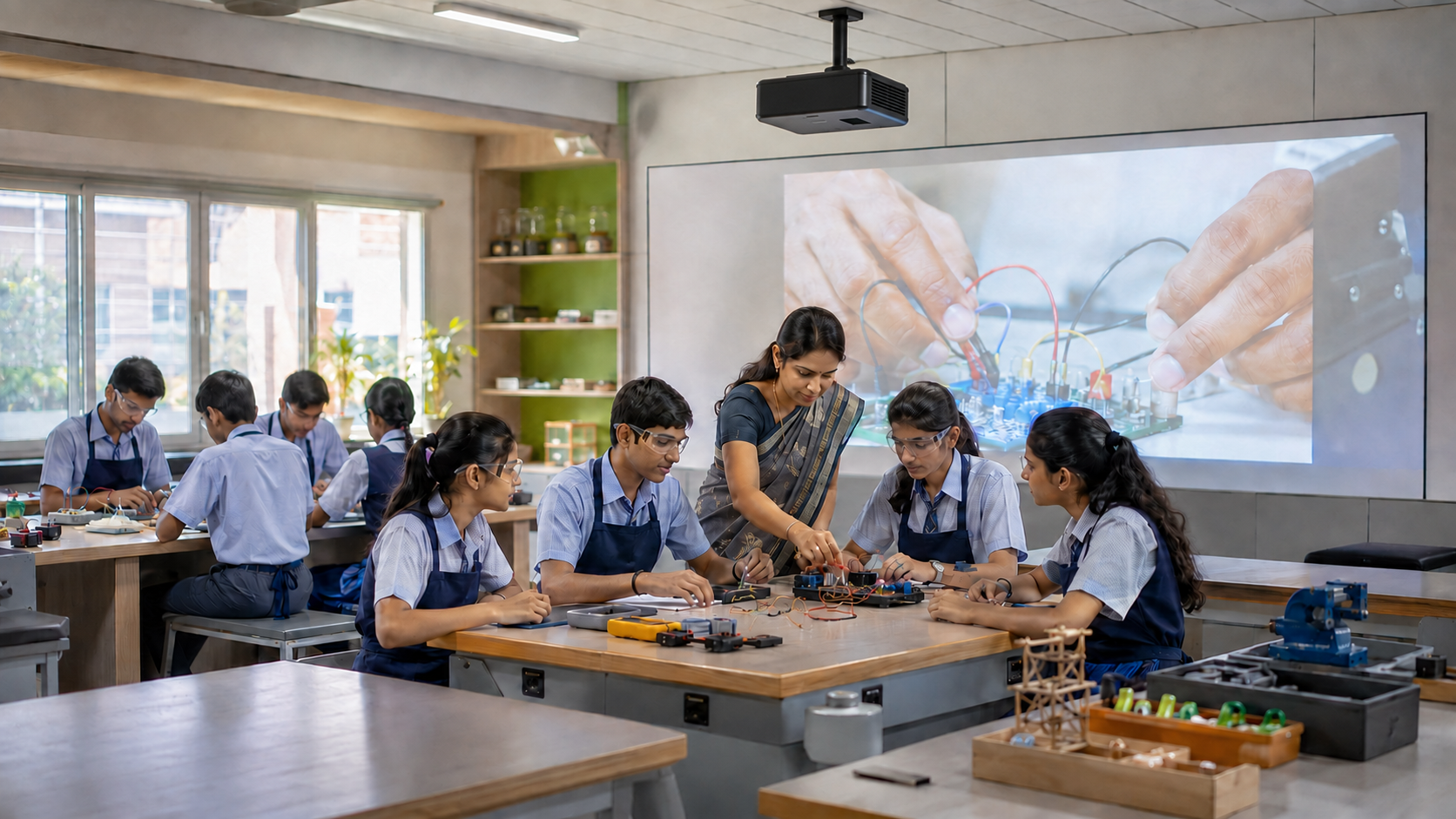
Cooperative learning is a structured, teacher-led approach where students work together in small groups to achieve a common goal. Think of it as a well-organized team where everyone has a specific job to do.
In this model, the teacher is the architect. You design the task, assign the roles, and set the rules. The focus is often on Individual Accountability. This means that while the group works together, each student is responsible for a specific part of the work. If one student doesn't do their share, the group cannot succeed.
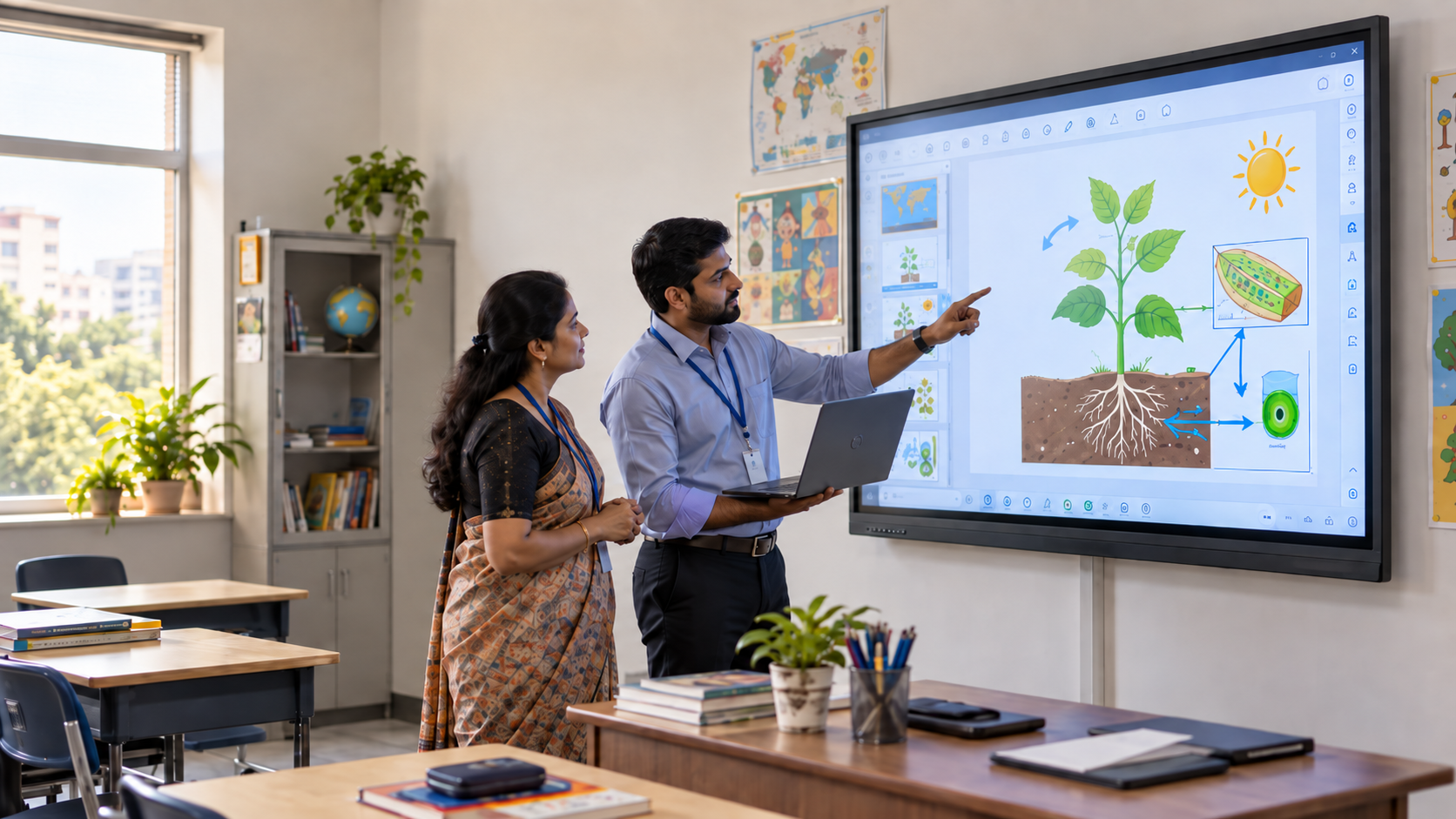
For example, in a science class, you might divide students into groups to study plant biology. One student is responsible for the roots, another for the stem, and another for the leaves. They must teach their part to the rest of the group. This is the classic "Jigsaw" method.
The primary goal of cooperative learning is to master foundational knowledge. It is highly effective for ensuring that every student, even the quiet ones, participates and understands the core material.
What Is Collaborative Learning in the Classroom?
If cooperative learning is a scripted play, collaborative learning is an improv session. It is a more fluid, student-centered approach where the teacher acts as a guide rather than a director.
In this model, students group together to explore a significant question or solve a complex problem. The key difference is that the students themselves decide how to approach the task. They negotiate their roles, determine their workflow, and wrestle with ideas.
The goal here isn't just to get the right answer but to develop critical thinking and negotiation skills. The process of working together holds as much significance as the end result.
When students engage in collaborative learning, they are not just memorizing facts. They are creating new knowledge. They are learning how to disagree respectfully, how to synthesize different viewpoints, and how to build on each other's ideas.
The Similarities Between These Methods
Before we dive into the differences, it is important to recognize why these two terms are so often confused. They share the same DNA, and both move away from the passive chalk and talk model that has dominated Indian education for decades.
Both methods rely on active engagement. In both scenarios, the teacher steps away from the front of the room and moves among the students. Both strategies aim to improve social skills and communication. Most importantly, both methods shift the responsibility of learning from the teacher to the student.
Whether you are using a strict cooperative learning structure or an open-ended collaborative project, the fundamental belief is the same: we learn better when we learn together.
Cooperative Learning vs Collaborative Learning: Key Differences
While they share a foundation, the execution of these two methods is different. Choosing the right one depends on what you want your students to achieve.
Here is a quick breakdown of how they differ:
- Structure: Cooperative learning is highly structured. The teacher defines the roles, the steps, and the timeline. Collaborative learning is loosely structured. The students define their own path.
- Authority: In a cooperative setup, the teacher retains control over the process. In a collaborative setup, the students share authority and ownership of the process.
- Outcome (Goal): Cooperative learning usually aims for a specific, correct solution or a completed task. Collaborative learning often aims for a creative solution or a new understanding of a concept.
- Assessment: In cooperative models, students are often graded on their individual contributions. In collaborative models, the group's collective performance is often the focus.
Why Traditional Classrooms Struggle with Group Work
If these methods are so effective, why do teachers often hesitate to use them? The answer often lies in the infrastructure.
Conducting cooperative learning in a standard classroom is a logistical nightmare. You have 40 students packed into rows of heavy wooden desks. Asking them to get into groups takes ten minutes of noisy furniture moving. Once they are in groups, they are huddled over a single notebook or a small piece of chart paper.
The physical limitations create a bottleneck.
- Lack of Visibility: The teacher cannot see what every group is doing simultaneously.
- The Huddle Problem: When five students try to work on one small sheet of paper, two students do the work while three watch. This isn't collaboration; it's passive observation.
- Loss of Data: The biggest commercial loss for a school is that the magic of group work vanishes. The questions asked, the diagrams drawn, and the problems solved are erased at the end of the class.
This is where the concept of digital collaboration in classroom environments becomes a game-changer.
Transforming Student Interactions into Digital Assets
Schools may view "assets" as physical things—buildings, buses, and labs. But your most valuable asset is the knowledge created inside your classrooms every day.
When a group of students solves a complex math problem using a unique method, that is an asset. When a debate team outlines a brilliant argument, that is an asset. In a manual classroom, these moments are lost. In a Roombr-enabled classroom, they are captured forever.
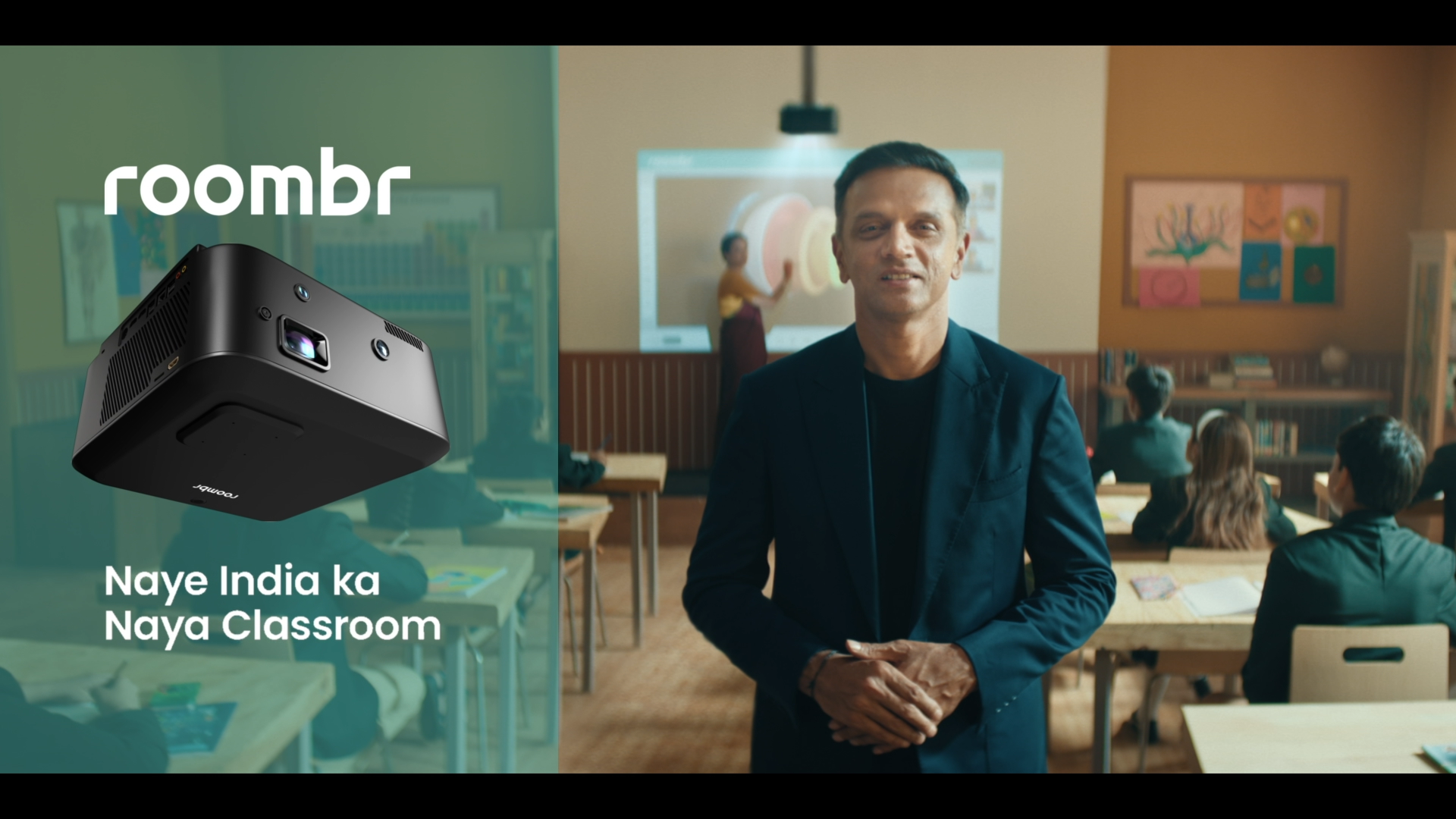
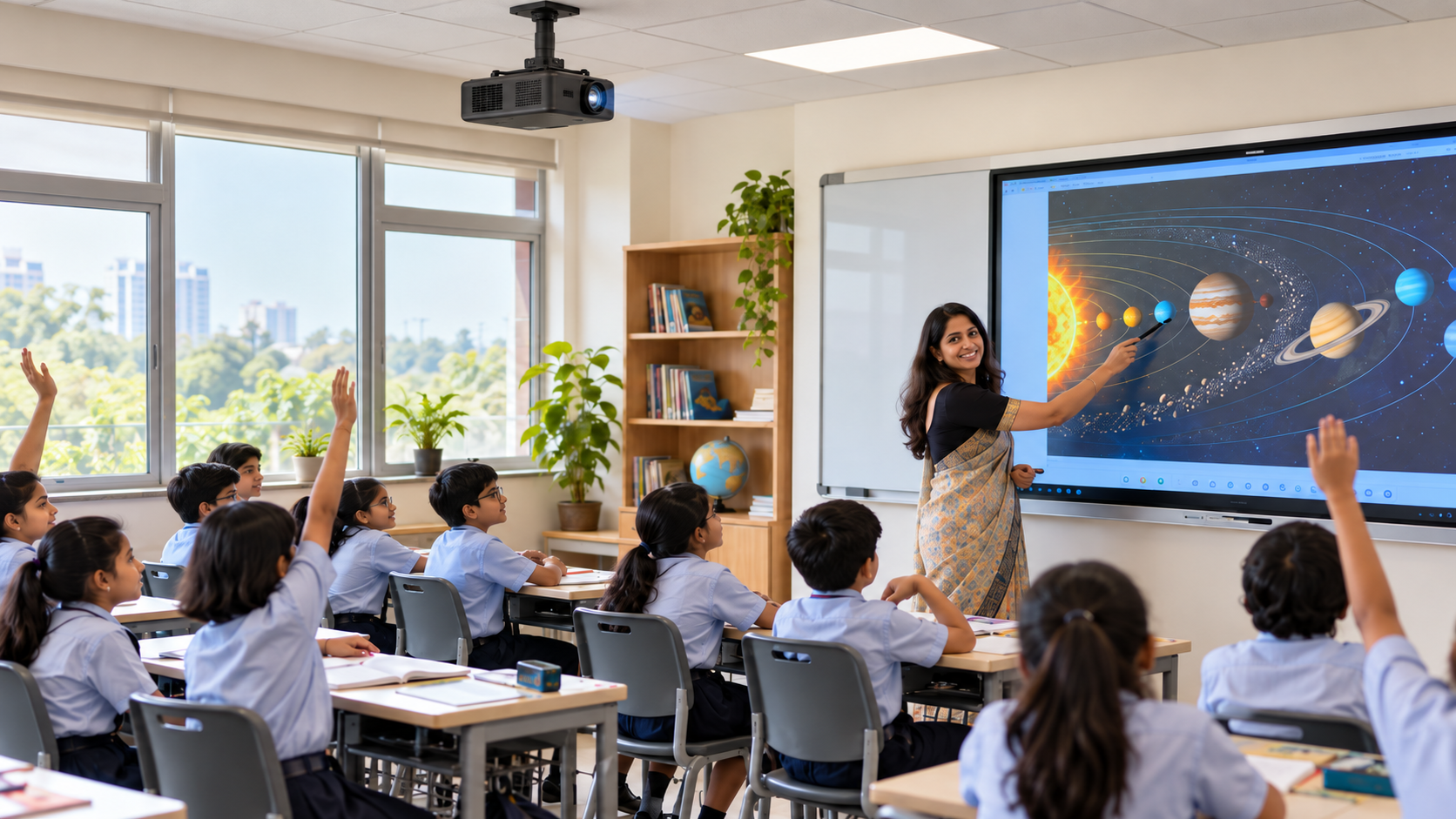
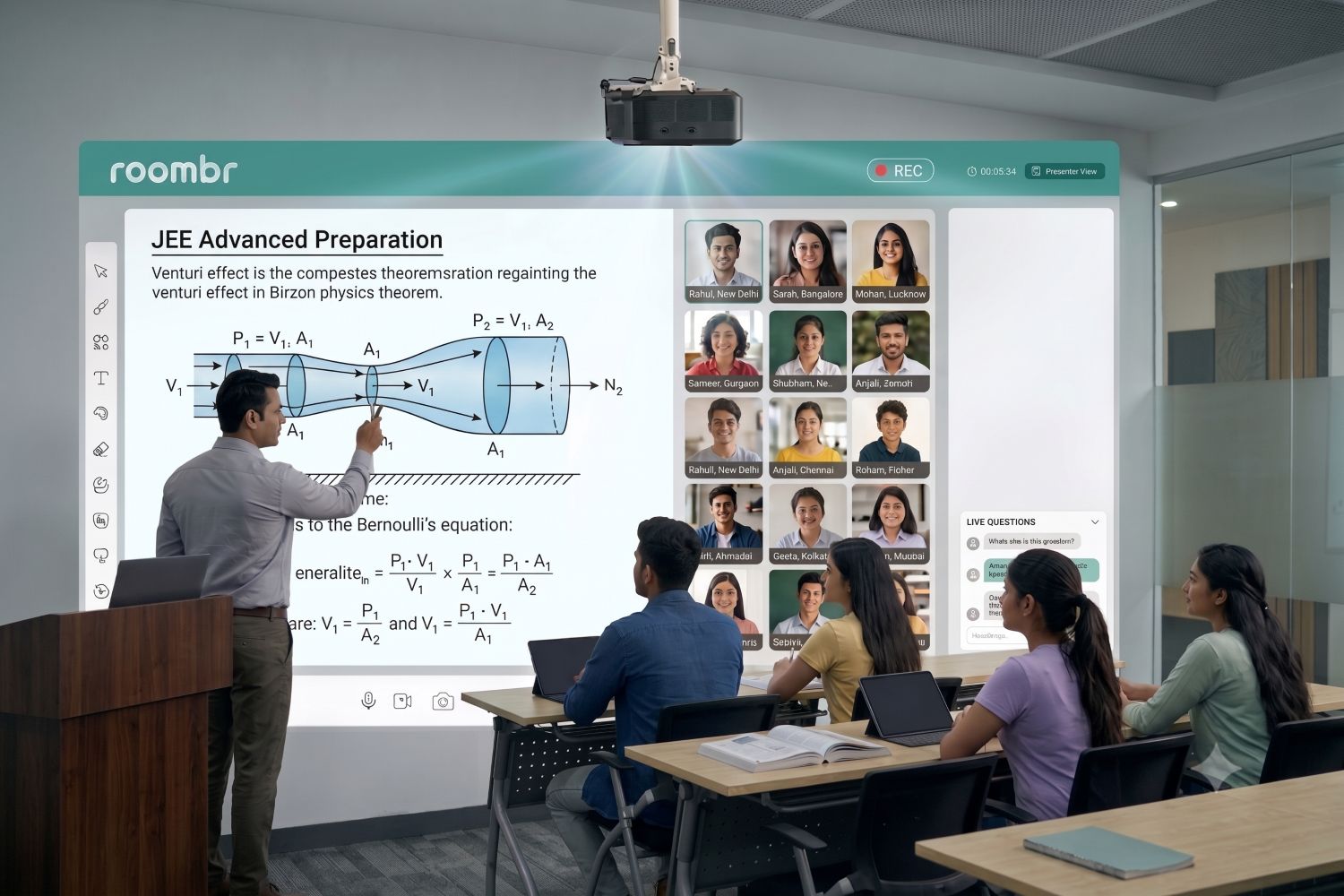
Roombr transforms the classroom wall into a massive 200-inch interactive surface. This isn't just a screen; it is a learning space. It allows multiple students to stand at the wall and write, draw, and interact with the content.
Because Roombr records the entire session, including the digital writing on the wall and the audio in the room, every cooperative learning session becomes a reusable video in your school's library. You are not just teaching a class; you are building a repository of student-generated content that future batches can learn from.
Practical Examples for Your School
If you are a principal or an academic director looking to implement these strategies, here is how you can visualize them in a Roombr classroom.
A Cooperative Example: The Math Relay
Topic: Quadratic Equations
Setup: The teacher divides the class into teams.
The Task: Each team must solve a multi-step equation.
The Roombr Edge: The screen is split into vertical columns, one for each team. One student from each team runs to the wall, completes the first step of the equation, and hands the digital stylus to the next teammate. The large surface allows the entire class to watch the logic unfold.
The Asset: The teacher saves the final screen. The school now has a step-by-step visual guide on solving these equations, authored by the students themselves.
A Collaborative Example: The Environmental Summit
Topic: Climate Change Solutions for Mumbai
Setup: Students work in groups to propose a solution for rising sea levels.
The Task: Create a visual plan and defend it.
The Roombr Edge: Students pull up maps of Mumbai on the giant wall. They overlay sketches of sea walls, drainage systems, and green zones. They use the internet browser on the wall to pull real-time data. They debate which areas to save.
The Asset: The entire brainstorming session, the maps, the sketches, and the arguments recorded by the dual cameras are saved. This video becomes a case study for the next year's geography batch.
Choosing the Right Approach
So, should you prioritize cooperative learning or collaborative learning? The answer is both.
A holistic curriculum requires a balance. You need cooperative learning to ensure students build a strong foundation of facts and skills. You need collaborative learning to teach them how to apply those facts in chaotic, real-world situations.
The mistake schools make is trying to force these modern pedagogies into outdated infrastructure. You cannot expect 21st-century collaboration in a 19th-century classroom setup.
Making the Shift
Investing in technology like Roombr is not just about buying hardware. It is about enabling a shift in culture. It is about moving from a classroom where knowledge is consumed to a classroom where knowledge is created and captured.
By providing the physical and digital space for cooperative learning, you are telling your students that their interactions matter. You are validating their peer-to-peer teaching. And by recording these sessions, you are telling them that their work is worth saving.
In the competitive landscape of Indian education, learning outcomes are the ultimate metric. Schools that facilitate active, engaged, and documented group work will always outperform those that rely on passive instruction.
Whether you are looking to improve student engagement, boost exam results through peer revision, or simply modernize your teaching methods, the path forward involves bringing students together. And to do that effectively, you need a wall big enough to hold all their big ideas.
Frequently Asked Questions
1. Are cooperative and collaborative learning the same?
No. Cooperative learning relies on structured roles and teacher direction to complete tasks, while collaborative learning focuses on student-led exploration and shared authority over the process.
2. How do I choose between cooperative and collaborative learning?
Use cooperative learning when your goal is to master specific facts or foundations. Use collaborative learning for open-ended problem solving, brainstorming, and developing critical thinking skills.
3. What are the main challenges of collaborative learning?
Common hurdles include unequal student participation, difficulty in monitoring multiple groups, high noise levels, and a lack of individual accountability without the right classroom tools.
4. Why is collaborative learning important for students?
It moves beyond rote memorization to build essential soft skills. It teaches negotiation, teamwork, and complex problem-solving, which are vital for future career success.
5. What are some effective cooperative learning strategies?
Popular structured methods include Think-Pair-Share, the Jigsaw technique, and Round Robin. These strategies ensure that every student has a specific role and actively participates.
6. How can I implement cooperative learning effectively?
Start by setting clear group goals. Assign specific roles (like leader or scribe) to each student and use classroom technology to track and display their collective work.
Partner with Roombr: The Future of Your Digital Classroom
Is your institution ready to move beyond the limitations of traditional teaching? Don't let outdated infrastructure hold back your students' potential.
As your dedicated edtech partner, Roombr transforms ordinary walls into immersive, 200-inch interactive workspaces. We don't just supply hardware; we build a holistic digital classroom ecosystem where every collaborative moment is captured, recorded, and turned into a permanent learning asset.
Join the league of forward-thinking schools that are redefining education in India. Upgrade to a wall-to-wall learning experience today.
Book a free Roombr demo now and see the difference.

Foziya Abuwala
Share
Step Into the future of
Education with Roombr