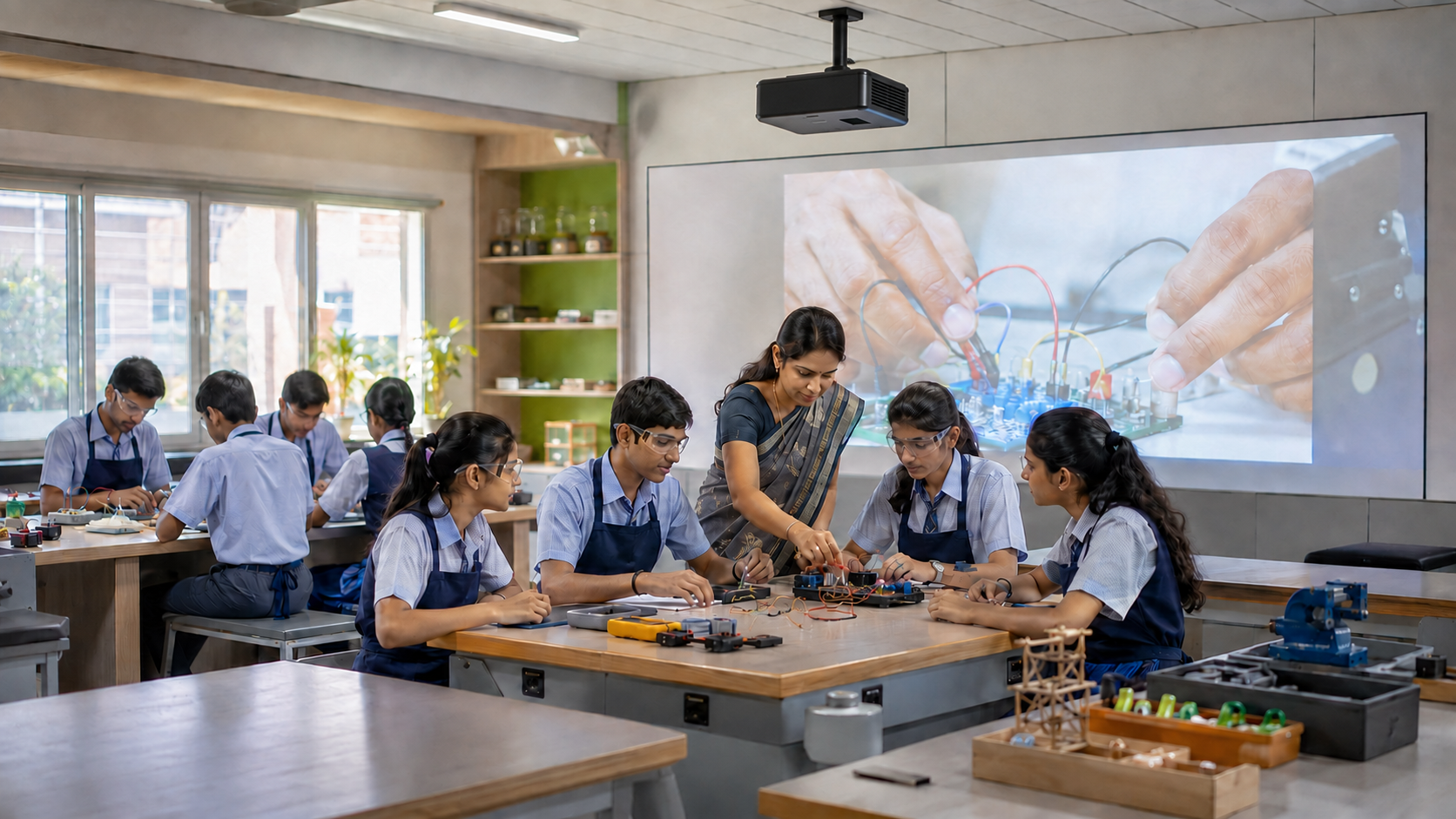

It's 11:40 on a Tuesday. A student in the third row has gone quiet — not disruptive, not raising a hand, just gone. The class continues because the schedule leaves little room to pause. Forty minutes, one teacher, thirty-plus students, and a syllabus that doesn't leave room to stop and ask how anyone is actually doing.
This is the daily reality behind Social-Emotional Learning (SEL) in Indian classrooms. Everyone agrees it matters. Almost no one has built-in time for it.
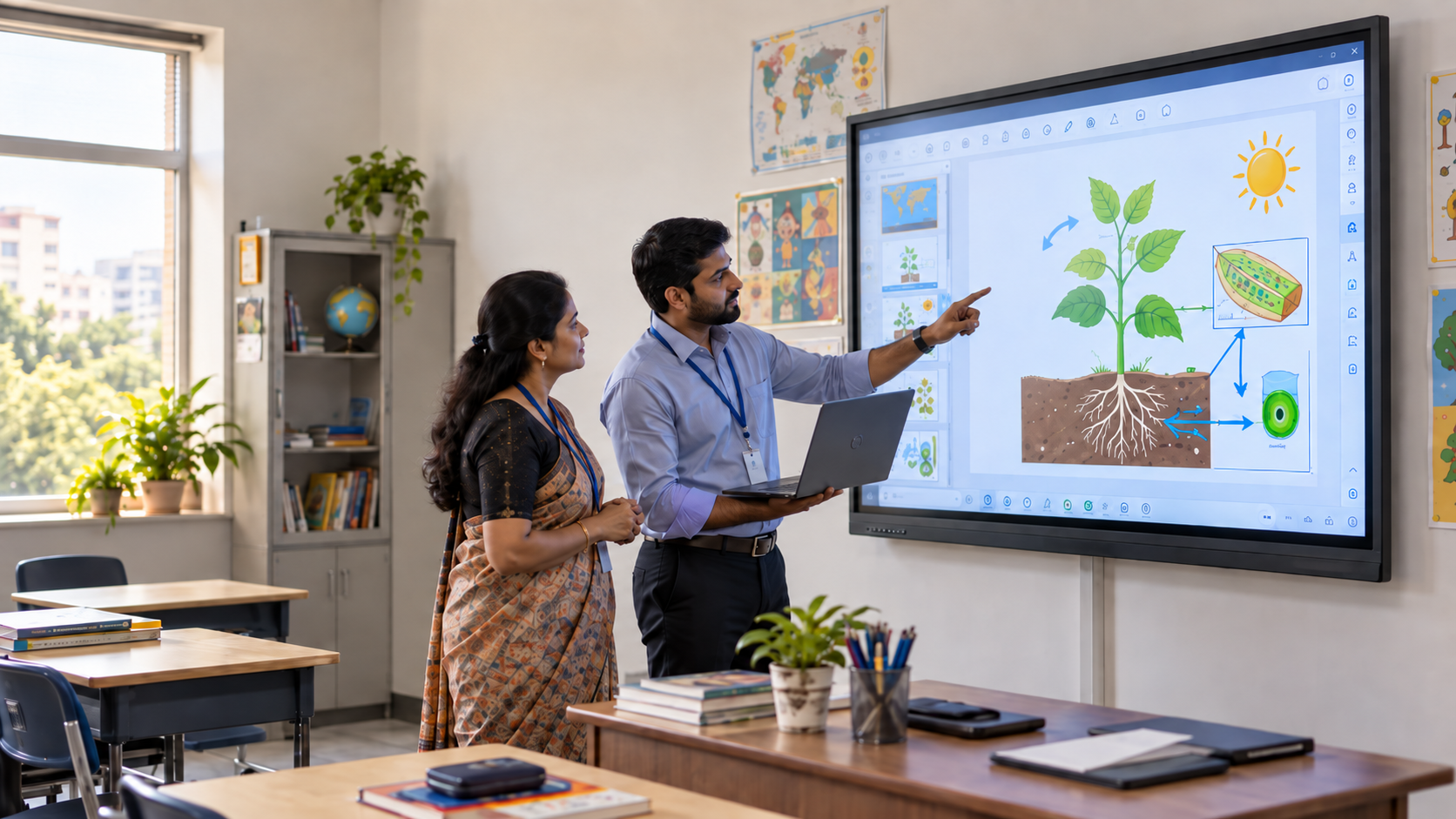
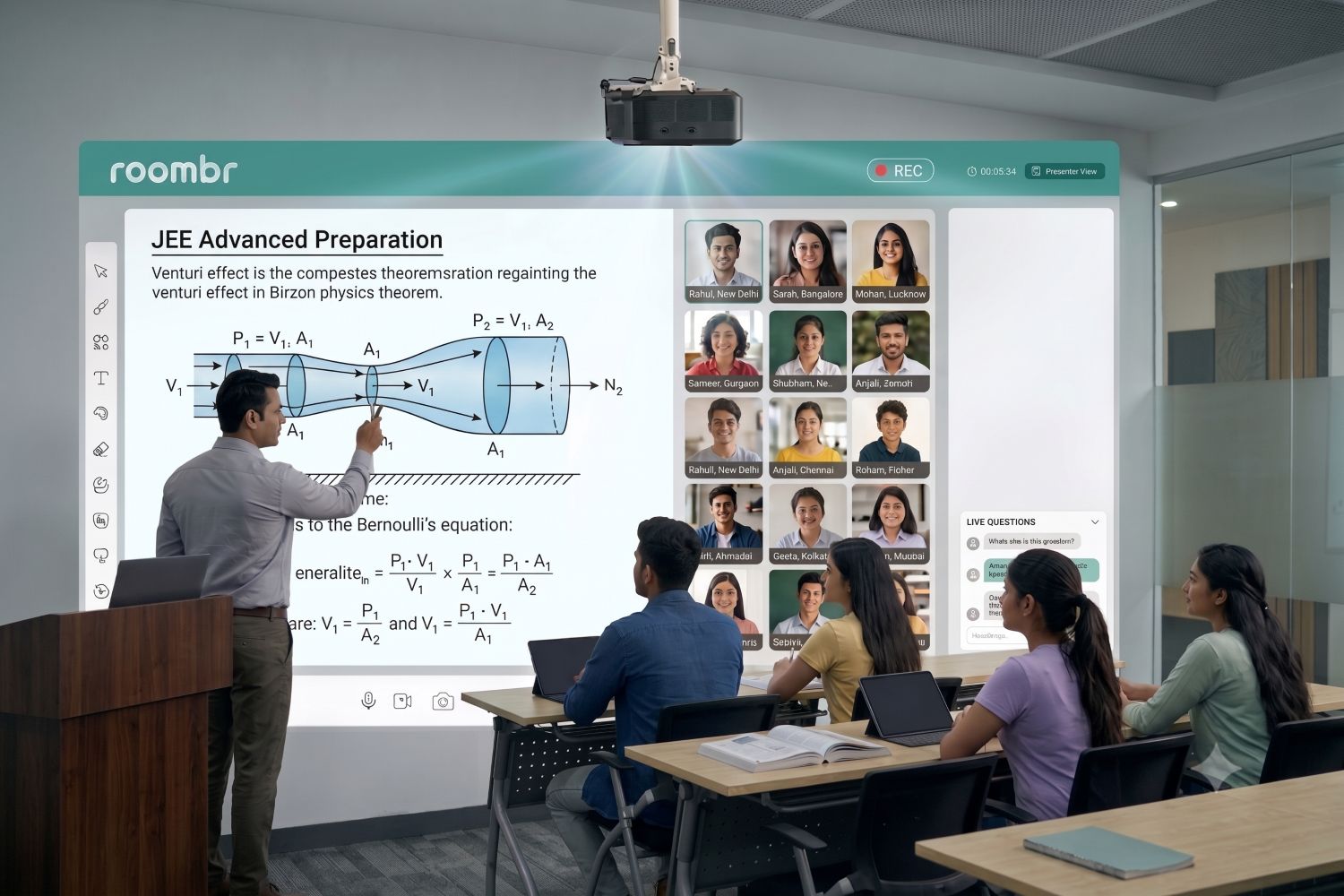
Most schools treat this as a resourcing problem — hire a counselor, add a period, buy a separate program. But a digital board already built for annotation, touch, and recording can carry a class through SEL just as easily as it carries a chapter of geometry. That's the shift the rest of this article walks through.
What Is Social-Emotional Learning (And Why Indian Schools Call It Something Else)
Social-emotional learning, or SEL, is built around five core competencies defined by CASEL (the Collaborative for Academic, Social, and Emotional Learning), the framework most educators worldwide treat as the reference point:
- Self Awareness — recognizing your own emotions and reactions
- Self Management — regulating those emotions and staying focused under pressure
- Social Awareness — reading and respecting other people's perspectives
- Relationship Skills — developing positive, respectful interactions with classmates
- Responsible Decision-making — thinking through consequences before acting
Indian schools rarely use the term "SEL" directly. NEP 2020 and NCF 2023 fold the same ideas into holistic development, experiential learning, and life skills education — different labels, same underlying goal: raising students who can manage themselves and relate to others, not just clear exams.
Some schools also frame this as character education or building emotional intelligence in the classroom, but the five competencies underneath stay the same regardless of what a school calls the program.
Why SEL Struggles to Get Classroom Time
Ask any teacher why SEL doesn't happen more often, and the answer isn't disagreement — it's logistics.
- No dedicated period. Most school timetables don't carve out time for emotional check-ins; academics fill every slot.
- Untrained facilitation. Teachers are trained to teach subjects, not run structured emotional discussions.
- Invisible content. Emotions are abstract. You can't hold up a textbook diagram of empathy the way you can hold up a diagram of a cell.
- Class size. In a room of 40, a verbal "how is everyone feeling" check-in either takes fifteen minutes or reaches no one honestly.
None of these are reasons to skip SEL. They're reasons it needs a format that fits inside the lesson, not one that competes with it.
How a Digital Board for Classroom Makes SEL Visible and Repeatable
Here's the reframe worth sitting with: a digital board's real job in every other subject is making the invisible visible. A geometry teacher uses it to show a rotating 3D shape a static textbook can't. A biology teacher uses it to zoom into a cell structure no chalkboard drawing could match.
SEL has the same problem — invisible, abstract concepts — and the same tool can solve it.
Three built-in features do the heavy lifting, and none of them require new software:
This is what separates a genuinely usable interactive classroom tool from a screen that just displays slides. The board isn't teaching emotional intelligence on its own — it's giving the teacher a fast, low-friction way to make it visible to everyone at once, which is where SEL usually breaks down.
6 SEL Activities You Can Run on a Digital Board in Classroom
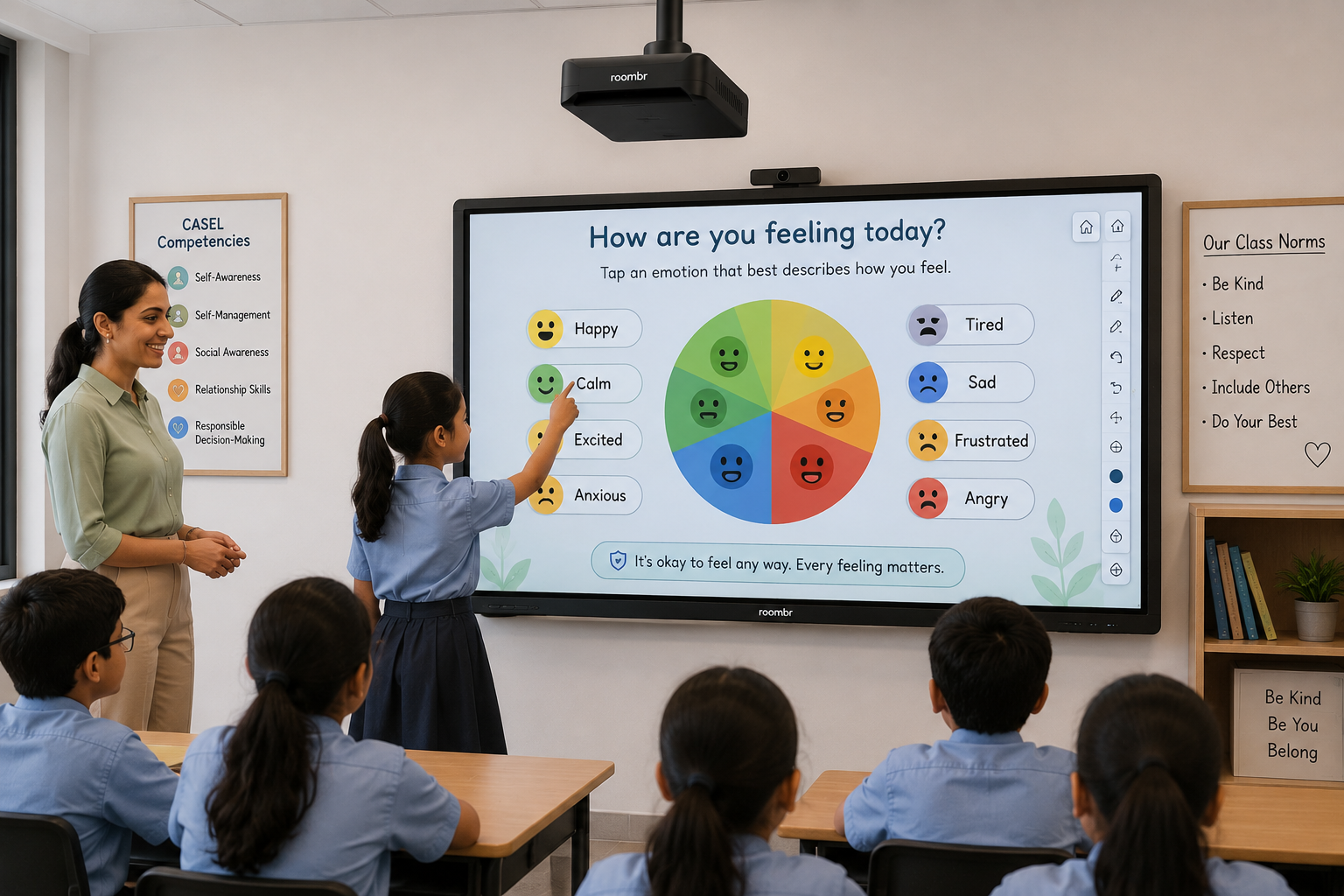
These aren't theoretical. Each one uses features your board almost certainly already has, and each maps to a specific CASEL competency so you know what you're building.
1. Digital Mood Check-In / Emotion Wheel
Builds: self-awareness | Best for: all grades
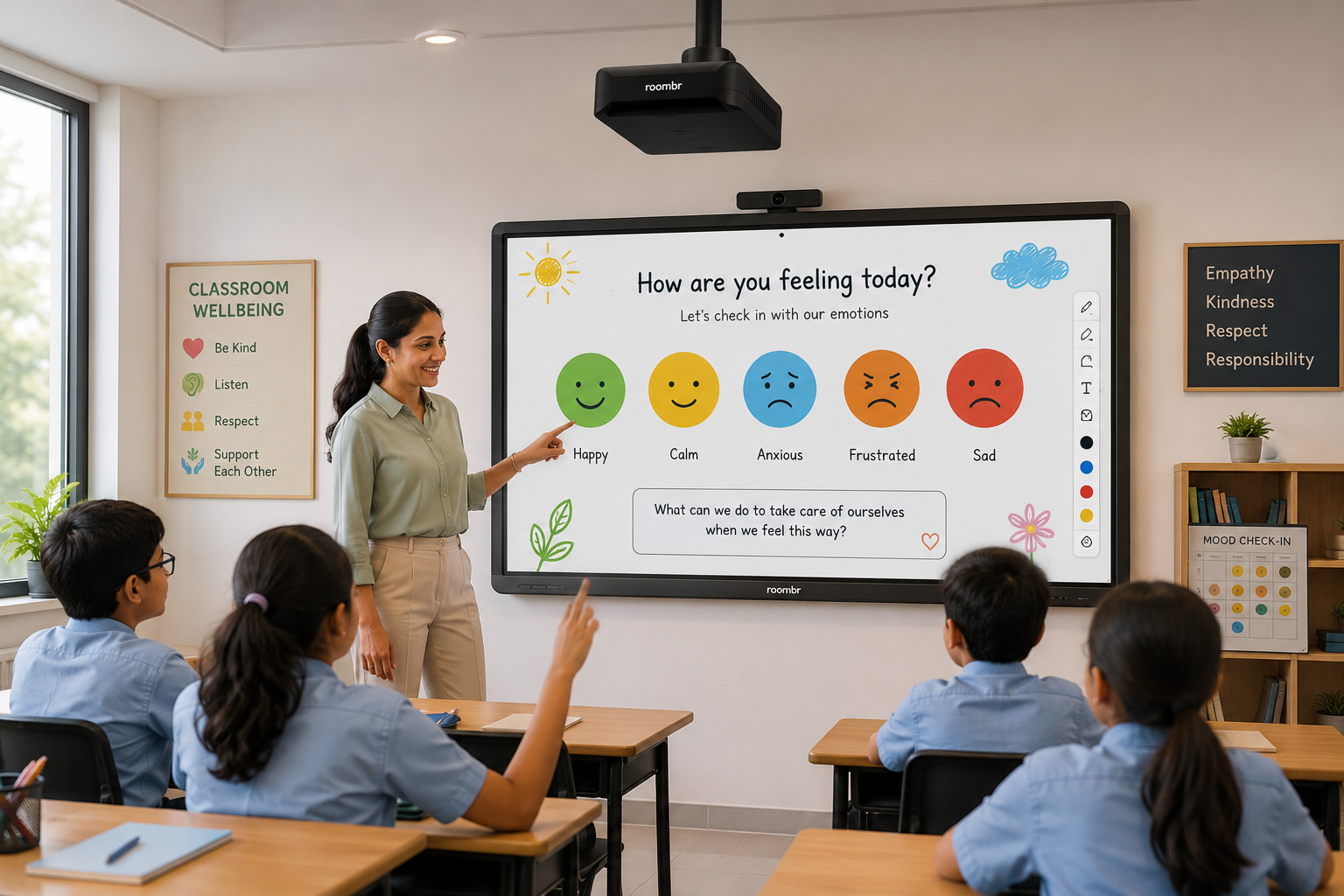
Display a simple emotion wheel or a row of emoji options at the start of class. Students walk up and tap how they're feeling — anonymously if the group is large, or by name for younger classes where teachers want to spot patterns early.
It takes under two minutes and replaces the ten-minute verbal round-robin that most classes skip entirely because there isn't time.
2. Pause-and-Circle Social Stories
Builds: social awareness, empathy | Best for: primary and middle school
Play a short silent film, animated clip, or "social story" and pause it mid-frame. Ask students to use the stylus to circle what a character might be feeling, based on their expression or body language.
This is one of the very few interactive teaching tools techniques that works equally well for a shy 8-year-old and a skeptical 13-year-old — the visual, not the discussion, does the initial work.
3. Class Gratitude or Reflection Wall
Builds: self-management | Best for: all grades
Instead of a physical wall covered in sticky notes that gets wiped clean every term, run a digital version. Students add a short reflection weekly — a simple gratitude line works as well as a longer mindfulness prompt — and the board saves the running history, so by December the class can scroll back through the whole year.
4. Role-Play With Recorded Playback
Builds: relationship skills | Best for: middle and senior school
Two students act out a conflict-resolution scenario — a disagreement over a group project, for example. The teacher records it on the digital board, then plays it back for the class to identify what worked and what escalated the situation. This works well as one of several collaborative learning activities built around the board rather than a one-off exercise.
Seeing your own reaction played back tends to land harder than being told about it.
5. Peer Recognition Board
Builds: relationship skills, sense of belonging | Best for: primary and middle school
A simple tap-to-recognize board where students can quietly acknowledge a classmate's kindness or effort. It builds a positive classroom culture without the teacher having to police every interaction manually.
6. Decision-Making Scenarios (Branching Stories)
Builds: responsible decision-making | Best for: middle and senior school
Present a "what would you do?" scenario on the board. The class votes via touch, then watches the consequence of that choice play out before moving to the next decision point.
This format works particularly well as one of several interactive educational tools used across a term — it's engaging enough that students ask for it again, which solves the adoption problem most SEL programs quietly struggle with.
What This Looks Like Across a Week
Here's a simple, five-day version any teacher can copy directly into a weekly planner — no separate SEL period required, just five minutes folded into existing lessons.
Common Concerns Schools Raise
"Isn't this a distraction from academics?"
CASEL's research and NEP 2020's own framing treat SEL as a support for academic outcomes, not a competitor to them — students who can regulate attention and manage stress tend to engage better with the actual syllabus, not worse.
"We don't have a trained counselor or SEL facilitator."
These activities are teacher-led classroom practice, not therapy or clinical intervention. They build day-to-day emotional vocabulary and habits. They don't replace a school counselor for students who need deeper support, and no teacher should treat them as if they do. If your school already runs remedial or inclusive learning programs, these SEL activities complement that work rather than duplicating it.
"What about recording student activities on the board is that a privacy issue?"
Any recorded classroom content should follow the same consent and storage practices your school already applies to other lesson recordings. If your school hasn't reviewed this recently, our guide on data privacy risks in outdated classroom technology is worth a read before rolling out recorded role-play activities at scale.
Frequently Asked Questions
1. How is Social-Emotional Learning (SEL) understood in Indian schools?
SEL refers to the five CASEL competencies — self-awareness, self-management, social awareness, relationship skills, and responsible decision-making. Indian schools typically address the same goals under "life skills education" or "holistic development" as outlined in NEP 2020 and NCF 2023.
2. Is social-emotional learning part of NEP 2020?
Yes. NEP 2020 explicitly calls for holistic, competency-based education rather than a purely academic, exam-focused approach, which aligns closely with SEL's core goals even though the policy doesn't use the term "SEL" directly.
3. Can a smart board really teach emotional skills?
A smart board doesn't teach emotional skills on its own — a teacher does. What the board provides is a way to make invisible, abstract emotional concepts visible and interactive for an entire class at once, using tools like annotation, touch input, and recording that most classrooms already have.
4. Do teachers need special training to run these activities?
No specialized training or certification is required. These are structured classroom activities, not clinical interventions. Any teacher comfortable using the board's basic annotation and recording features can run them.
5. Which age group benefits most from digital board-based SEL activities?
Primary and middle school students tend to respond best to visual, low-pressure formats like mood check-ins and social stories, while role-play and decision-making scenarios work well through middle and senior school as students handle more nuanced social situations.
What to Look for If You Want SEL to Work in Your Classrooms
Activities like these only run smoothly on a digital board built to keep up: responsive dual-touch so two students can interact with an activity at once, annotation that doesn't lag mid-video, and sessions that save automatically so both teachers and children can revisit them weeks later. This is where a lot of schools hit a wall: they try one SEL activity on a board that isn't built for it, it feels clunky, and eventually the idea is discontinued.
Roombr Pro is built for this kind of everyday use. AI-powered, dependable session after session, so a mood check-in or role-play activity becomes a routine part of class instead of a one-off that gets abandoned after the first try. That consistency is what turns a single activity into smart classroom learning that covers more than just the syllabus. It's part of what preparing students with 21st century skills looks like day to day.
If you're exploring how your existing use of technology in education can stretch further into student wellbeing, not just academics, book a free demo with Roombr to see how it fits into your classroom.

Foziya Abuwala
Share
Step Into the future of
Education with Roombr