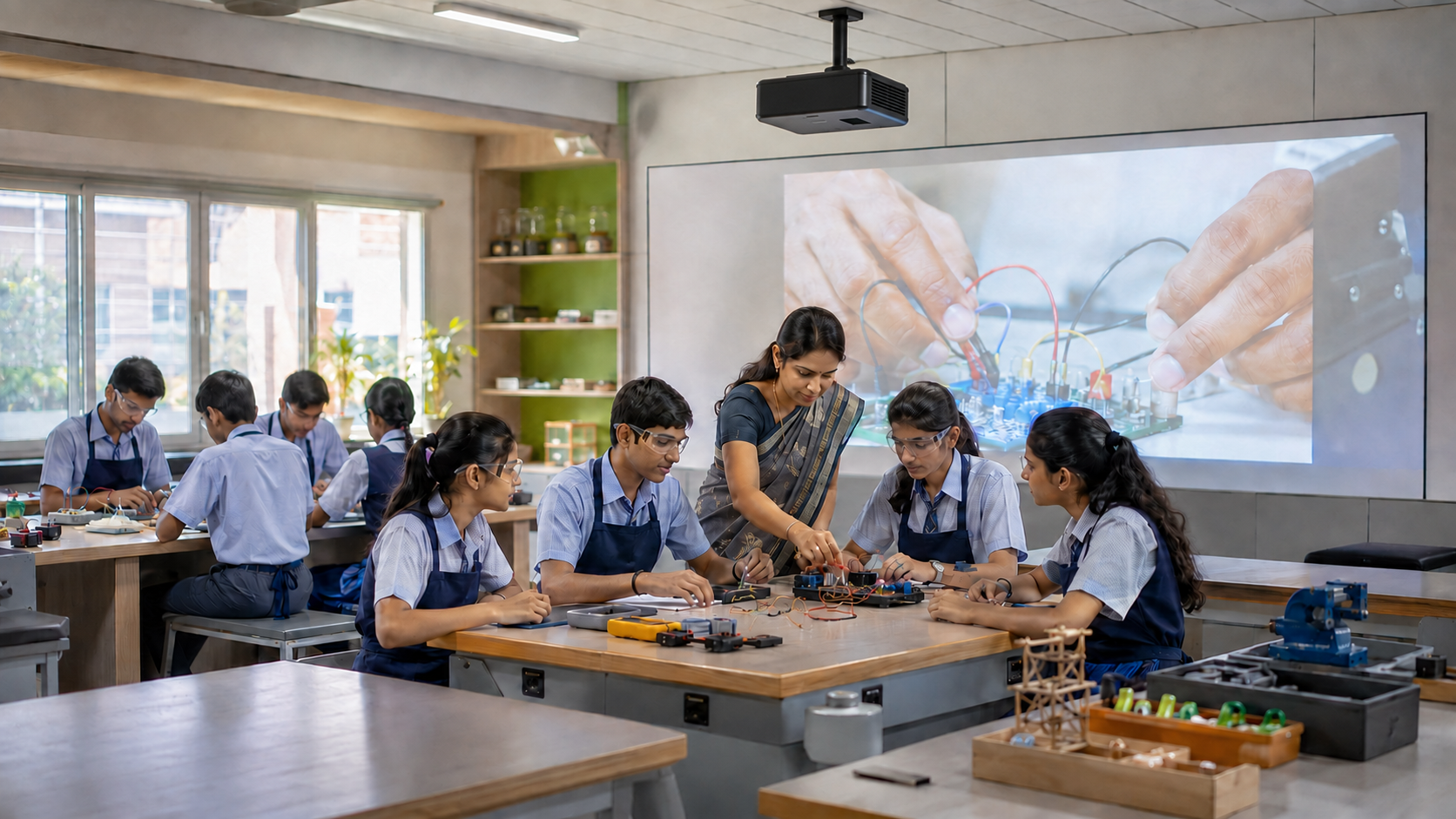


For decades, the Indian education system followed a standard, linear delivery of facts intended for mass memorization. However, as we navigate through 2026, a silent revolution has taken hold. The National Education Policy (NEP) 2020 was the blueprint for this change, but the engine driving its implementation is Artificial Intelligence.
We’ve stopped seeing technology as just a screen and started seeing it as a way to teach differently. The importance of AI in education isn't about replacing the teacher at the front of the room. It is about giving that teacher the superpowers needed to meet the NEP’s ambitious goals. It is about adopting a new philosophy of teaching that fulfills the national mandate for a Viksit Bharat (Developed India).
AI and the Shift to Competency-Based Education
A core pillar of NEP 2020 is the shift from "what to think" to "how to think." Section 4.4 of the policy explicitly calls for the elimination of rote learning in favor of conceptual clarity and critical thinking.
In a traditional setup, achieving this for 40+ students simultaneously was an impossible task for a single teacher. In 2026, innovative teaching methods powered by AI have solved this scale vs. quality paradox.
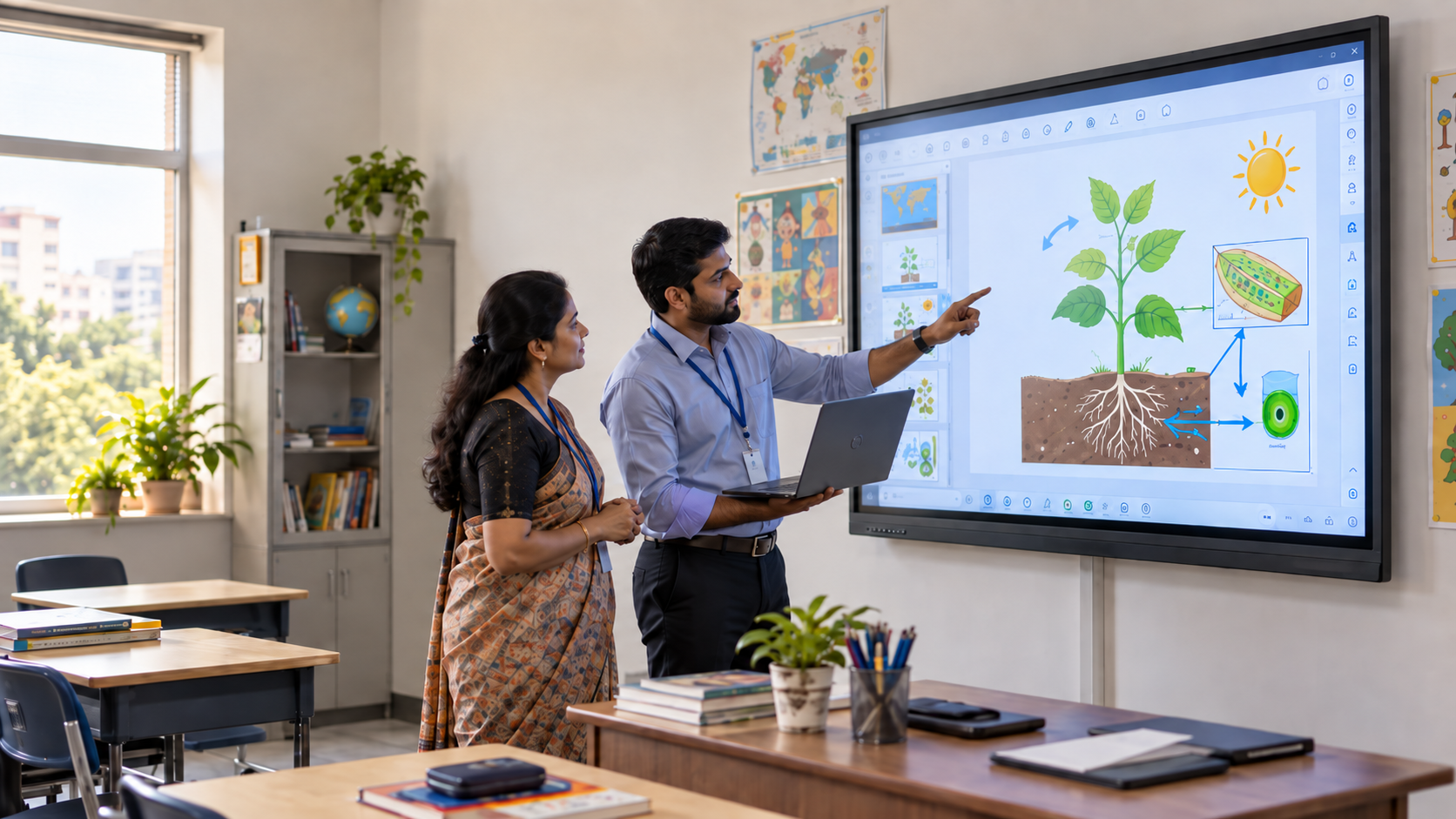
- Inquiry-Based Learning: AI-powered teaching assistants now facilitate questioning. If a student asks a "Why" question during a science lesson, AI models can instantly generate relevant, real-world analogies or 3D simulations.
- Adaptive Depth: Unlike a static textbook, an AI-integrated curriculum adjusts the complexity of a topic based on class comprehension. If the majority of the class struggles with a mathematical theorem, the AI flags this to the teacher and suggests a remedial visual explanation.
Thus, as a teacher, you don’t have to wait for the unit test to find out that some of the students are failing. You can pivot right then and there. That is the definition of a student-centric classroom.
Building a Digital Smart Classroom That Works
According to the latest educational trends, the focus has moved from device-centric to experience-centric. A modern classroom is now characterized by:
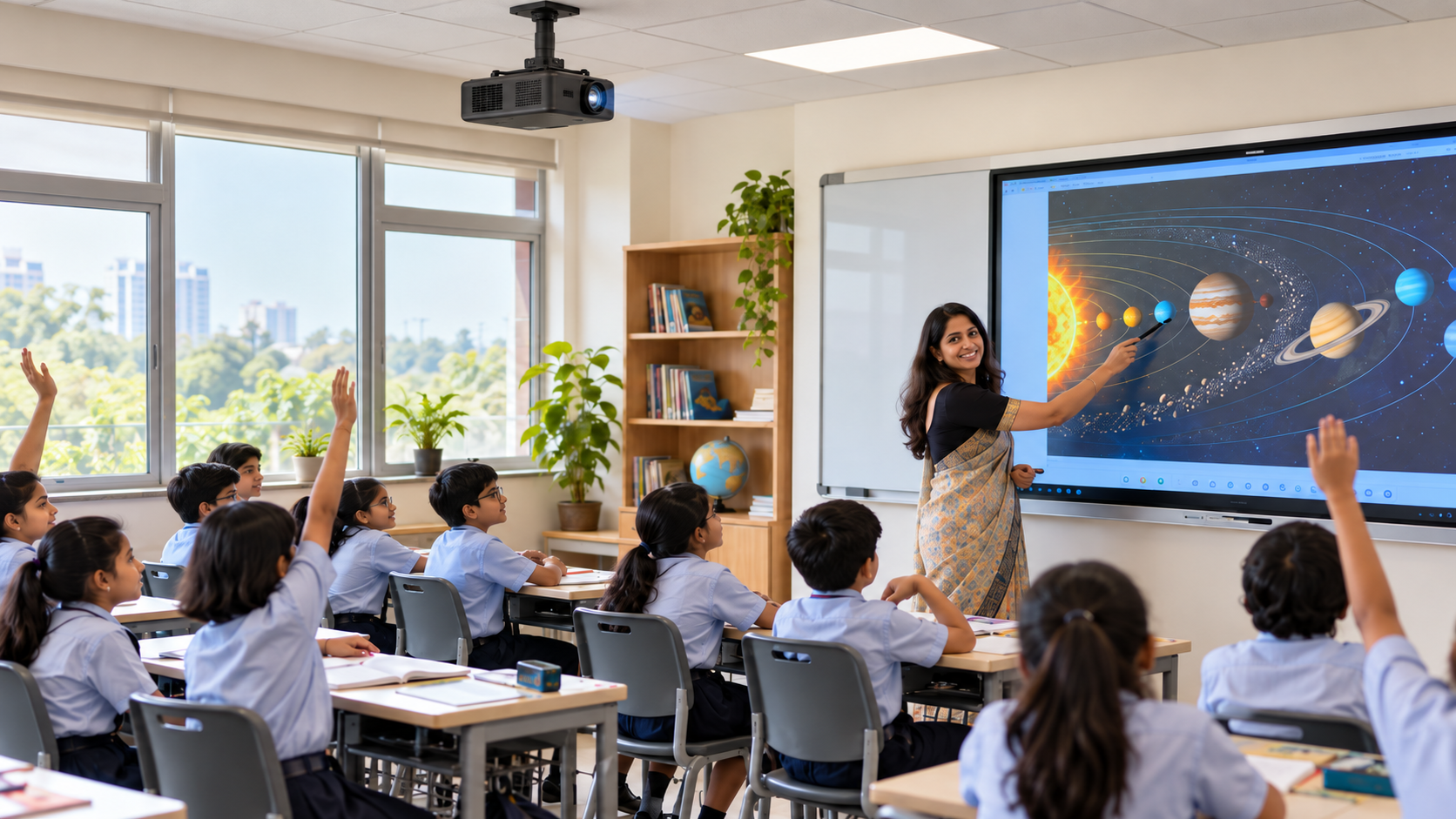
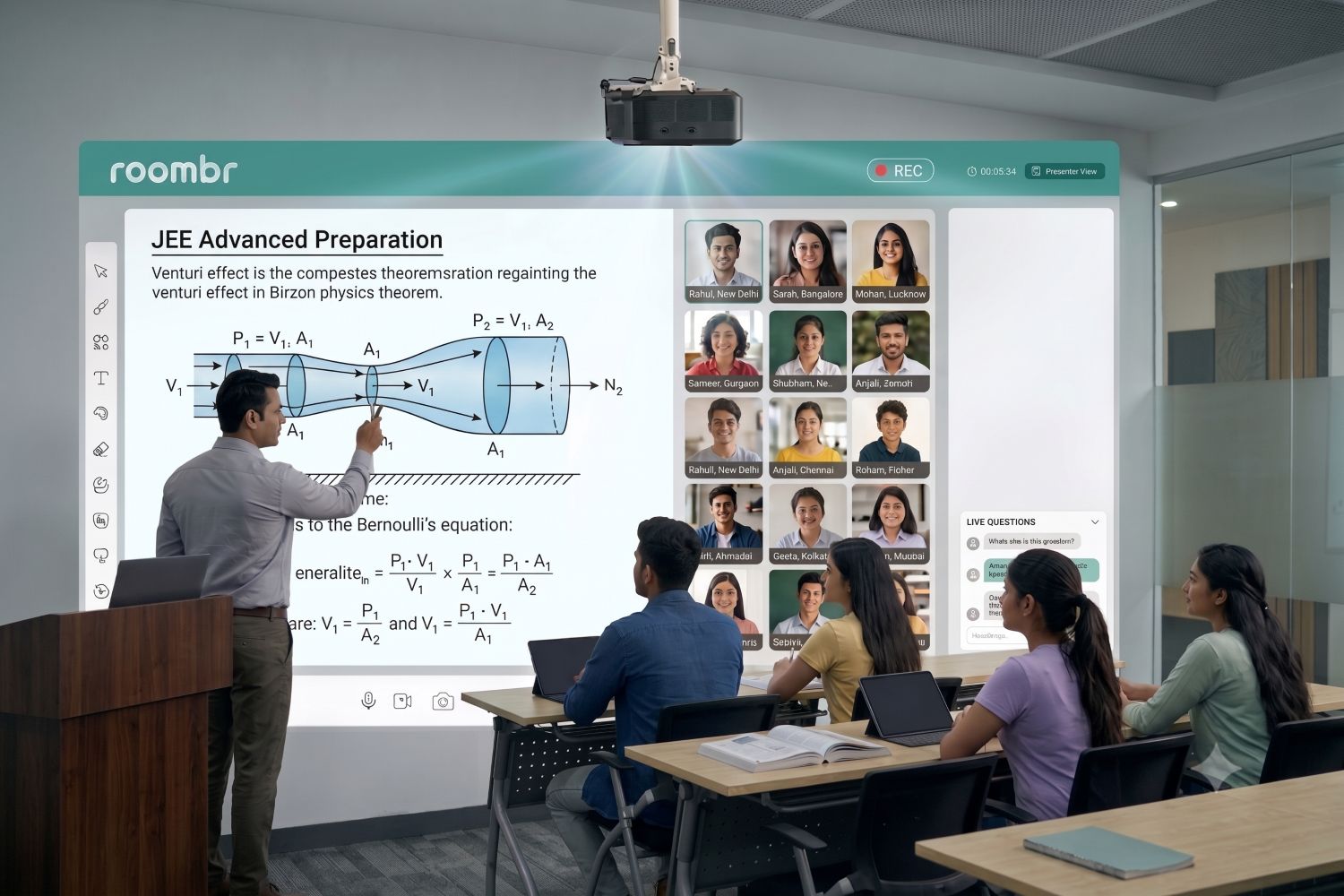
- Immersive Interactivity: Advanced interactive surfaces (like Roombr’s patented technology) turn any wall into a collaborative workspace where students don't just watch a video, they manipulate variables in a virtual lab.
- Automated Engagement Tracking: AI cameras and sensors provide heat maps of student participation, helping teachers identify the silent backbenchers who might be disengaged.
- Unified Ecosystems: Schools are moving away from fragmented apps. An all-in-one digital classroom setup now integrates the Learning Management System (LMS), real-time assessments, and lesson recording into one seamless interface.
In other words, a true smart classroom is much more than hardware. It’s an environment that gathers data to help you make better decisions.
So, if you’re looking to set up a digital classroom, don't just look at the screen size. Look at the intelligence behind it:
- Does it allow for collaborative touch-and-feel learning?
- Can it record a lesson and automatically create a summary for the absent students?
- Does it integrate with your school's 360-degree holistic report card?
A proper digital classroom setup today is like an invisible assistant that handles the grunt work, which includes attendance, basic grading, and content delivery, so the teacher can focus on mentoring.
The 360-Degree Holistic Progress Card
One of the most ambitious goals of NEP 2020 was the replacement of the marks-based report card with a Holistic Progress Card (HPC). The policy envisions evaluating students on their cognitive, affective, and psychomotor domains.
Without AI, this was an administrative challenge. The importance of AI in education shines here because it can observe what we might miss:
- Collaboration Skills: AI analyzes group project dynamics to see who takes the initiative.
- Problem-Solving: Instead of just a final correct answer, AI tracks the logic steps a student takes during a digital quiz.
- Continuous Assessment: As mandated by the PARAKH (Performance Assessment, Review, and Analysis of Knowledge for Holistic Development) framework, AI enables formative assessment. This includes tracking growth every single day rather than through a high-stress year-end exam.
By the end of the term, you aren’t just giving a grade out of 100. You’re giving a data-backed narrative of who that child is becoming.
Multilingualism: Breaking the Language Barrier
NEP 2020 emphasizes teaching in regional languages (the Mother Tongue) to ensure no child is left behind. In a country as linguistically diverse as India, this was historically a challenge for resource availability.
AI pedagogy has turned this challenge into a strength. Using Natural Language Processing (NLP), a teacher in a digital smart classroom can:
- Deliver a lecture in English while the AI generates real-time subtitles or audio translations in Hindi, Kannada, or Marathi for students who need it.
- Instantly translate complex topics into local dialects so children can master concepts in the language they speak at home.
The Viksit Teacher: AI as a Co-Pilot, Not a Replacement

There is a common misconception that AI will replace teachers. On the contrary, NEP 2020 views technology as an empowerment tool. The importance of AI in education has actually made the human teacher more essential.
When you use innovative teaching methods like AI-driven inquiry sessions, you aren't just a knowledge dispenser. You become a guide. You’re the one who teaches them ethics, empathy, and how to use this very AI responsibly. We are seeing teachers reclaim nearly 10 hours a week from mindless paperwork. What are they doing with that time? They’re talking to their students. They’re helping with mental health. They’re being the mentors the NEP envisioned.
Practical Steps for Your Digital Classroom Setup
If you're a school leader wondering where to start, here are a few practical tips to start small:
- Prioritize Interactivity: A digital smart classroom should be an active doing space, not a watching space.
- Focus on FLN: Use AI tools specifically for Foundational Literacy and Numeracy (FLN). AI is incredibly patient. It can listen to a child read 100 times without getting frustrated.
- Train the Mindset, Not Just the Tool: No amount of digital classroom setup will work if your staff doesn't see the importance of AI in education as a partner in their growth.
Why the Importance of AI in Education Matters for 2026 and Beyond
We are no longer preparing kids for a world where knowing things is enough. We are preparing them for a world where they need to collaborate with machines to solve human problems. By integrating these innovative teaching methods today, we aren't just following a government policy; we are future-proofing our children.
The importance of AI in education lies in its ability to make high-quality, personalized schooling affordable and scalable. Whether it’s a high-end school in Bengaluru or a rural classroom in Bihar, the digital smart classroom is the great equalizer of our time.
Frequently Asked Questions
Q1: How does AI fulfill the vision of NEP 2020 in schools?
AI turns NEP 2020's competency-based vision into reality by tailoring lessons to each student's pace. It moves classrooms away from rote learning, using innovative teaching methods to ensure every child masters a concept before moving forward.
Q2: What is the importance of AI in education for teachers?
The importance of AI in education lies in its ability to automate administrative burdens like grading and attendance. This co-pilot approach gives teachers more time for one-on-one mentoring, which is the heart of the NEP 2020 framework.
Q3: Can a digital smart classroom bridge the rural-urban gap?
Absolutely. A digital smart classroom uses AI to translate complex lessons into regional languages instantly. This ensures that students in remote areas receive the same high-quality, personalized instruction as those in metropolitan cities, promoting national educational equity.
Q4: What are the essentials for a 2026 digital classroom setup?
A modern digital classroom setup requires high-speed connectivity, an interactive display for immersive learning, and AI-driven assessment tools. These components work together to track student progress continuously, replacing traditional high-stress exams with helpful, real-time feedback.
Ready to move beyond policy and start transforming your school’s daily results? See how Roombr makes NEP 2020 compliance effortless by turning your classroom walls into a data-driven, interactive learning ecosystem.

Foziya Abuwala
Share
Step Into the future of
Education with Roombr