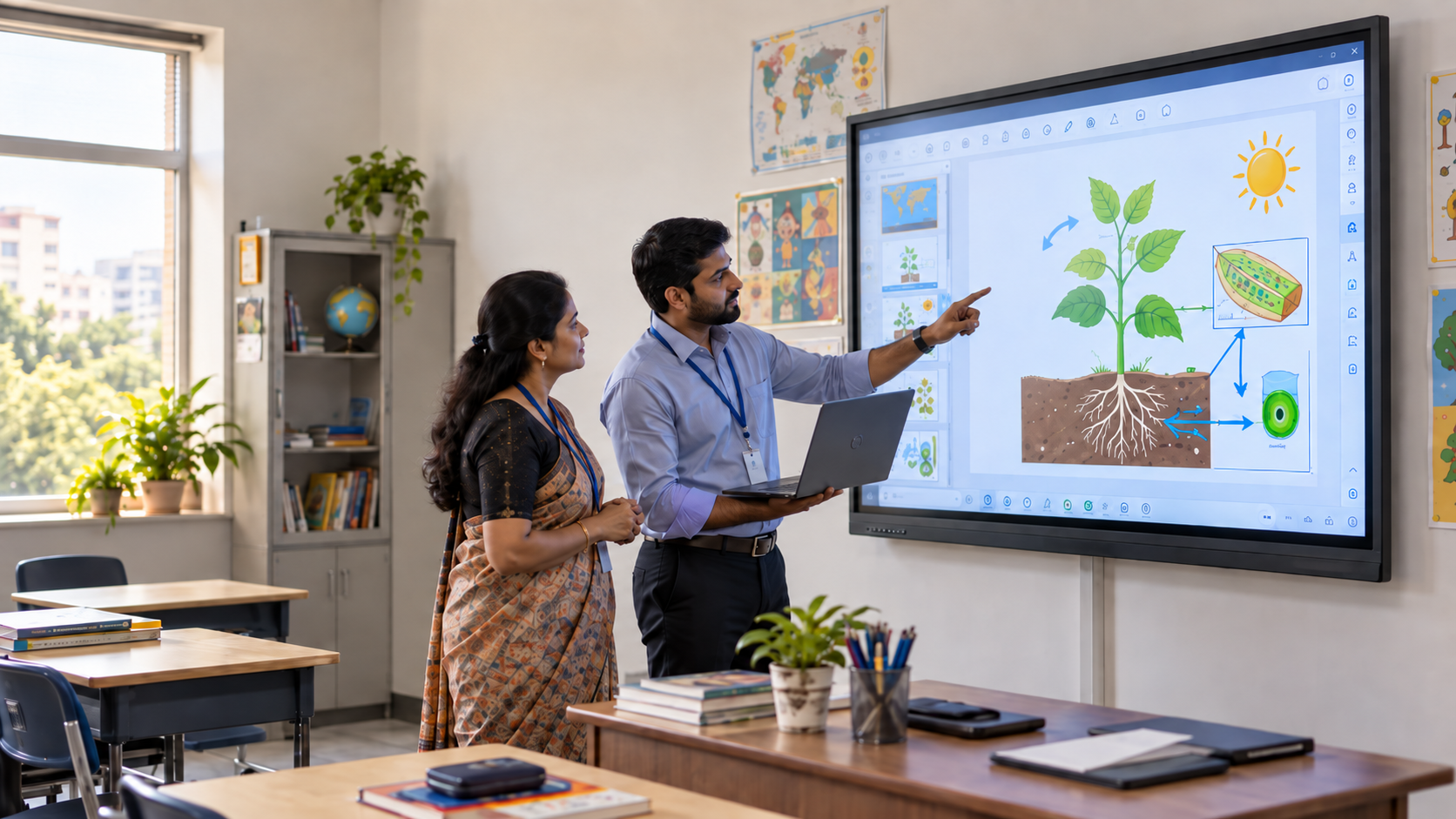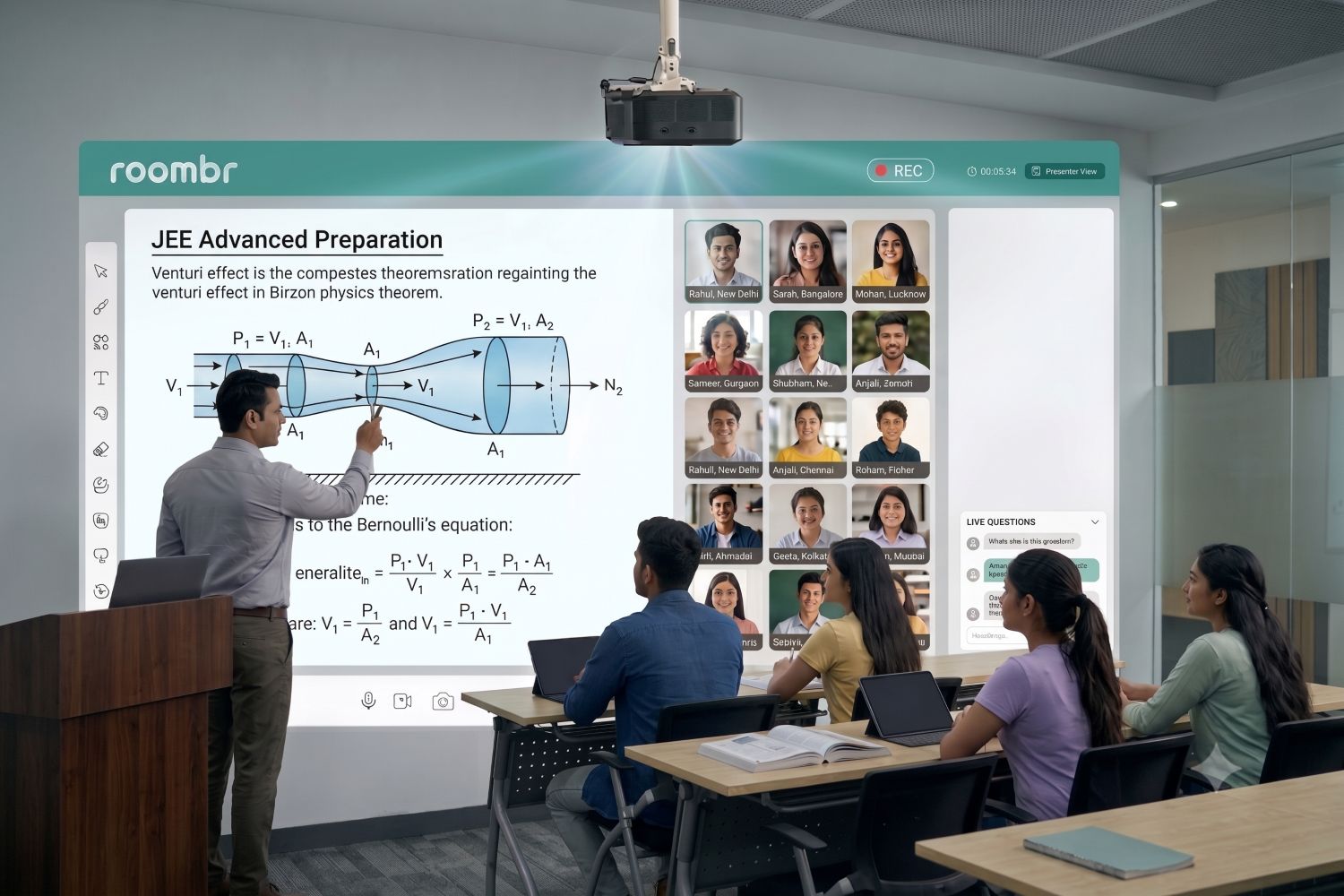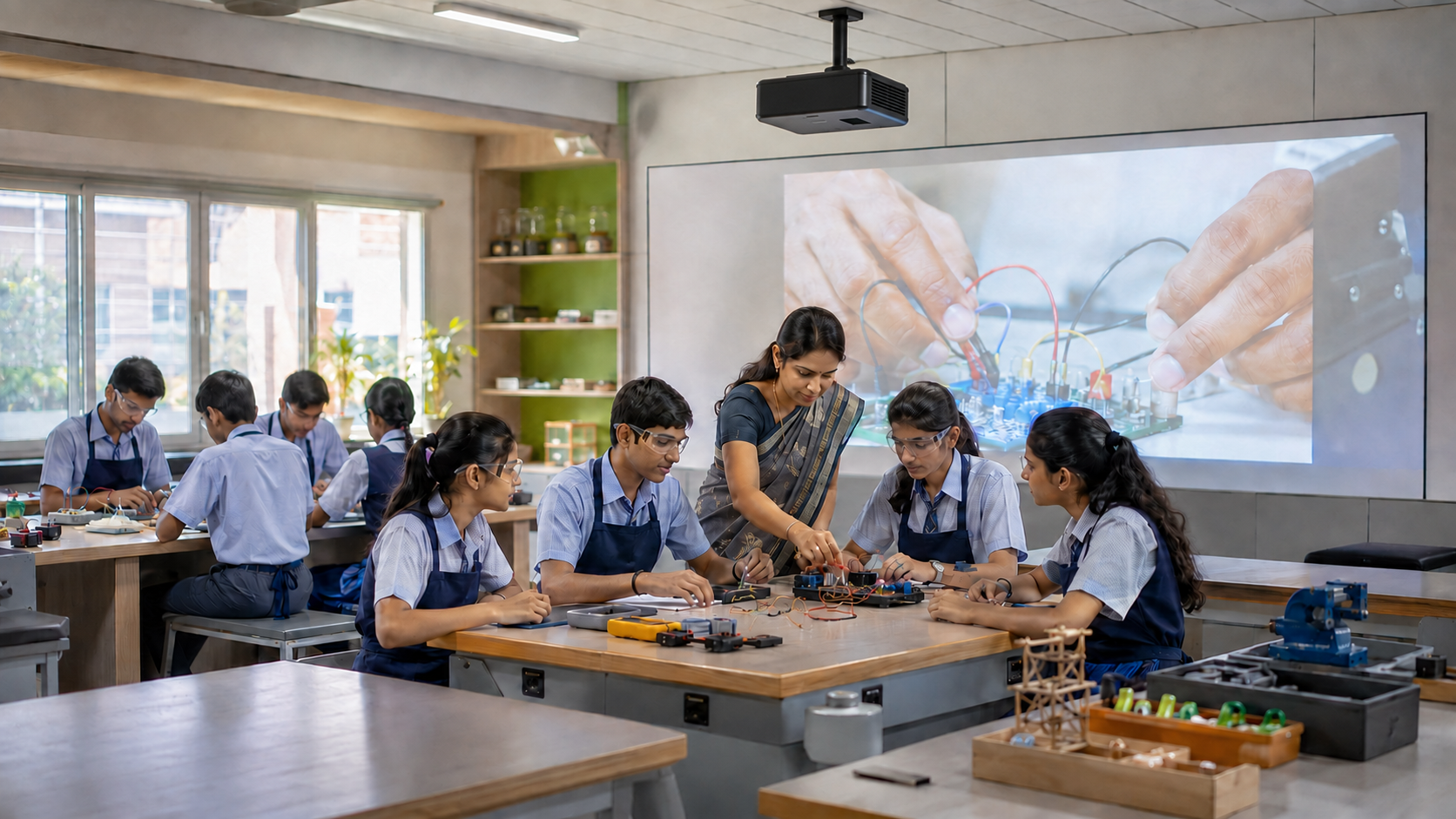


Walk into any modern classroom today, and you will see teachers writing, tapping, and switching screens on an interactive panel board. These boards sit at the center of daily teaching. Yet one small detail often decides how smooth a lesson feels: the input method.
Most interactive panel boards rely on infrared touch. That opens up two main ways to interact with the screen. One is using an IR pen or stylus. The other is using fingers directly on the surface. On paper, both look simple. In real classrooms, the experience can feel very different.
This article looks at the IR pen and finger touch from a daily teaching point of view. The goal is to understand how each input method performs during real lessons, across subjects, age groups, and classroom sizes.
Input Methods on an Interactive Panel Board
Before comparing classroom use, it helps to clarify how these inputs work on an interactive touch panel.
IR Pen Input
The IR pen is an active tool that requires charging via a cable. When the pen tip interrupts the infrared grid around the interactive panel board, it registers it as a precise touch point.
The narrow tip allows extremely accurate input. Teachers rely on IR pens for writing text, drawing diagrams, solving equations, and annotating slides. Its precision makes complex subjects like mathematics, physics, and chemistry much easier to teach effectively.
Finger Touch Input
Finger touch uses the same infrared grid. The board detects the interruption created by a finger rather than a pen. This allows direct interaction without accessories.
Finger touch supports tapping, dragging, zooming, rotating, and multi-user interaction. Students often find it intuitive, as it feels similar to using a phone or tablet, only much larger.
Both inputs rely on the same hardware. The difference lies in how that hardware is used during teaching.
Why Input Method Matters in Daily Teaching
Lessons in a digital classroom move quickly. Teachers switch between slides, write notes, draw shapes, play videos, and respond to students. Any friction in the input slows the class.
Small delays add up. A misplaced pen, a missed touch point, or a moment spent wiping fingerprints can disrupt the flow. These details shape how confident and effective teachers feel at the front of the room.
Schools now evaluate not just which interactive panel board to buy, but how it will be used every single day.
1. Writing and Drawing: Precision vs Speed

IR Pen for Writing Tasks
When writing is involved, IR pens hold a clear advantage. Their narrow tip allows sharp, legible handwriting, precise symbols, and controlled lines. Teachers writing equations or labeling diagrams appreciate the natural feel. It replicates chalk or marker use.
- Clean lines and arrows
- Accurate diagrams
- Less correction required
- Visual clarity even during long lessons
On large interactive smart boards, IR pens reduce clutter and prevent misaligned strokes, ensuring every student can read content clearly from any seat.
Finger Touch for Writing Tasks
Writing with fingers is possible, but the results are less controlled. Thicker strokes, uneven curves, and inconsistent letters are common. For short annotations, underlines, or minor corrections, finger input works.
However, for sustained teaching or detailed subjects, many teachers switch back to IR pens for clarity and precision. In higher grades, precision directly impacts learning outcomes.
2. Navigation and Classroom Flow
IR Pen Takes the Lead
The IR pen isn’t just for writing. It can handle navigation too. Teachers can use it to switch slides, open files, scroll pages, or select tools, all with pinpoint accuracy. Unlike finger touch, there’s no risk of accidental taps or misclicks, so lessons stay smooth and uninterrupted. Using one consistent tool for both writing and navigation keeps the classroom running efficiently, even during long teaching hours.
Finger Touch as a Backup
Finger touch still has a place for quick, simple actions, like tapping a menu item or making minor adjustments. But for most teaching tasks, writing explanations, drawing diagrams, or selecting content, the IR pen is far more precise and reliable. Teachers can focus on the lesson without worrying about missed touches or messy corrections.
3. Student Interaction and Group Work
IR Pen in Student Activities
IR pens introduce structure. Teachers can hand the pen to a student intentionally, controlling who interacts at a time.
While this might slow group exercises slightly, it prevents accidental disruptions, maintains lesson focus, and keeps content accurate. Pens also reduce miswrites, which is especially important for complex subjects.
Finger Touch in Multi-User Scenarios
Finger touch works well in early classrooms, like kindergarten or lower grades. Multi-touch lets several kids use the interactive panel board at the same time. They can sort items, drag shapes, or play learning games without help. This makes lessons fun and interactive. But in most classrooms, the IR pen is more reliable. It gives better precision, control, and consistency for daily teaching.
4. Comfort Over Long Teaching Hours
Using an IR Pen for Extended Sessions
Holding a pen for long periods may cause minor fatigue if the pen is thin or poorly balanced. Yet, teachers accustomed to chalk or markers adapt quickly.
The ergonomic grip of quality IR pens allows natural wrist and arm movement, reducing strain during 6–8 hour teaching days.
Using Finger Touch for Long Sessions
Finger input avoids gripping tools, but repeated vertical tapping can strain wrists and shoulders. Reaching higher board areas is awkward, particularly on large interactive display panels. Teachers often adjust their stance, switch hands, or step back and forth, which slows lesson delivery.
5. Accuracy and Missed Touch Points
Accuracy with IR Pens
IR pens tend to register more accurately at the edges of large interactive whiteboards. The defined tip reduces accidental touches.
This helps when writing near corners or selecting small on-screen elements.
Accuracy with Finger Touch
Finger touch accuracy depends on hand size and angle. On large touch boards, missed taps can happen, especially near screen edges or small icons.
Teachers often compensate by tapping more slowly or repeating actions, which affects lesson pace.
6. Maintenance and Classroom Practicalities
Pen Management
IR pens need careful storage to prevent misplacement or damage. Replacement adds minor cost, but the payoff is precision and clarity in daily teaching. Schools often create simple routines to manage pen storage effectively.
Screen Cleanliness
Finger touch leaves visible fingerprints and smudges. On interactive panel boards with heavy student interaction, cleaning becomes a daily chore.
IR pens, however, produce minimal smudging, keeping screens clear and readable from all seating positions.
Choosing the Right Input Method for Your School
There is no single best answer. The right choice depends on how teaching happens in your classrooms.
Ask simple questions:
- How much writing happens daily?
- How often do students interact with the board?
- How large are the classrooms?
- How comfortable are teachers with tools?
For most Indian classrooms, IR pens provide superior precision, comfort, and control, making them the preferred tool for consistent, high-quality instruction.
Frequently Asked Questions
1. Why is the IR pen considered better than finger touch for daily teaching?
The IR pen ensures precise handwriting, accurate diagrams, and consistent input across the full interactive panel board. Unlike finger touch, it maintains clarity for students at all seating positions, reduces accidental touches, and allows teachers to teach without slowing down or adjusting their writing style.
2. Do IR pens reduce teacher fatigue compared to finger touch?
Yes. Ergonomically designed IR pens allow natural wrist and arm movement, minimizing strain during long sessions. Finger touch requires constant stretching and repeated tapping, which can tire teachers quickly, especially on large interactive display panels. IR pens make extended teaching more comfortable and sustainable.
3. How do IR pens improve classroom control over finger touch?
IR pens help teachers manage board interaction. Only the person holding the pen can write, preventing accidental touches from students. Finger touch allows multiple unintended inputs, disrupting lessons. IR pens maintain order while supporting controlled, structured teaching, particularly in crowded classrooms.
4. Are IR pens more effective for exam-focused or concept-heavy subjects?
Absolutely. Subjects like mathematics, physics, and accounting rely on stepwise explanations and precise diagrams. IR pens ensure clear, legible writing and structured content, making it easier for students to follow and retain information, whereas finger touch often produces uneven strokes and errors in complex content.
5. Can IR pens support interactive student participation better than finger touch?
Yes. While finger touch may seem engaging, it can lead to chaos in large classrooms. IR pens allow teachers to hand over control intentionally, enabling controlled participation. Students interact when invited, maintaining lesson flow, while the interactive panel board remains accurate and readable for everyone.
Teach Without Limits — Book a Roombr Demo
Imagine a classroom where the wall becomes your teaching surface, and your tools just work. Roombr’s all-in-one system turns any wall into an interactive display with a thoughtfully designed, rechargeable IR pen. No interruptions. Just precise writing, smooth interaction, and lessons that flow naturally.
If your school is planning its next classroom upgrade, now is the time to see it in action. Book a Roombr demo and experience teaching made simple, flexible, and focused on learning.

Foziya Abuwala
Share
Step Into the future of
Education with Roombr