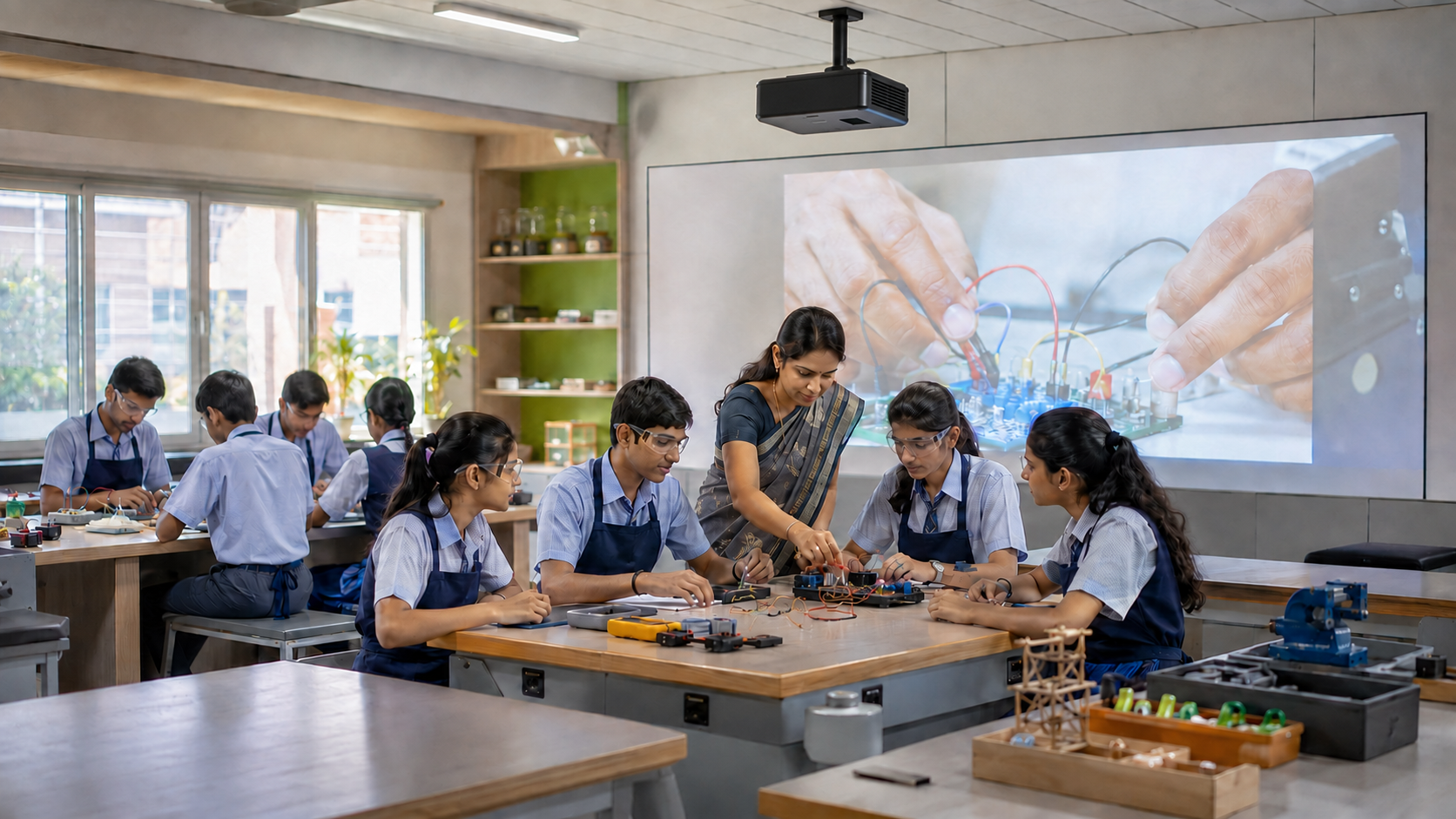


The Indian education sector is witnessing a seismic shift. We are moving from a time where technology was a subject taught in a computer lab to an era where technology is the very medium of instruction.
According to the latest UDISE+ 2024-25 report, the digital footprint in Indian schools is expanding rapidly. The number of schools with functional computers has risen to 64.7%, and internet connectivity has jumped to 63.5%. This is not just an upgrade. It is a fundamental restructuring of how India learns.
For school leaders and educators, understanding ICT in education is no longer optional. It is a survival skill. As David Warlick famously said, "We need technology in every classroom and in every student and teacher’s hand, because it is the pen and paper of our time."
This comprehensive guide serves as your pillar resource to navigate this transformation. We will cover the definition, the strategic role under NEP 2020, the tangible benefits, and the practical challenges of implementing a digital classroom in 2026.
What is ICT in Education? (Definition & Scope)
Most people know the ICT full form—Information and Communication Technology. But in an educational context, it means much more than just hardware.
What is ICT in education?
It is the integration of digital tools, communication networks, and media to support, enhance, and optimize the delivery of information. It bridges the gap between the teacher’s knowledge and the student’s understanding.
The 4 Pillars of ICT
To truly understand ICT, we must look beyond the smart board. A robust ICT ecosystem consists of four pillars:
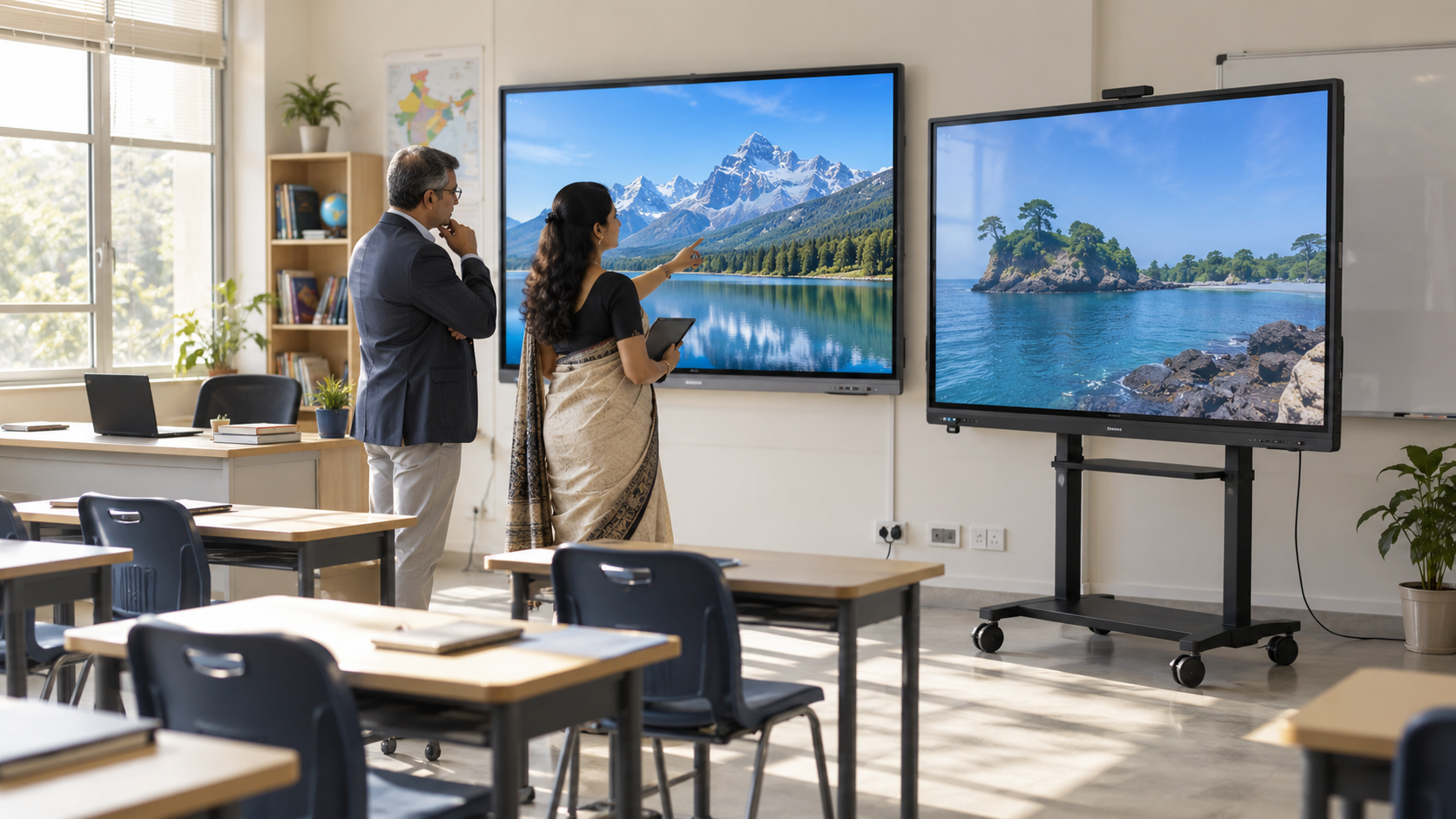
- Hardware (The Body): This includes the physical devices like Interactive Flat Panels (IFPs), tablets, projectors, and servers.
- Software (The Mind): The Learning Management Systems (LMS), operating systems, and apps that run on the hardware.
- Netware (The Nervous System): The internet connectivity (Wi-Fi, LAN, or Satellite) that allows data to flow.
- Humanware (The Soul): The most critical component—the teachers, students, and administrators who use these tools. Without trained Humanware, the best smart class is just an expensive room.
The Role of ICT in the Teaching-Learning Process
ICT has fundamentally changed how teaching happens. It is no longer a one-way broadcast from teacher to student. Here is how ICT in education transforms the process, point by point:
1. Digital Classrooms
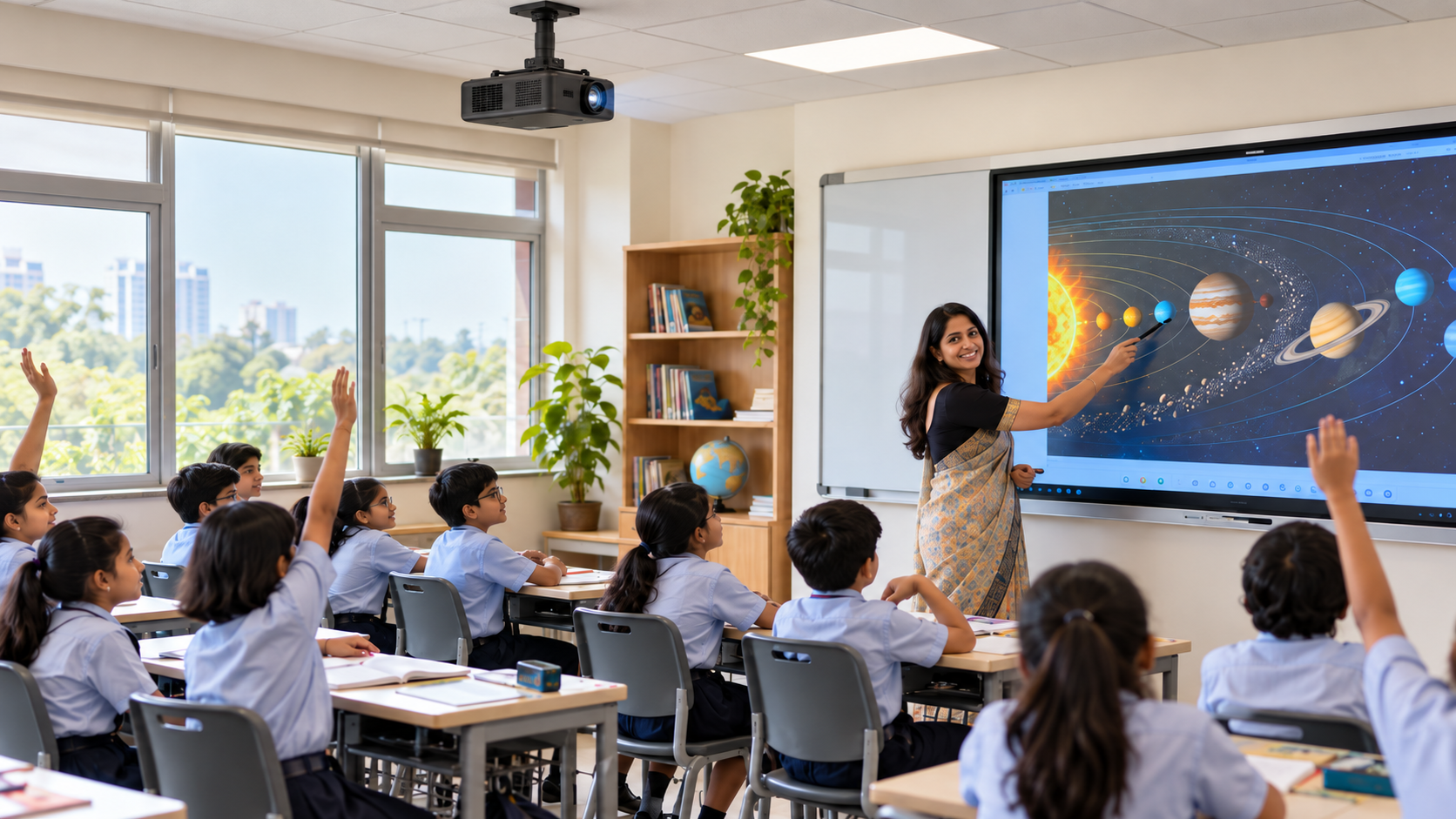
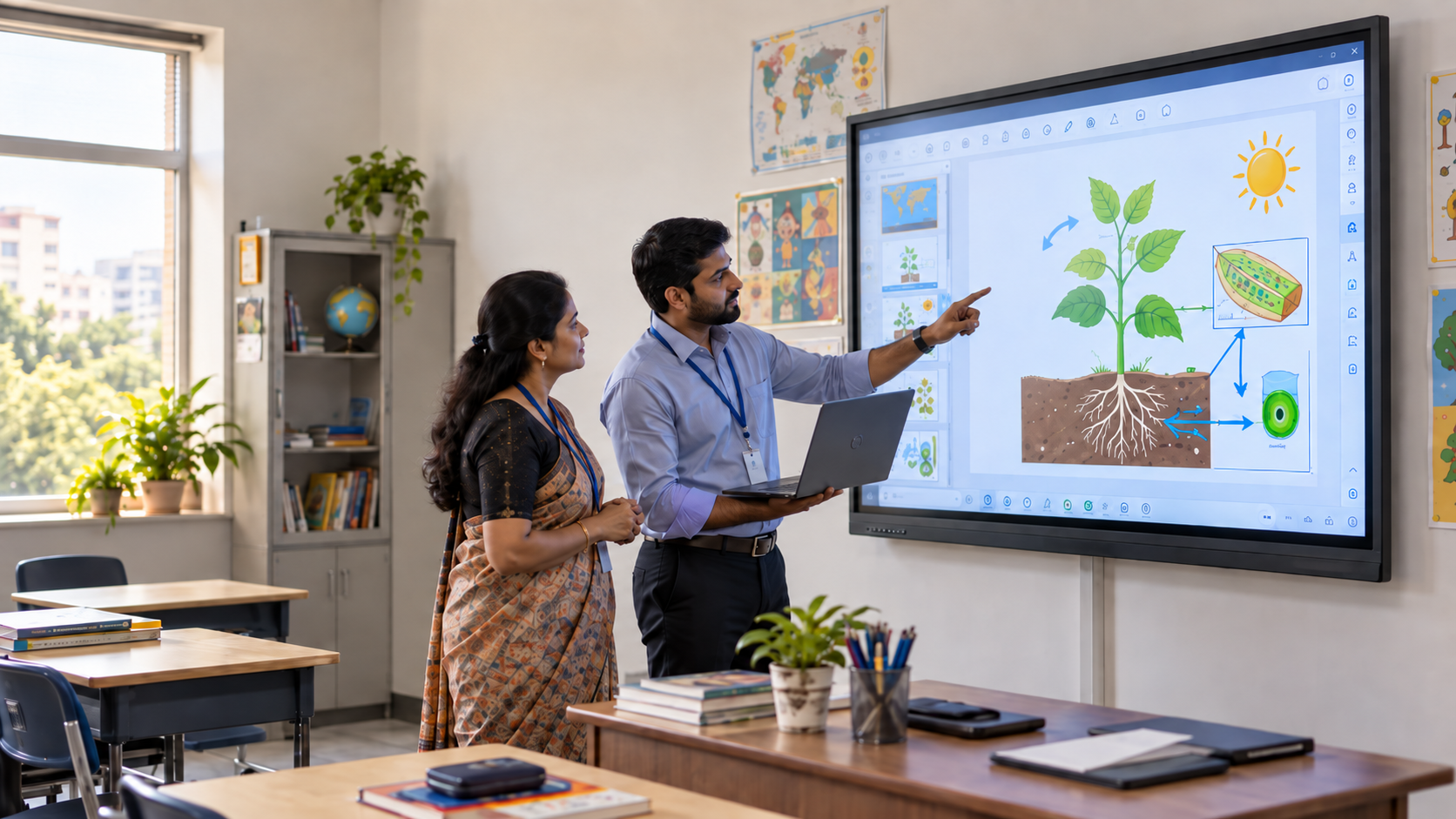
Gone are the days of chalk dust and static blackboards. Digital classrooms equipped with technology and interactive displays replace traditional blackboards.
Impact: Lessons become visually appealing. Teachers can pull up 3D diagrams, annotate directly on the screen, and save class notes to the cloud instantly.
2. Online Learning Platforms
Digital tools and educational apps give students the freedom to study at a speed that works best for them. For instance, platforms such as Khan Academy and Coursera offer organized, step-by-step learning programs.
Impact: This democratizes education. A student in a rural village can access the same high-quality physics lessons as a student in a top metro school.
3. Virtual Reality (VR) & Augmented Reality (AR)
These tools create immersive learning experiences for complex subjects like science and history.
Impact: Instead of reading about the solar system, students can walk on Mars using VR headsets. AR apps can bring a textbook diagram of the human heart to life, letting students see it beat in 3D right on their desks.
4. Cloud-Based Collaboration
Platforms like Google Classroom and Microsoft Teams facilitate seamless student-teacher communication.
Impact: Homework, feedback, and project work happen in real-time. Students can collaborate on the same document from their respective homes, fostering teamwork even when schools are closed.
5. AI-Powered Learning Assistants
AI-powered assistants and virtual mentors provide immediate responses to student questions.
Impact: If a student has a doubt at 9 PM, they don't have to wait for school the next day. AI tools can answer queries instantly, providing personalized explanations and 24/7 support.
6. Assessment & Feedback Tools
Digital systems handle grading automatically and provide data insights that allow educators to monitor how well students are performing over time.
Impact: Teachers save hours on manual grading. More importantly, analytics can predict learning gaps, telling a teacher exactly which student is struggling with which concept before the final exam.
Core Concepts of ICT in Education

To implement ICT in education successfully, schools must adopt specific pedagogical concepts. It is not enough to just buy the tools; you must use the right methods.
1. Blended Learning
This is the gold standard of modern teaching. Blended learning combines traditional in-person teaching with digital tools for a hybrid approach.
Scenario: A teacher explains a theory in class, and students reinforce it by playing a digital simulation game at home.
2. Personalized Learning
No two students learn the same way. Smart and adaptive learning tools automatically adjust the difficulty of lessons to match each student's current skill level and academic needs.
Scenario: If a student excels in math, the software unlocks advanced problems. If they struggle, it provides remedial videos and easier practice questions automatically.
3. E-Libraries & Digital Content
ICT provides access to vast educational resources beyond textbooks.
Scenario: Textbooks are static and often outdated. Digital content libraries allow schools to update their curriculum instantly. Students can instantly access a massive library of digital books, academic journals, and educational videos with just one click.
4. Real-Time Communication
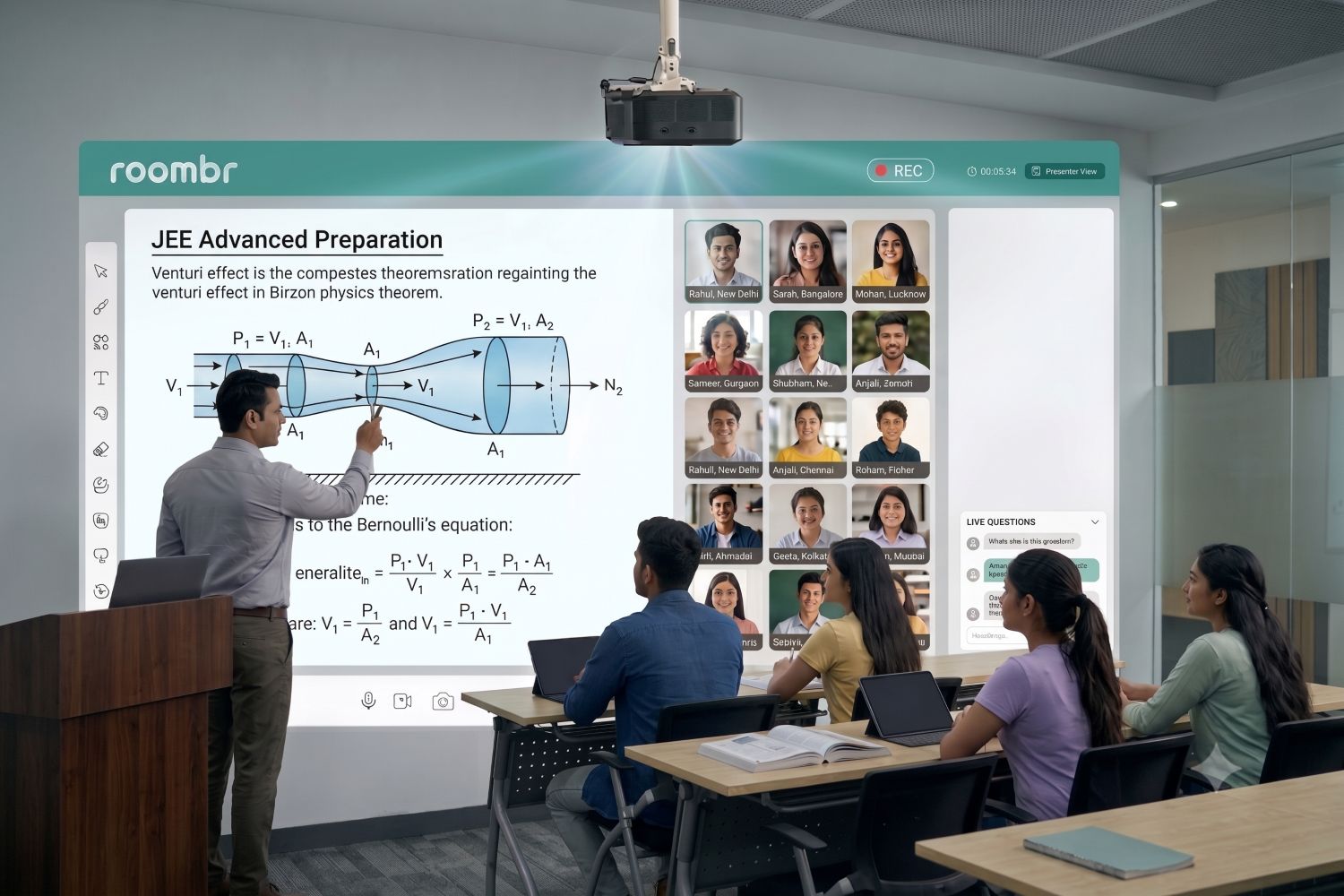
Video conferencing and virtual classrooms connect students and educators globally.
Scenario: A history class in Mumbai can connect via video call with a museum curator in Egypt to learn about pyramids in real-time, breaking the physical walls of the classroom.
5. Gamification in Learning
Adding game-based elements to lessons increases student engagement.
Scenario: Apps can turn quizzes into competitive game shows. Students earn points, badges, and leaderboard positions, turning boring homework into a competitive and fun activity.
Examples of Essential ICT Tools Used in Education
The integration of ICT tools in education is now a fundamental requirement for modern schooling. If you are setting up a smart class, here are the key tools making a significant impact today:
The Strategic Importance of ICT in Education in India (NEP 2020 Aligned)
India is a land of contrasts. We have high-tech international schools in Bengaluru and single-teacher schools in rural Uttar Pradesh. The role of ICT is to act as the great equalizer.
1. The NEP 2020 Mandate
The National Education Policy (NEP) 2020 was the turning point. It moved technology from the extra-curricular column to the core column.
- National Educational Technology Forum (NETF): The policy established this autonomous body to provide a platform for the free exchange of ideas on the use of technology.
- Digital Literacy: Coding and computational thinking are now introduced as early as Class 6.
- Teacher Empowerment: The policy mandates continuous professional development (CPD) for teachers through digital platforms like DIKSHA (Digital Infrastructure for Knowledge Sharing).
2. Bridging the Rural-Urban Divide
The biggest role of ICT in education is democratization. In a traditional setup, a student in a remote village has no access to the best physics teacher in the country. In a digital classroom, geography dissolves.
- Remote Access: High-quality video lectures can be broadcast to thousands of rural schools simultaneously.
- Language Accessibility: ICT tools can instantly translate complex English content into vernacular languages like Kannada, Hindi, Tamil, or Marathi, breaking the language barrier in education.
- Virtual Lab and Practical Exposure: Many rural schools can't afford expensive science labs, but ICT changes that through virtual experiments. Now, any student can safely run digital chemistry trials on a screen, making sure a lack of equipment never holds back a bright mind.
Importance and Benefits of ICT in Education
Why should a school management committee invest lakhs of rupees in smart class equipment? The Return on Investment (ROI) is visible in three key areas: Student Outcomes, Teacher Efficiency, and Institutional Brand.
1. For Students: Active Engagement
The modern student has an attention span shorter than a goldfish (approx. 8 seconds). Traditional chalk and talk methods fail to hold their attention.
- Visual Learning: A biology teacher can explain the human heart using a diagram, or they can use a 3D model on an interactive panel that pumps and rotates. The latter creates a lasting memory.
- Personalized Pacing: In a class of 40, not everyone learns at the same speed. Adaptive learning apps allow slower learners to practice basic concepts at home while advanced learners move ahead.
- Gamification: ICT introduces game mechanics (points, badges, leaderboards) into learning. This turns boring homework into a competitive and fun activity.
2. For Teachers: From Administrator to Mentor
A significant portion of a teacher’s time is lost in administrative drudgery, taking attendance, grading 40 test papers, and writing report cards.
- Automation: ICT tools automate these tasks. An LMS can auto-grade quizzes instantly.
- Resource Availability: Teachers no longer need to rely solely on the textbook. The entire internet is their library. They can pull up what ICT tools are in education and get videos, simulations, and articles in seconds.
- Better Work-Life Balance: With automated admin work, teachers can focus on what they love: teaching and mentoring students.
3. For Management: Data-Driven Decisions
How does a principal know if Class 9B is struggling with Algebra? Usually, they find out only after the final exam results, when it is too late.
- Real-Time Analytics: ICT systems provide dashboards. If 60% of students fail a specific quiz, the principal knows today and can organize a remedial class tomorrow.
- Admissions & Branding: Parents today are digital natives. A school with a fully equipped digital classroom setup commands higher trust and prestige in the community.
Challenges of ICT Implementation in India (And Solutions)
We must address the elephant in the room. Implementing ICT in education comes with its own set of challenges. Here are the three biggest challenges and how smart schools are solving them.
Challenge 1: The Infrastructure Bottleneck
The Reality: In many Tier-2 and Tier-3 cities, power cuts are frequent, and internet speed is unreliable. A cloud-only solution will fail here.
The Solution: Adopt Offline-First technology. Solutions like Roombr are designed for the Indian context. They store the heavy content (videos, 3D models) on a local server inside the classroom. The internet is used only for syncing tiny bits of data (attendance, grades), which requires very little bandwidth.
Challenge 2: The Teacher Training Gap
The Reality: You can buy the best interactive flat panel, but if the teacher only uses it as a whiteboard, the investment is wasted.
The Solution: Focus on TPACK (Technological Pedagogical Content Knowledge). Training should not just be "how to click this button." It should be "how to use this tool to teach Photosynthesis better." Peer learning, where tech-savvy teachers mentor others, is highly effective.
Challenge 3: E-Waste and Maintenance
The Reality: Computer labs often become graveyards of old, dusty CPUs.
The Solution: Shift to durable, all-in-one devices. Interactive displays have a lifespan of 50,000 hours (approx. 10-15 years) and require zero maintenance (no bulb changes like traditional projectors).
Future Trends of ICT in Education

The full form of ICT in education is expanding to include technologies we once thought were sci-fi.
- AI Tutors: Imagine a tutor that never sleeps. AI tools will soon provide 24/7 support to students, answering their doubts instantly.
- Virtual Reality (VR) & Augmented Reality (AR): For example, geography classes will let students explore the Amazon Rainforest through virtual field trips. Medical students will practice surgery on virtual bodies before touching real ones.
- Blockchain for Certificates: Fake degrees will become impossible. Schools and universities will issue unhackable digital certificates on the blockchain.
- Micro-Credentials: Instead of waiting years for a degree, students will earn digital badges for specific skills. These bite-sized certificates allow them to prove their expertise in topics like coding or design instantly.
Final Insights
The integration of ICT in education is a journey, not a destination. It is not about replacing the teacher with a robot. It is about equipping the teacher with superpowers.
As we move through 2026, the schools that will thrive are not necessarily the ones with the biggest buildings, but the ones with the most agile minds. By embracing smart class infrastructure, innovative teaching methods, and blended learning, you are preparing your students for a future that is entirely digital.
The government is ready with NEP 2020. The technology is ready with solutions like Roombr. The parents are ready. The question is: Is your school ready?
Frequently Asked Questions (FAQs)
1. What is the full form of ICT in education?
The ICT full form is Information and Communication Technology. In the context of education, it refers to the use of digital devices, software, and networks to store, manage, and transmit information to enhance learning.
2. What are the main uses of ICT in education?
ICT is used for interactive teaching (smart boards), administration (attendance/fee apps), remote learning (video conferencing), and research (digital libraries).
3. How does ICT support innovative teaching methods?
ICT enables methods like blended learning (mixing online and offline), flipped classrooms (watching lectures at home), and gamification, which are impossible in a purely traditional setup.
4. What is the difference between IT and ICT in education?
IT (Information Technology) usually refers to the industry or the hardware itself. ICT is a broader term that emphasizes the "communication" aspect, meaning how these tools are used to connect people (teachers and students) and share knowledge.
5. What are the barriers to ICT in Indian schools?
The main barriers are a lack of reliable electricity, poor internet connectivity in rural areas, a lack of teacher training, and the high initial cost of setting up a digital classroom.
6. Is a smart class expensive to set up?
Initially, yes. However, over 5 years, it is often cheaper than traditional methods. You save on printing costs, physical storage, and administrative man-hours. Plus, the increase in admissions due to better branding offers a high ROI.
Experience a stress-free digital transition with Roombr’s all-in-one solution, bringing together premium hardware, integrated software, and hands-on teacher training. Best of all, our affordable subscription model ensures your school stays future-ready without the burden of high upfront costs. Explore our holistic solution now.

Foziya Abuwala
Share
Step Into the future of
Education with Roombr