

If you are a Principal, HOD, or IQAC Coordinator, you know the procedure. The Self Assessment Report (SAR) is submitted. The dates for the National Board of Accreditation (NBA) Peer Team Visit (PTV) are approaching. And the anxiety isn't about whether you have good teachers. It is about verifiable proof.
Can you prove that remedial teaching actually happened? Can you demonstrate that your expensive digital boards are being used for active learning and not just as glorified projector screens?
This is where most institutions face hurdles. They invest crores in smart classroom equipment, buying rows of standard interactive flat panels, only to find that these devices fail to generate the data required for Outcome-Based Education (OBE).
In the new era of accreditation, it is not enough to simply have technology. Your infrastructure must measure outcomes. This guide explores how moving beyond generic hardware to a holistic smart classroom solution like Roombr can be the deciding factor in securing your accredited status.
The Shift: From Input-Based to Outcome-Based Smart Classroom
Traditionally, accreditation was about inputs: How many computers do you have? How many square feet is the library?
Today, the NBA follows the Washington Accord’s Outcome-Based Education (OBE) model. The auditors are asking different questions:
- Input: "You bought a smart board."
- Outcome: "How did that board improve Course Outcome (CO) attainment for weak learners?"
If your current digital classroom setup cannot answer the second question with data, it is a liability, not an asset. You need a system that doesn't just display content but captures the learning process itself.
NBA Criterion 2: Validating ICT-Enabled Teaching
NBA Criterion 2 (Teaching-Learning Processes) places heavy weight on the quality of teaching. A common pitfall during the PTV is when faculty members simply read from PowerPoint slides on a digital screen. Auditors penalize this as passive teaching.
To score high, you must demonstrate Active Learning.
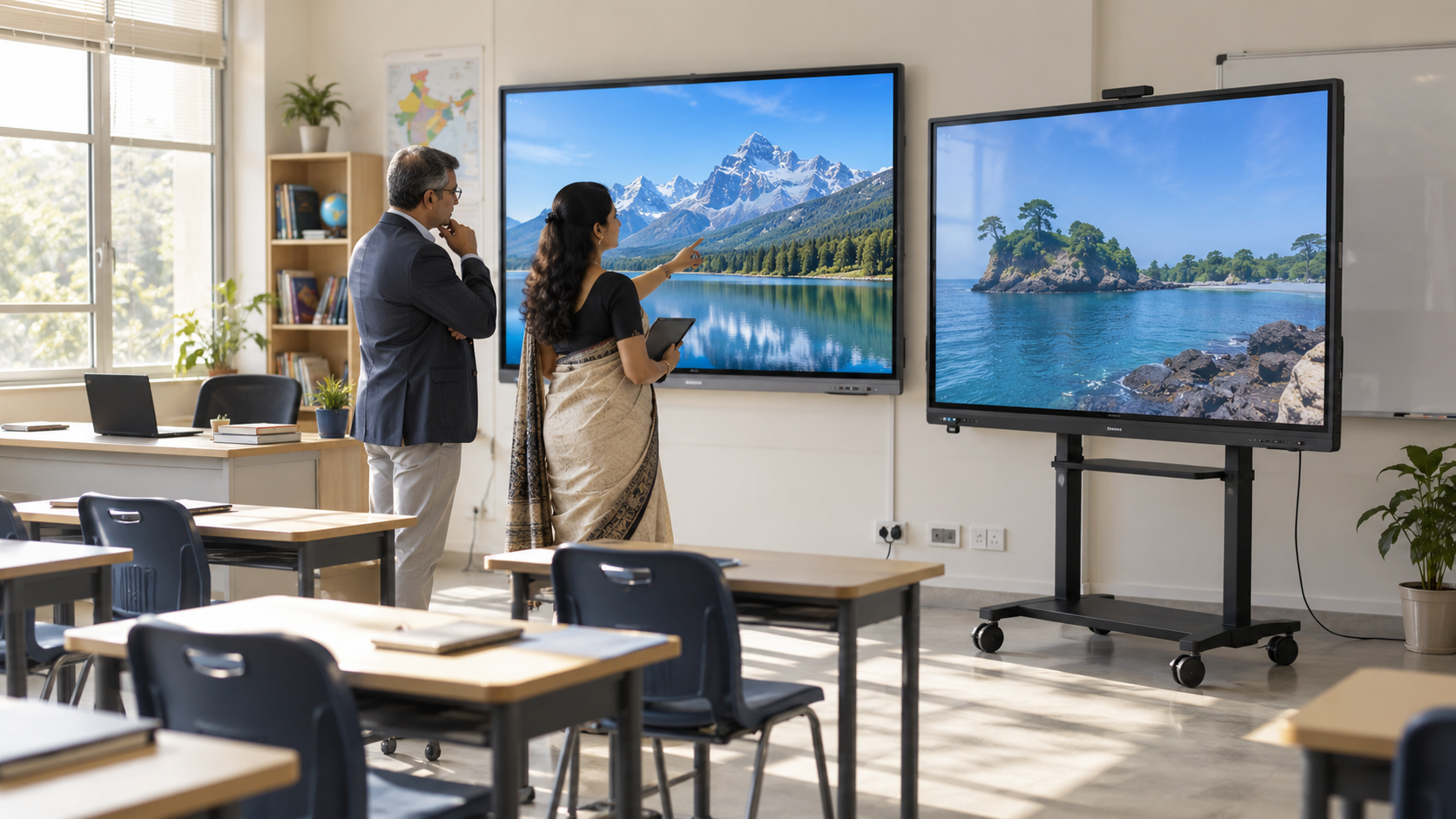
Why Standard Panels Fall Short: A standard 75-inch interactive flat panel in a large lecture hall often suffers from visibility issues for back-benchers, leading to disengagement. Furthermore, if the hardware is just a touch-screen TV, the teaching method rarely evolves beyond basic annotation.
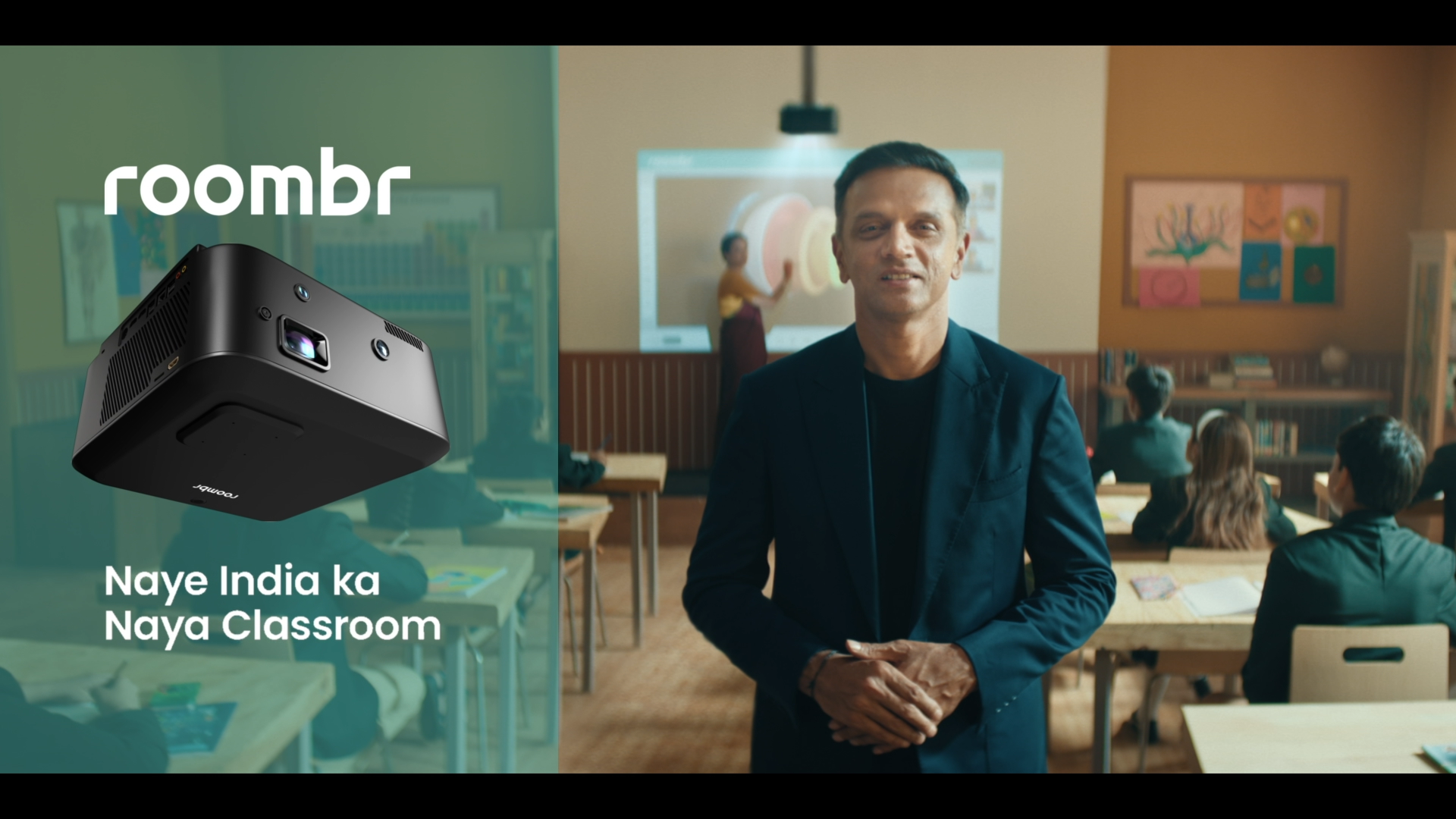
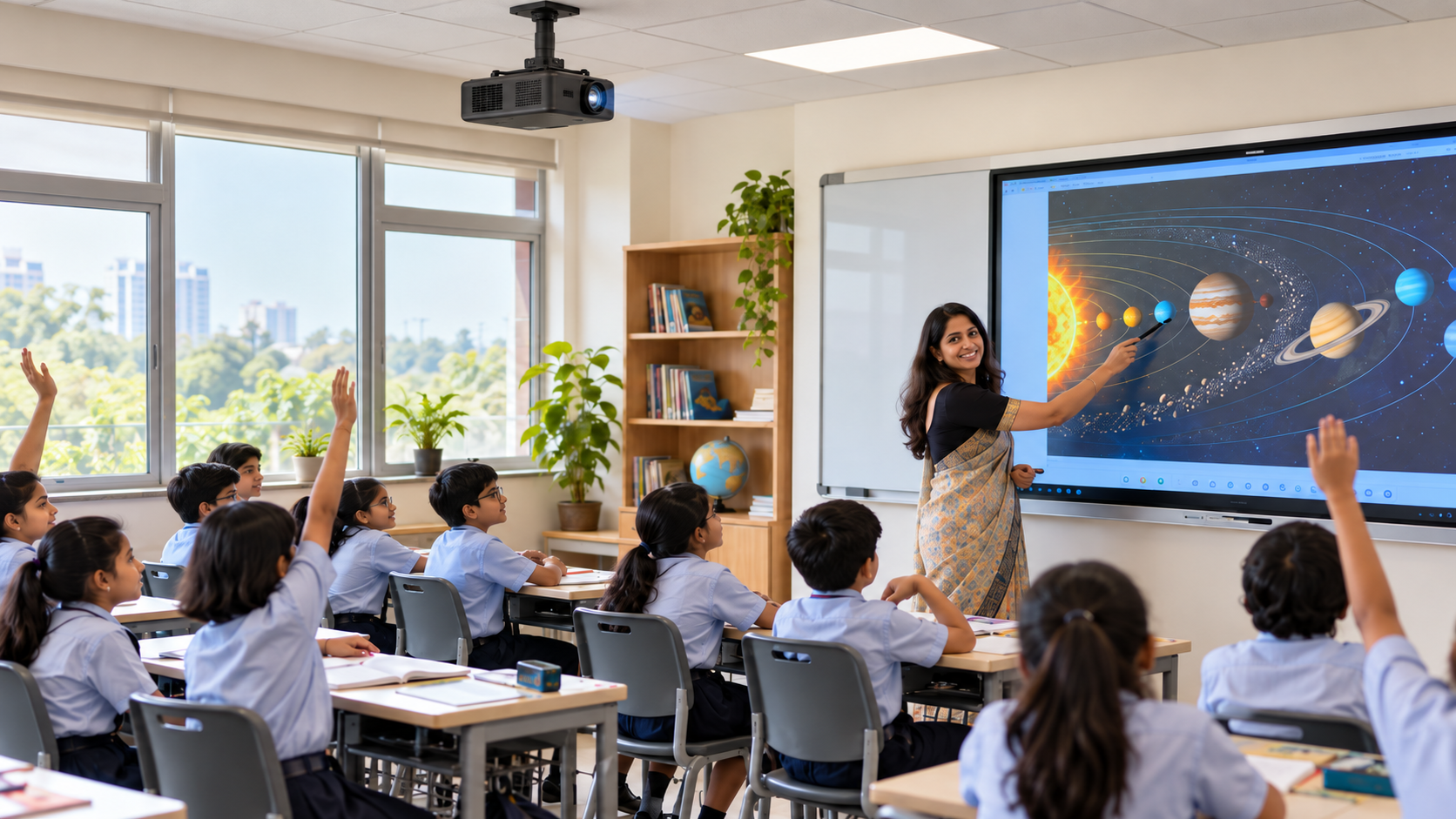
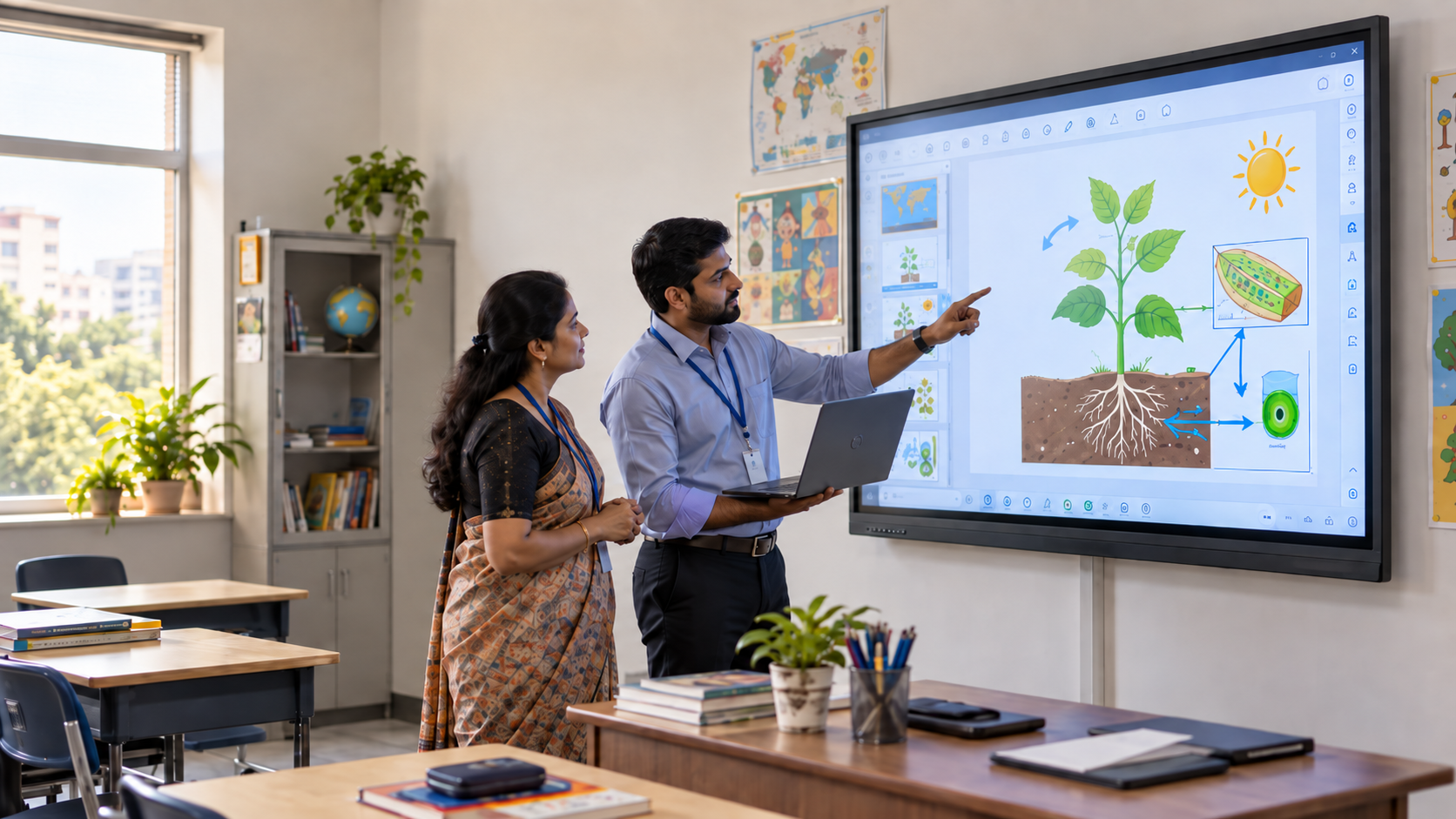
The Roombr Advantage: Roombr transforms your entire wall into a 100 to 200-inch interactive canvas. This massive scale ensures that every student, even in the last row, is visually immersed. But the real game-changer for accreditation is the 3D-enabled hardware.
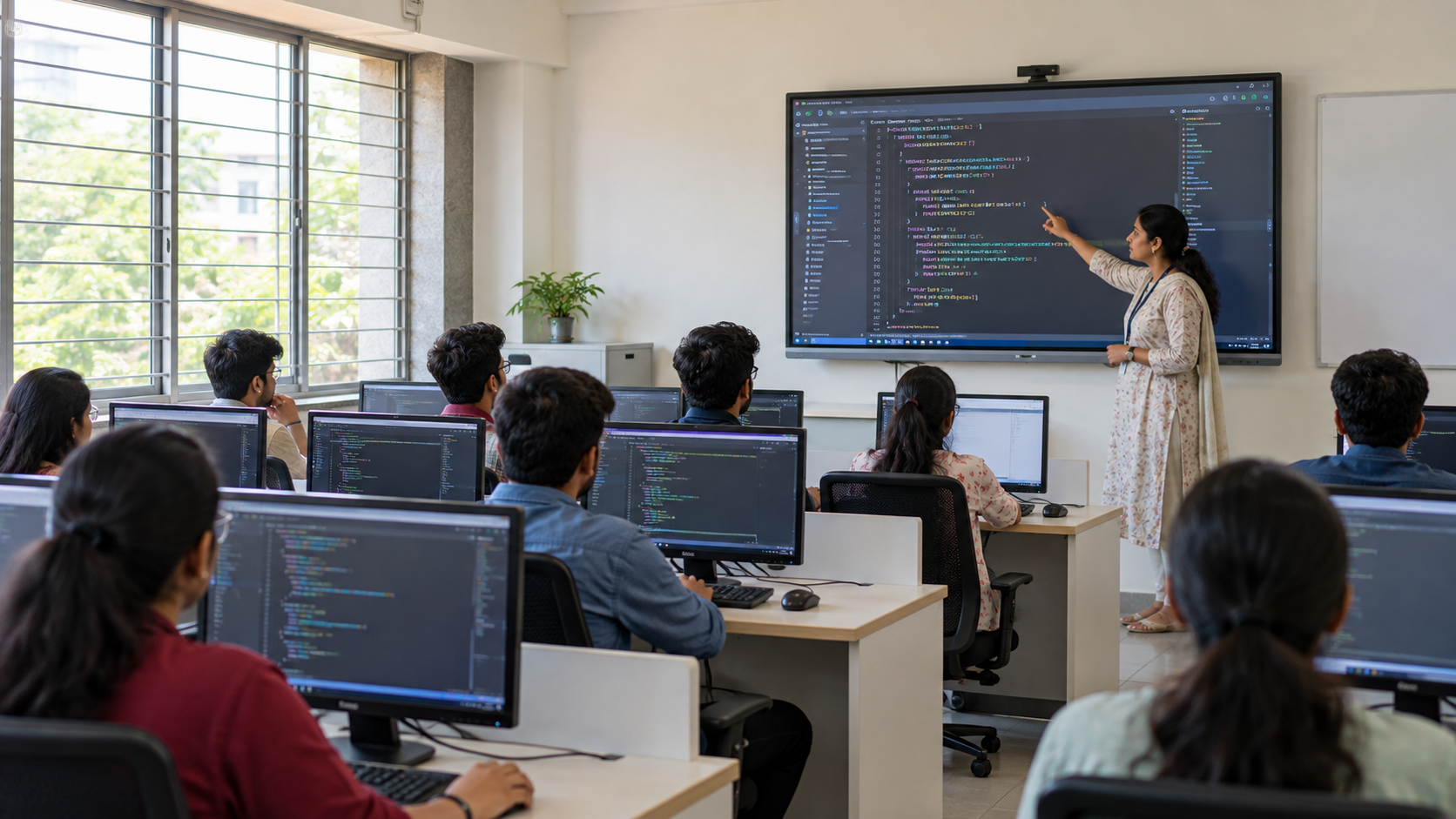
Imagine a Civil Engineering professor not just describing a bridge truss but manipulating a 3D model of it on a 200-inch surface. This is verifiable evidence of high-level ICT usage. When auditors ask to see innovative teaching methods, you don't just show them a logbook. You show them a smart classroom that brings complex engineering and scientific concepts to life.
NBA Criterion 4: The Evidence Gap in Student Performance

Criterion 4 is often the hardest to document. It requires proof of Continuous Improvement and support for students who are struggling (weak learners).
The Challenge: Every college claims they conduct remedial classes. But when the peer team asks for proof, what do you show? An attendance register? That is weak evidence.
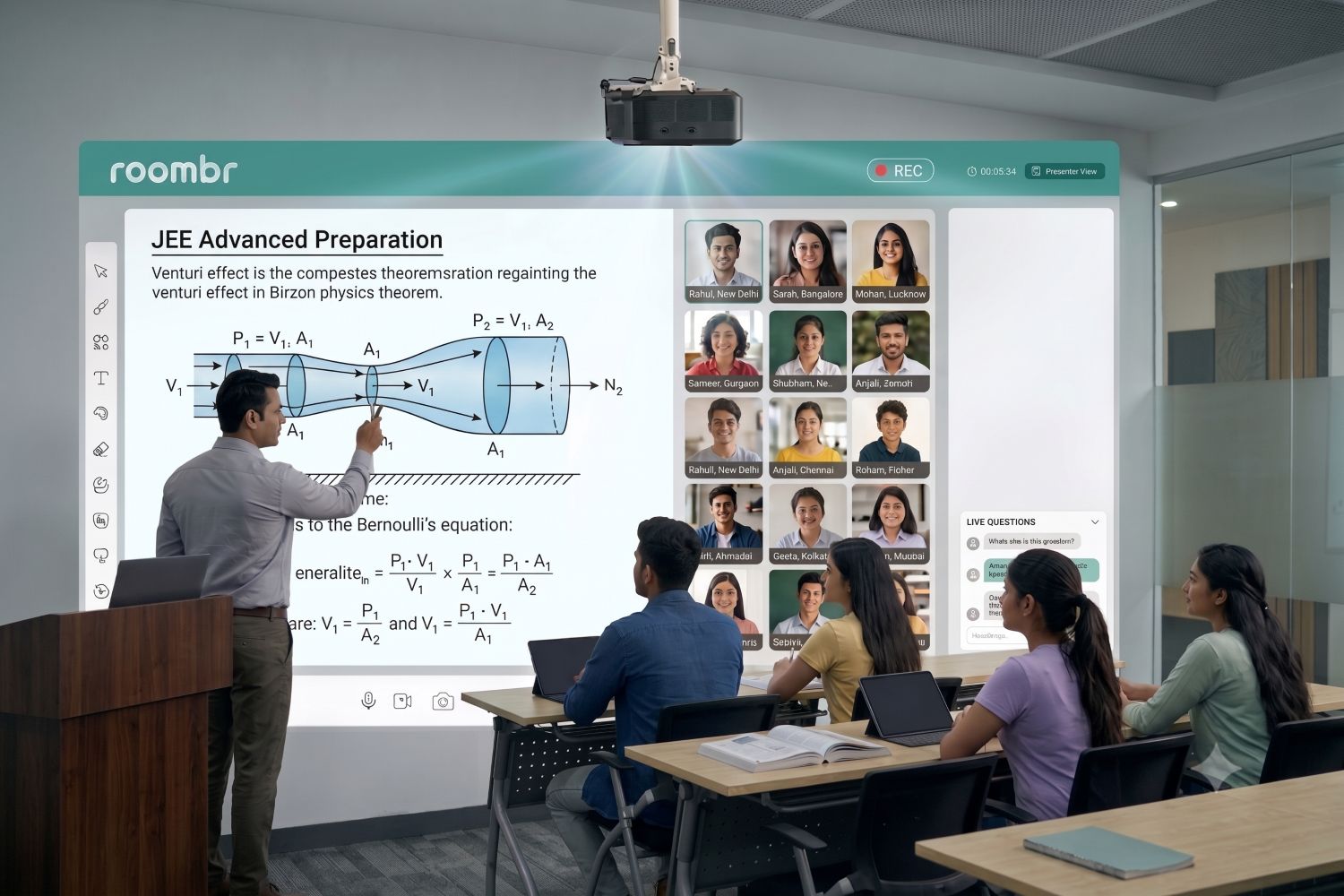
The Solution: This is where Roombr becomes your accreditation partner. It acts as an automated lecture recording solution that captures the classroom experience without the teacher needing to press a single button.
- Automatic Digitization: Roombr records the lecture, the audio, and the digital notes simultaneously.
- Structured Content: The AI edits the session into structured chapters.
- The Compliance Win: When an auditor asks, "How do you support slow learners?", you can open the Roombr app and show the exact digital logs where weak students accessed recorded remedial lessons to revise concepts they missed.
This closes the loop. You aren't just saying you support students. You are providing digital records and assessments that prove it.
NBA Criterion 7: Infrastructure Efficiency & Maintenance
Criterion 7 evaluates Continuous Improvement (which includes infrastructure maintenance) and Facilities.
A major red flag for auditors is a complicated classroom structure. It is a digital classroom setup that involves a web of HDMI cables, a separate desktop tower gathering dust on the floor, a ceiling-mounted projector, and a separate interactive whiteboard.
The Problem:
- High failure rate (one loose cable stops the class).
- High maintenance (multiple vendors for PC, Projector, and Audio).
- Poor aesthetic appeal (looks cluttered and unprofessional).
The Roombr All-in-One Appeal: Roombr consolidates the entire smart classroom equipment list into a single, wall-mounted computing unit. It houses the Intel i5/i7 processor, the projection unit (1500 ANSI Lumens), the Harman speakers, and the camera array in one sleek device.
For the NBA peer team, this signals operational efficiency. It shows that the institution has invested in sustainable, low-maintenance technology that ensures the availability of resources (a key sub-criterion) is always high. There is no downtime waiting for the IT guy to fix a cable.
NBA Criterion 5: Reducing Admin Work to Boost Innovation
Criterion 5 focuses on Faculty Information and Contributions. The NBA wants to see faculty publishing papers, filing patents, and innovating, not spending 20 minutes copying notes onto a USB drive.
Roombr operates on a Classroom to Cloud model.
- Zero-Touch Saving: Whatever the teacher writes on the interactive wall is automatically saved to the cloud.
- Instant Sharing: Students receive the notes instantly via the app.
By automating the administrative grunt work, you free up faculty bandwidth. When teachers aren't struggling with technology, they have the mental space to focus on the pedagogy and research that actually drives accreditation scores up.
The “Show, Don't Tell” Strategy for the Peer Team Visit
When the NBA team arrives, you can use your smart classroom as a presentation tool for the department profile.
Instead of a boring PPT in the conference room, take the auditors to a Roombr-enabled classroom.
- Demonstrate Interactivity: Use the stylus on the wall to pull up the SAR data.
- Show the Analytics: Open the Roombr dashboard to show student engagement metrics (Predictive Analytics).
- Play a Clip: Play a 30-second clip of a recorded lecture to demonstrate the audio-visual clarity available to students.
This "Show, Don't Tell" approach creates a psychological impact. It proves that your institution is future-ready and genuinely invested in student outcomes.
Final Thoughts
The National Board of Accreditation (NBA) doesn't just evaluate your facilities. They evaluate your intent. While traditional hardware like a standalone interactive flat panel checks a box on a procurement list, it often fails to capture the learning outcomes that define modern excellence.
Accreditation is ultimately a data game. By deploying a holistic smart classroom solution, you aren't just upgrading technology. You are building an automated evidence engine. Roombr transforms the classroom from a passive teaching space into a verifiable ecosystem of continuous improvement, ensuring that when the peer team arrives, your data speaks louder than your claims.
Frequently Asked Questions (FAQs)
Q1: How does a smart classroom help with Course Outcome (CO) attainment?
A system like Roombr tracks student engagement and assessment performance through its app. This data can be directly mapped to specific COs, providing the quantitative evidence needed for your attainment calculations.
Q2: Is lecture recording mandatory for NBA?
While not explicitly mandatory, Criterion 4 requires evidence of remedial teaching. A lecture recording solution is the most efficient, irrefutable way to prove that students have access to learning materials beyond classroom hours.
Q3: Can we use standard interactive flat panels for OBE?
You can, but they often lack the integrated analytics and automated recording features required for seamless data collection. You will likely need to buy separate software and hardware to achieve what Roombr does natively.
Q4: How does Roombr help with Faculty appraisal (Criterion 5)?
By automating note-sharing and recording, Roombr allows faculty to build a digital portfolio of their teaching content effortlessly. This digital repository is excellent evidence of faculty contribution and innovative teaching methods.
Q5: How does a smart classroom support NBA Course Outcome (CO) calculations?
Smart classrooms like Roombr automatically track student engagement and quiz results during lessons. This real-time data allows faculty to map student performance directly to Course Outcomes (COs), providing the verifiable analytics auditors require for your Self Assessment Report (SAR) documentation.
Q6: Does installing smart classrooms improve NBA Criterion 7 scores?
Yes, if the infrastructure ensures Continuous Improvement. Roombr boosts Criterion 7 scores by replacing cluttered setups with a single, low-maintenance unit. This demonstrates operational efficiency and ensures resources are consistently available for students, directly satisfying the Facilities and Technical Support requirements.
Secure Your NBA Accreditation Score with Roombr’s Future-Ready Smart Classroom
Don't let a lack of digital evidence compromise your institution's grade. It is time to move beyond fragmented tools and adopt a cohesive strategy for Outcome-Based Education.
Experience firsthand how Roombr’s integrated digital classroom setup automates the documentation required for your Self Assessment Report (SAR). Our experts are ready to demonstrate how our Classroom-to-Cloud technology aligns perfectly with NBA criteria, saving your faculty time while maximizing student engagement. Stop guessing about compliance and start proving it.
Book a Personalized Demo for Your IQAC Team Now.

Foziya Abuwala
Share
Step Into the future of
Education with Roombr