
.png)
The 2026 National Assessment and Accreditation Council (NAAC) cycle has arrived with a paradigm shift: the Maturity-Based Graded Accreditation (MBGA). For college principals and IQAC (Internal Quality Assurance Cell) coordinators in India, the pressure isn't just about having technology anymore. It is about the adequacy and utilization of that technology.
Under the new guidelines, Criterion 4.1.3 (focused on classrooms and seminar halls with ICT-enabled facilities) is no longer a yes/no checkbox. It is a sliding scale of quality. If you are currently debating between a standard Interactive Flat Panel (IFP) and the Roombr’s holistic digital classroom solution, you are making a decision that will echo through your Self-Study Report (SSR) for the next five years.
In this guide, we break down why the right hardware choice is the difference between a Level 2 and a Level 5 maturity rating.
Why Display Size is Important for Criterion 4.1.1 & 4.1.3
NAAC peer teams don't just look at your purchase orders. They look at the student experience. Criterion 4.1.1 specifically asks for the adequacy of facilities for teaching-learning.
The Interactive Flat Panel (IFP) Limitation
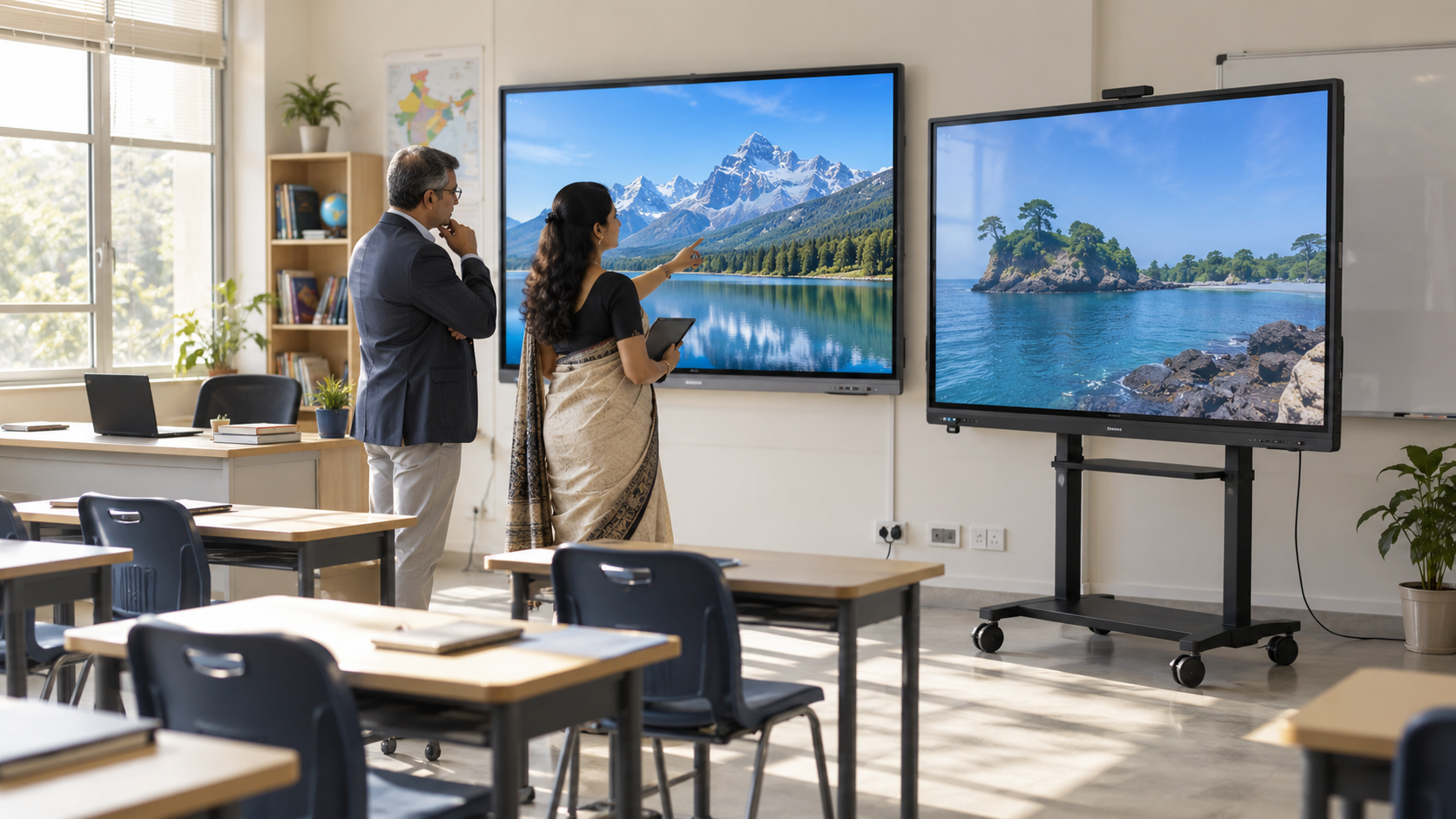
Most institutions opt for an interactive flat panel in the 65-inch to 86-inch range. While these look impressive in a small meeting room, they fail the backbencher test in a standard lecture hall designed for 60 to 100 students. If the students in the last three rows cannot clearly read the text on the screen, your infrastructure is technically inadequate for the batch size.
The Roombr Interactive Walltop Advantage
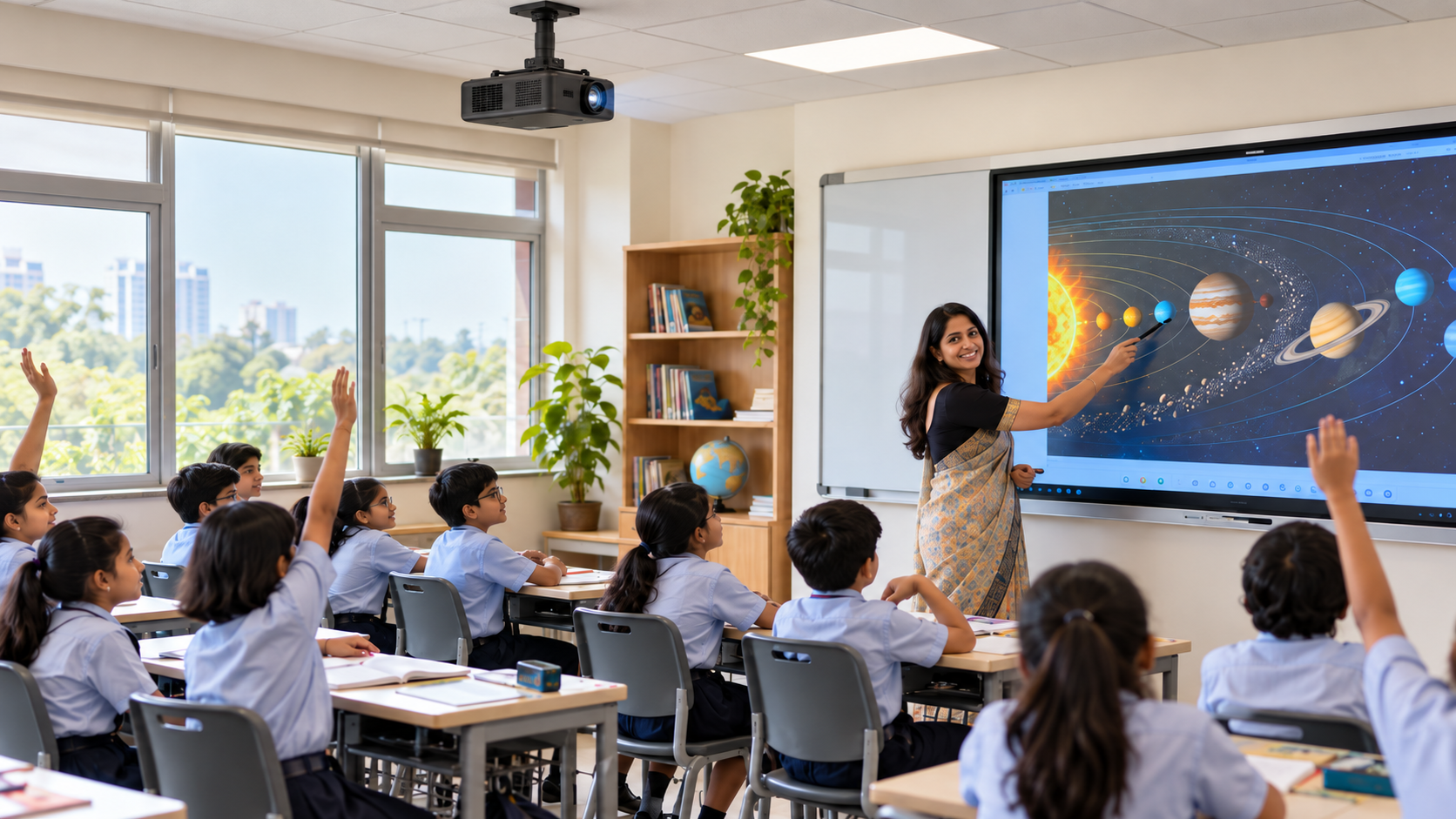
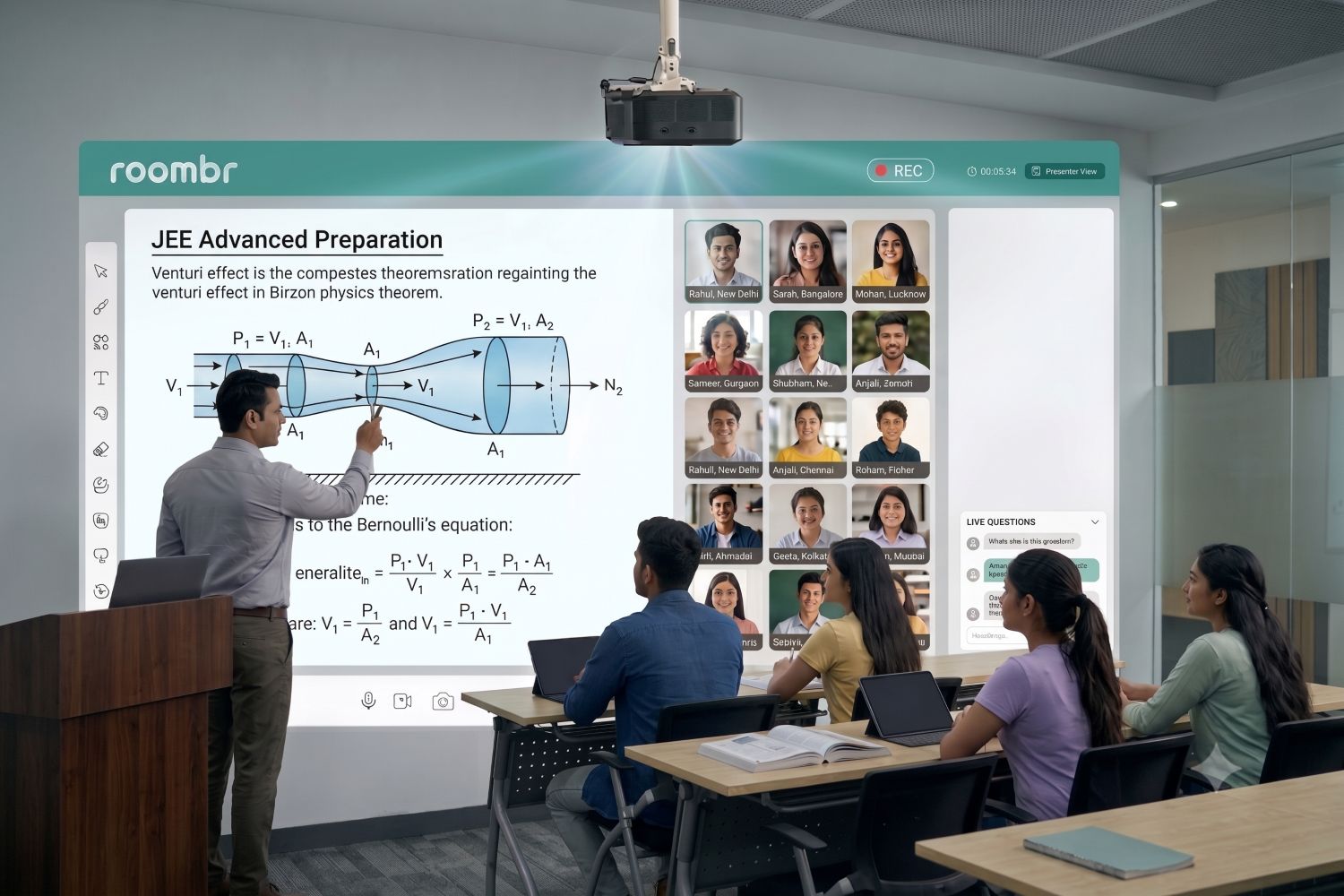
Roombr doesn't just provide a screen. It creates a digital classroom setup by transforming your entire front wall into an interactive display of up to 200 inches.
- Visibility: Every student, from the first row to the last, has a clear, unobstructed view.
- Impact: In your NAAC documentation, you can confidently claim 100% visual inclusivity, a high-value metric that IFPs simply cannot reach at standard sizes.
Built-in Lecture Capturing System (LCS)
One of the most rigorous parts of the NAAC process is the Data Validation and Verification (DVV). You need proof that your smart classroom equipment is actually being used for ICT-enabled teaching.
IFPs and the Thin Evidence Problem
A standard interactive panel is a display. To record a lecture, a teacher must manually set up a separate camera, a tripod, and a microphone, and then find a way to merge the screen recording with the video. Because this is cumbersome, teachers rarely do it. When the NAAC peer team asks for e-content developed by teachers (Criterion 4.3.4), many colleges have very little to show.
Roombr’s Integrated LCS
Roombr is designed as a holistic lecture-capturing system. With a single click, the device records:
- The high-definition content on the wall
- The teacher’s physical movements (via the built-in dual-camera system)
- The audio (via a high-gain mic array)
This automated evidence generation is a goldmine for IQAC coordinators. It provides a library of geotagged, timestamped video logs that prove your institution is a leader in blended learning.
Securing the A++: A Technical Comparison Table
To help your management see the vision, here is how the hardware choices map directly to NAAC scoring potential.
From ICT-Enabled to Outcome-Based Education (OBE)
The new Maturity-Based system prioritizes Criterion 2: Teaching-Learning and Evaluation. NAAC wants to see how your technology improves learning outcomes.
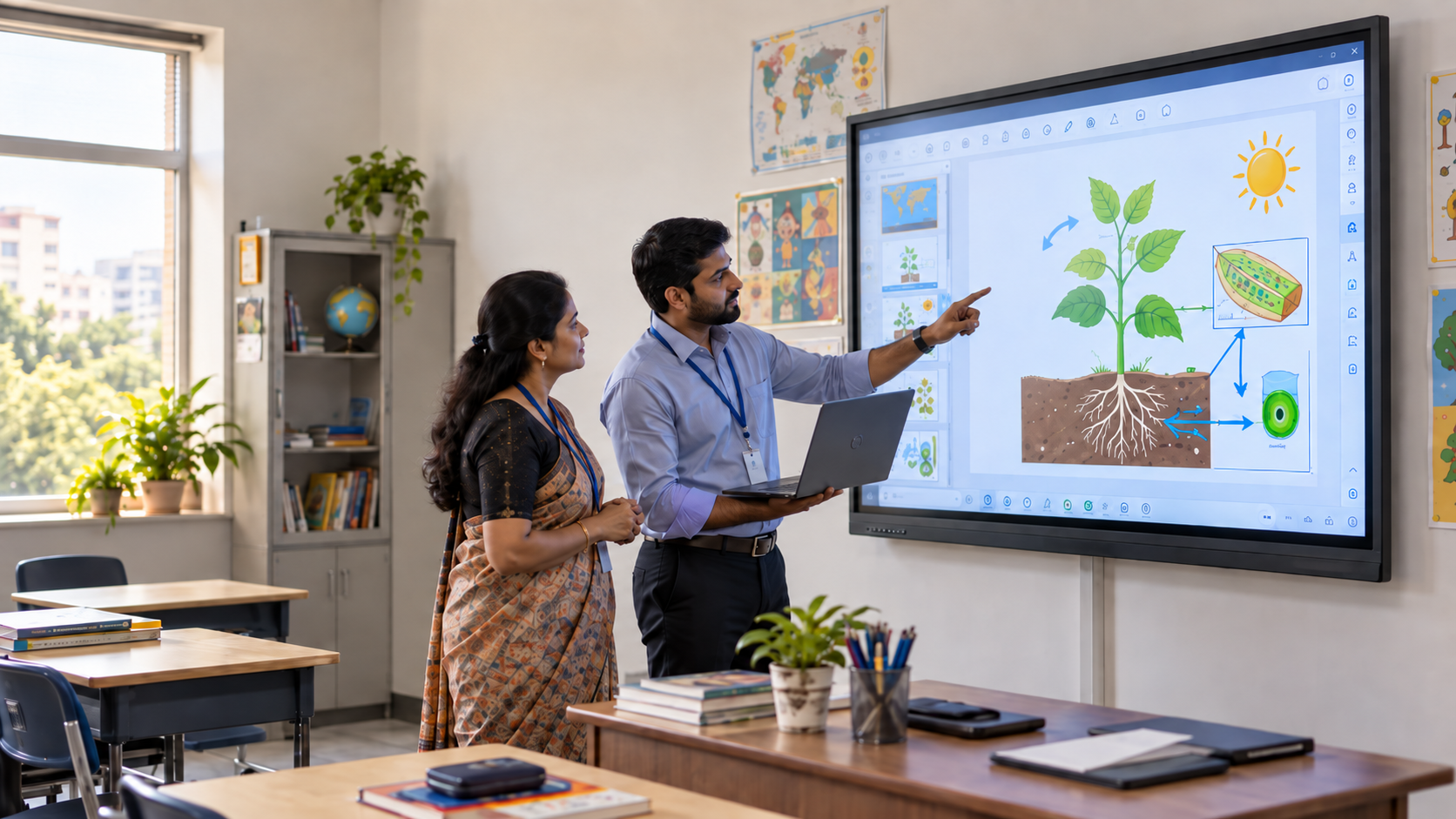
A digital classroom shouldn't just be a digital version of a textbook. Roombr’s software suite allows for real-time collaboration. Because it serves as a walltop computer and not just a panel. Teachers have the space to run side-by-side simulations, keep permanent notes on one side while showing a video on the other, and pull in live web resources without losing the flow of the lecture.
When the peer team visits, seeing a teacher effortlessly navigate a 200-inch interactive canvas creates a wow factor that a 75-inch TV screen simply cannot replicate. It signals that your institution is not just keeping up with the times, it is defining the future of Indian education.
Final Verdict
If you are a small coaching center or a classroom for five to ten students, an interactive flat panel might suffice.
However, if you are a Higher Education Institution (HEI) aiming for NAAC Level 4 or 5, you cannot afford small infrastructure. The Roombr interactive wall provides the visibility required for Criterion 4.1.1, the evidence-generation required for Criterion 4.3.4, and the integrated simplicity required for a clean Criterion 4.4.1 audit.
Choosing Roombr is more than a hardware upgrade. It is a strategic move to future-proof your accreditation.
Request Your Custom NAAC Digital Readiness Roadmap
With the 2026 Maturity-Based Graded Accreditation (MBGA), simply having ICT only secures a baseline grade. To reach the coveted Level 5, you must demonstrate deep faculty adoption and pedagogical transformation. Institutions fail this metric because their technology is too complex for daily use, leading to thin evidence in the SSR.
Our specialized digital readiness audit goes beyond hardware specs. We help you map your specific departmental needs, from Science labs to Humanities halls, ensuring your infrastructure supports the student-centric outcomes required for Criterion 2.4. Let’s build an ecosystem your faculty will actually love, and your peer team will admire.
Book a free Roombr digital classroom demo today and make an informed decision for your institution.

Foziya Abuwala
Share
Step Into the future of
Education with Roombr