

In the rapidly evolving landscape of Indian education, terms like "innovation," "critical thinking," and "21st-century skills" are no longer just buzzwords. They are the benchmarks of a successful institution. As the National Education Policy (NEP) 2020 emphasizes a shift away from rote learning toward holistic, integrated, and enjoyable digital classroom learning, school leaders find themselves at a crossroads: STEM or STEAM?
While both frameworks aim to prepare students for a tech-driven world, understanding the nuances between them is crucial for decision-makers. More importantly, the success of either approach depends heavily on the educational equipment and the environment in which it is delivered.
What is STEM?
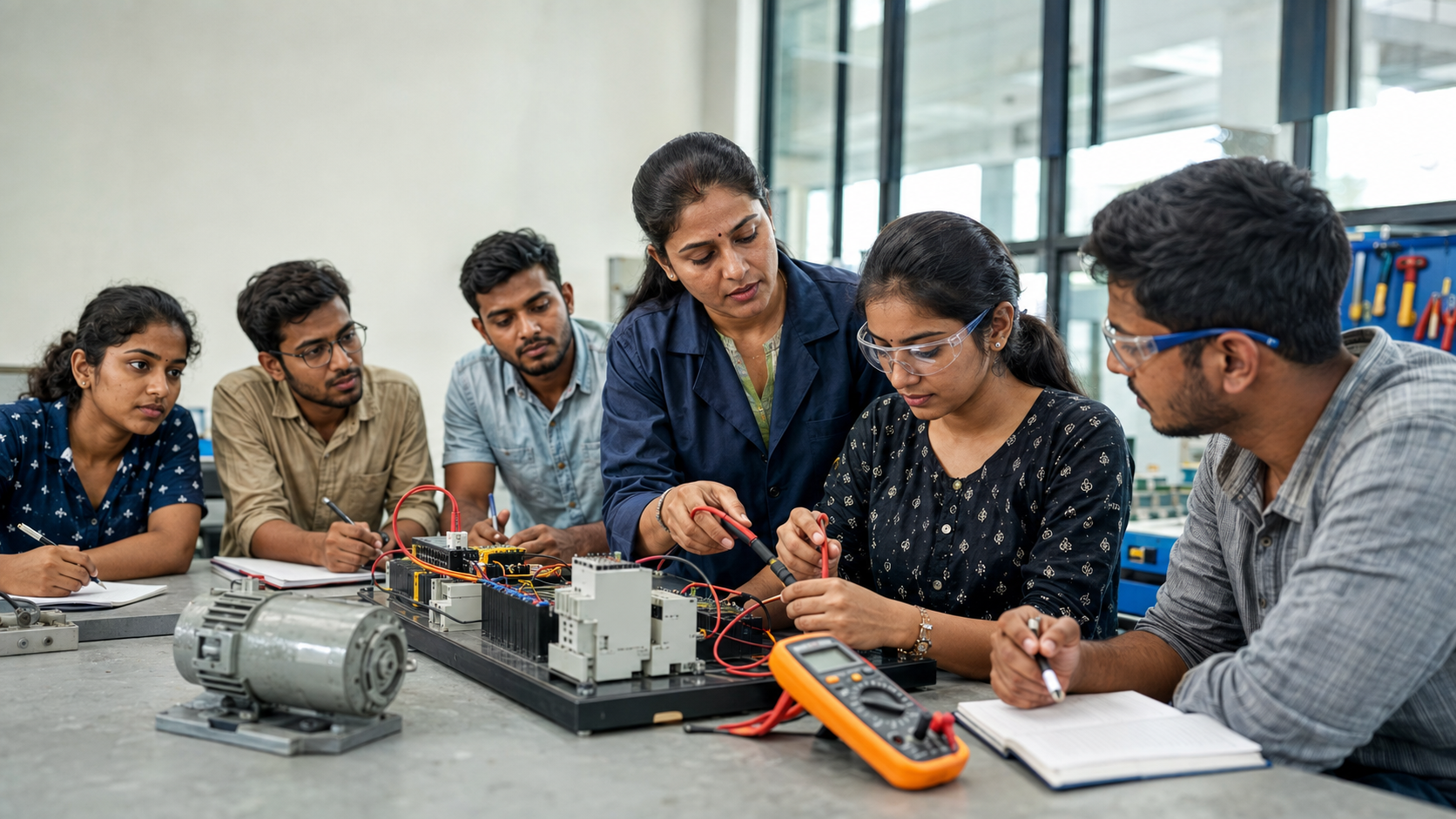
India has always been a STEM powerhouse. We’ve built our reputation on producing world-class engineers, doctors, and IT professionals. At its heart, STEM (Science, Technology, Engineering, and Mathematics) is about the "how" of the world. It’s linear, it’s logical, and it’s focused on finding a singular, correct solution to a problem.
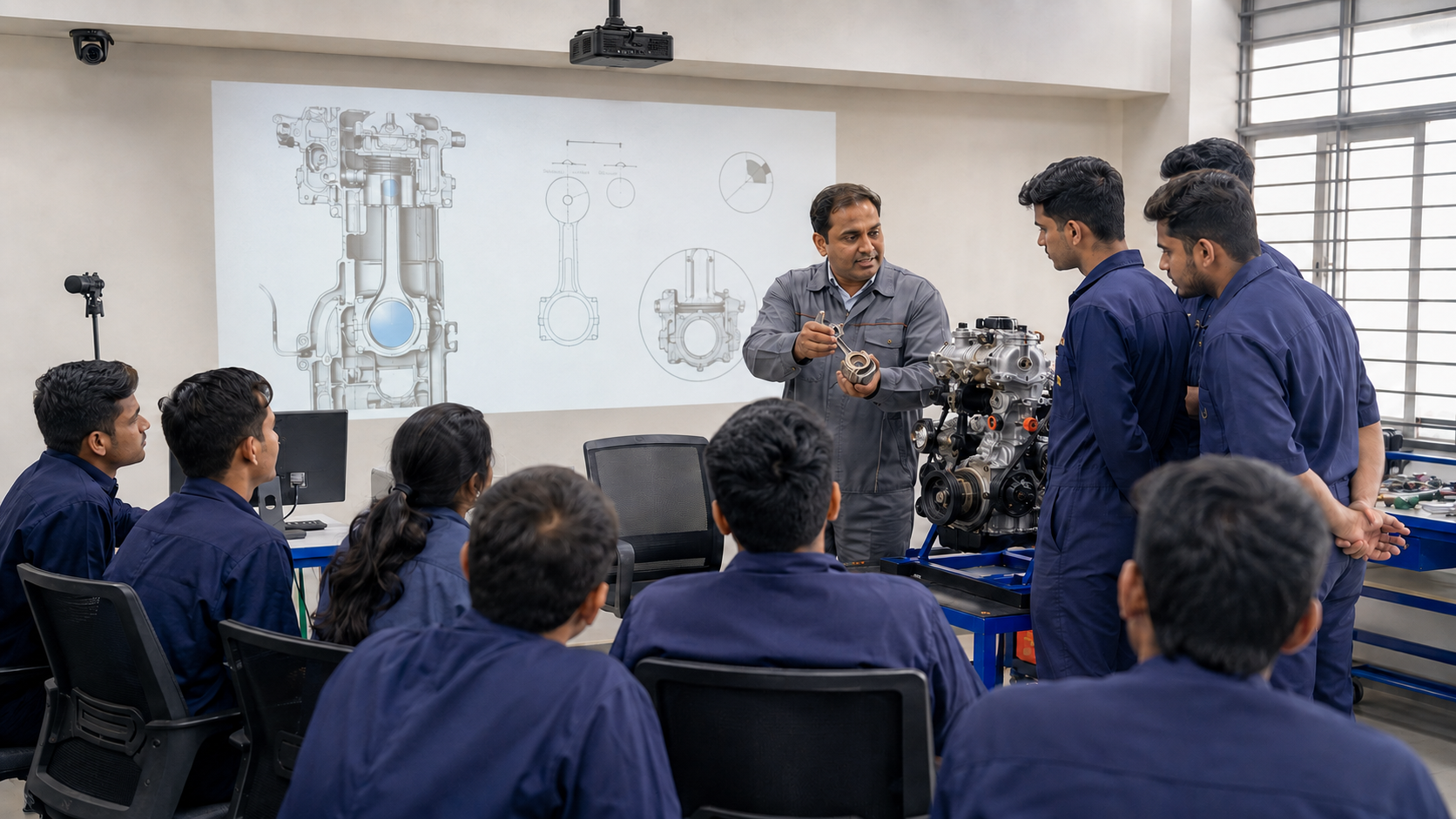
In the classroom, STEM is the backbone of technical literacy. It’s about teaching a student to code a script or calculate the load-bearing capacity of a bridge. It’s essential, but in the modern economy, being "just" a technical expert is no longer the career insurance it used to be.
What is STEAM?
This is where the ‘A’ comes in. STEAM takes the same technical foundation but adds the Arts, which is a broad umbrella for design, ethics, humanities, and creative communication.
If STEM is about building the engine, STEAM is about designing the whole car. It’s about empathy and user experience. The "Arts" component teaches students to ask: "Is this solution actually helpful for humans?" It moves the needle from rote problem-solving to genuine innovation. In a world where AI can now write basic code, the human ability to think creatively (the STEAM edge) is what will keep our students employable.
The Key Differences at a Glance
For those of us making the decisions, it helps to see the contrast clearly. It isn’t about one being better than the other; it’s about evolution.
How the Digital Classroom Enhances Both STEM and STEAM
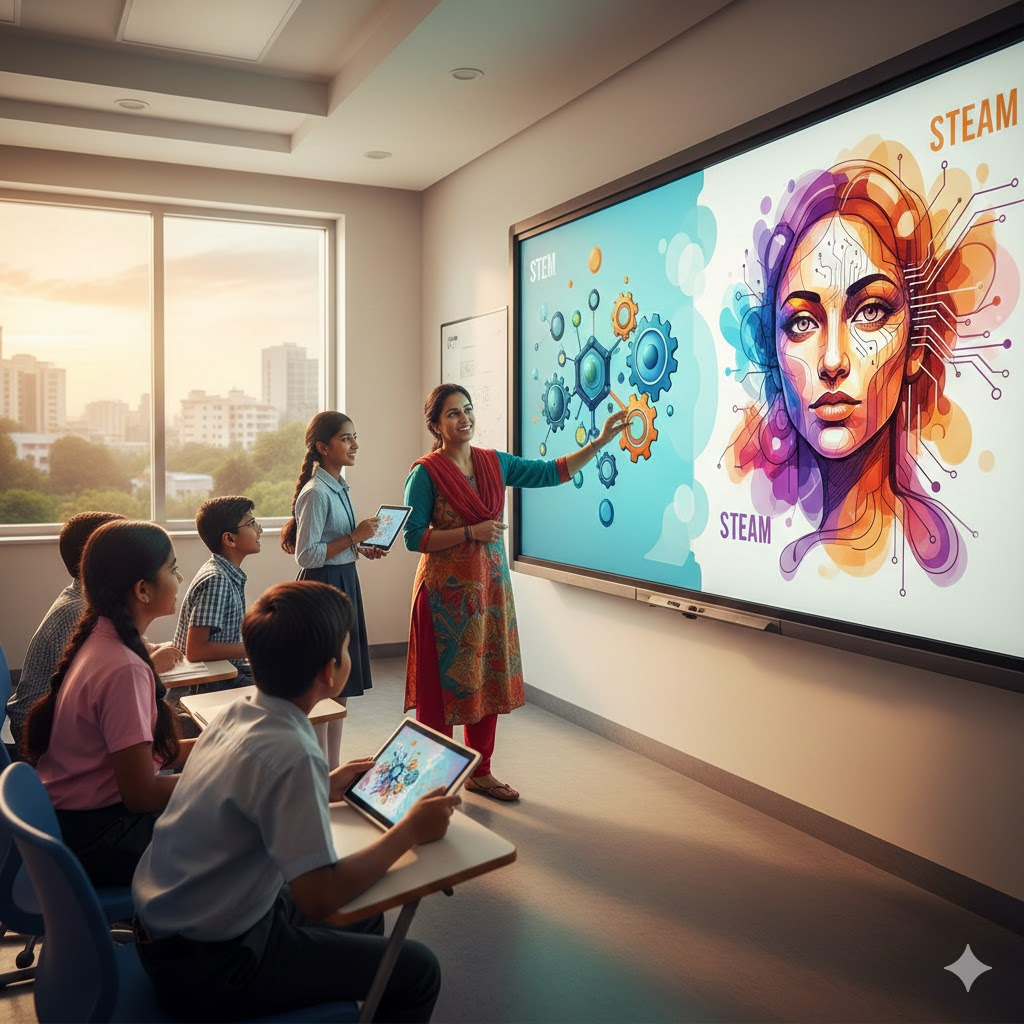
It’s a fact that teaching 21st-century concepts using 20th-century tools is ineffective. A green chalkboard is great for equations, but it’s a bottleneck for innovation. Whether your school is leaning toward STEM or STEAM, the digital classroom is the only way to bridge the gap between theory and practice.
1. Visualization is Everything for STEM
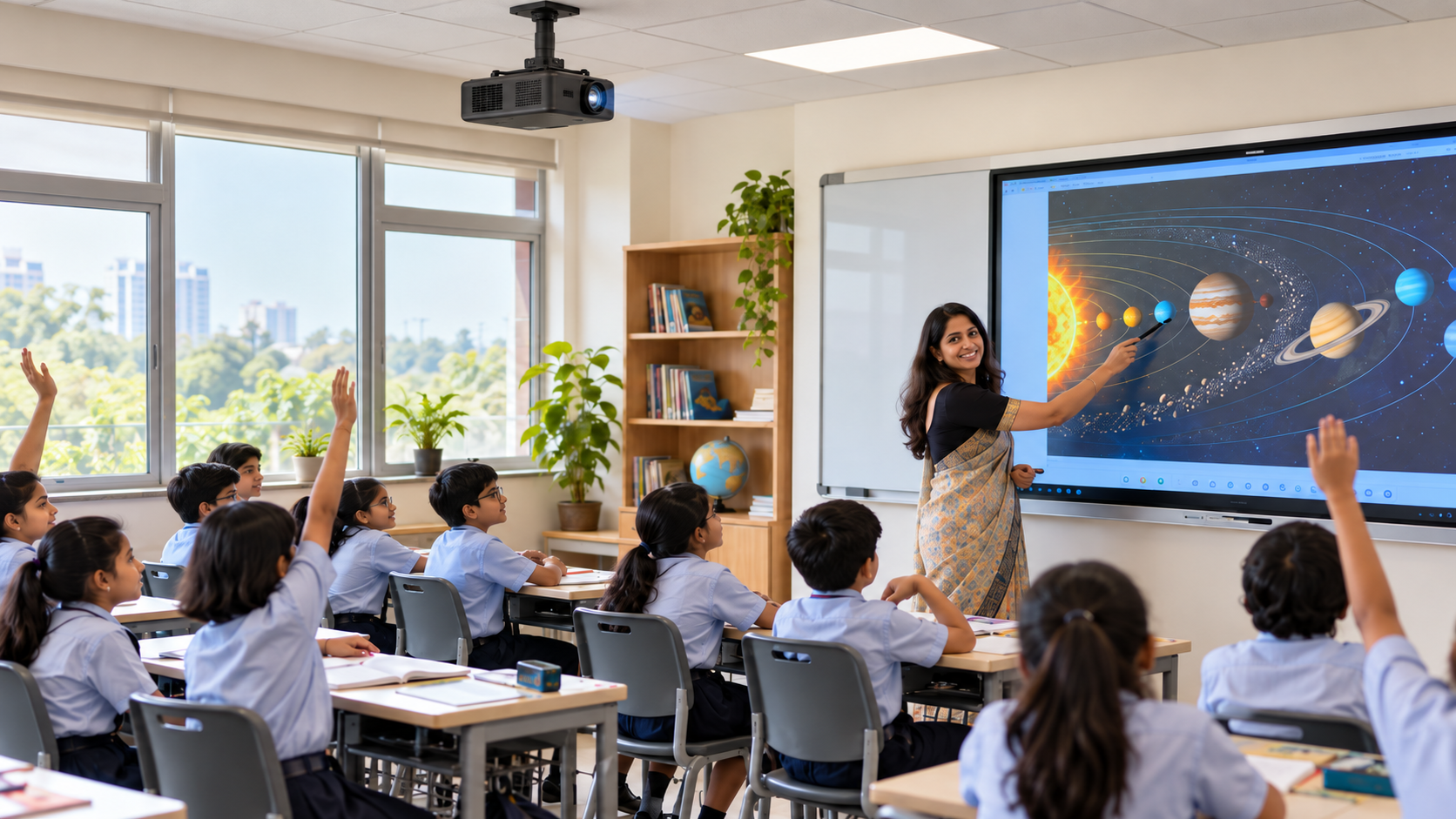
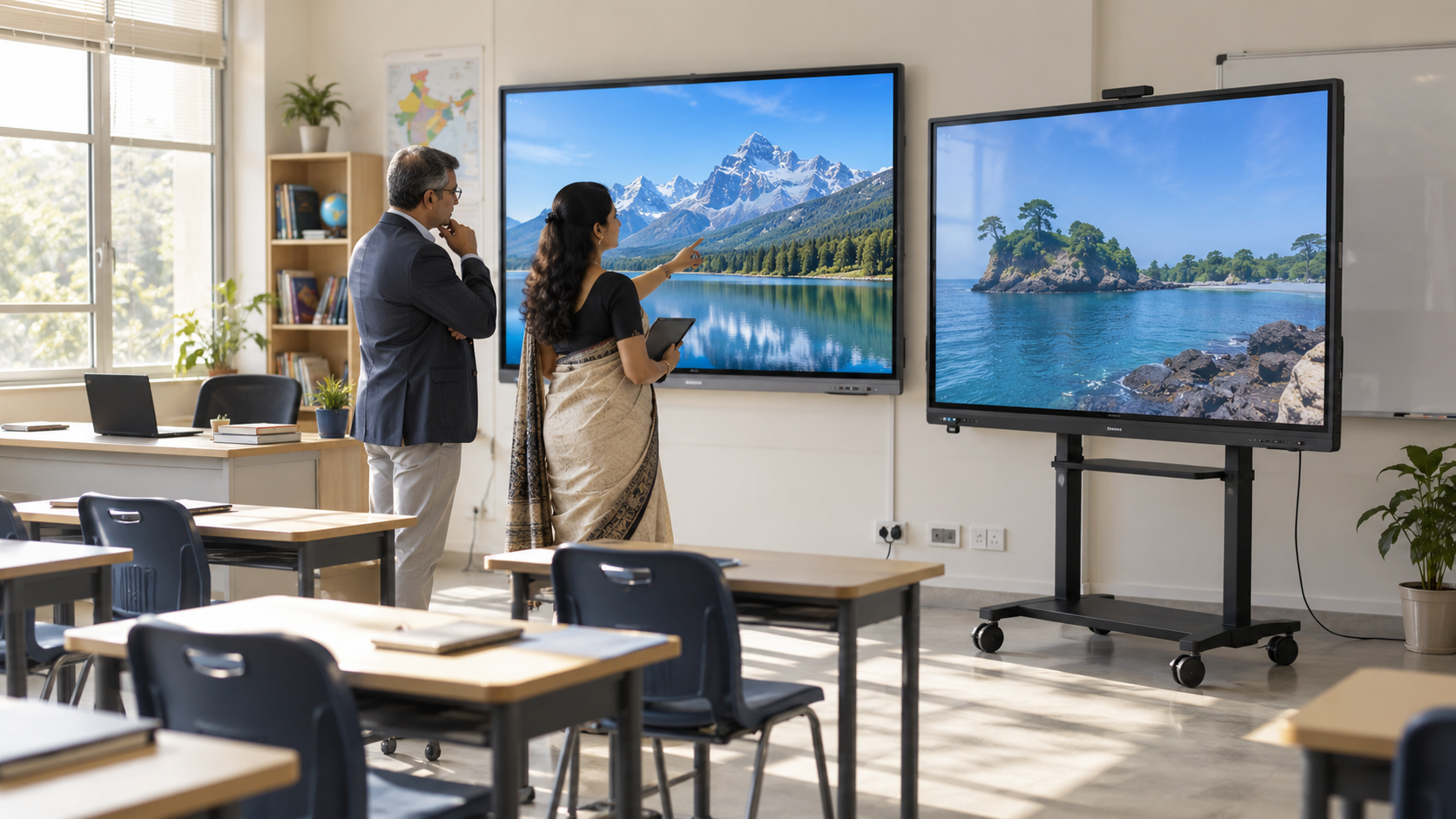
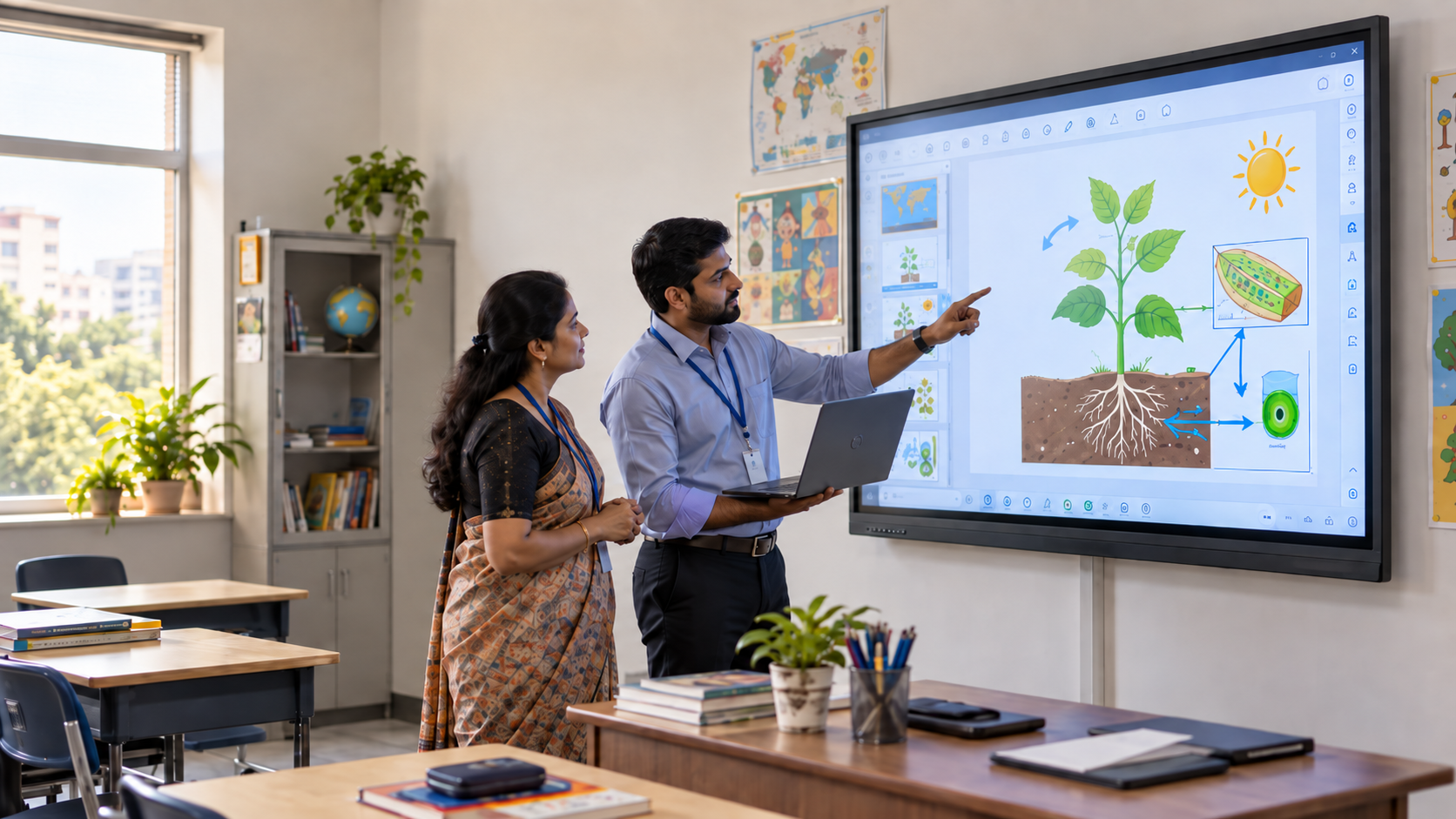
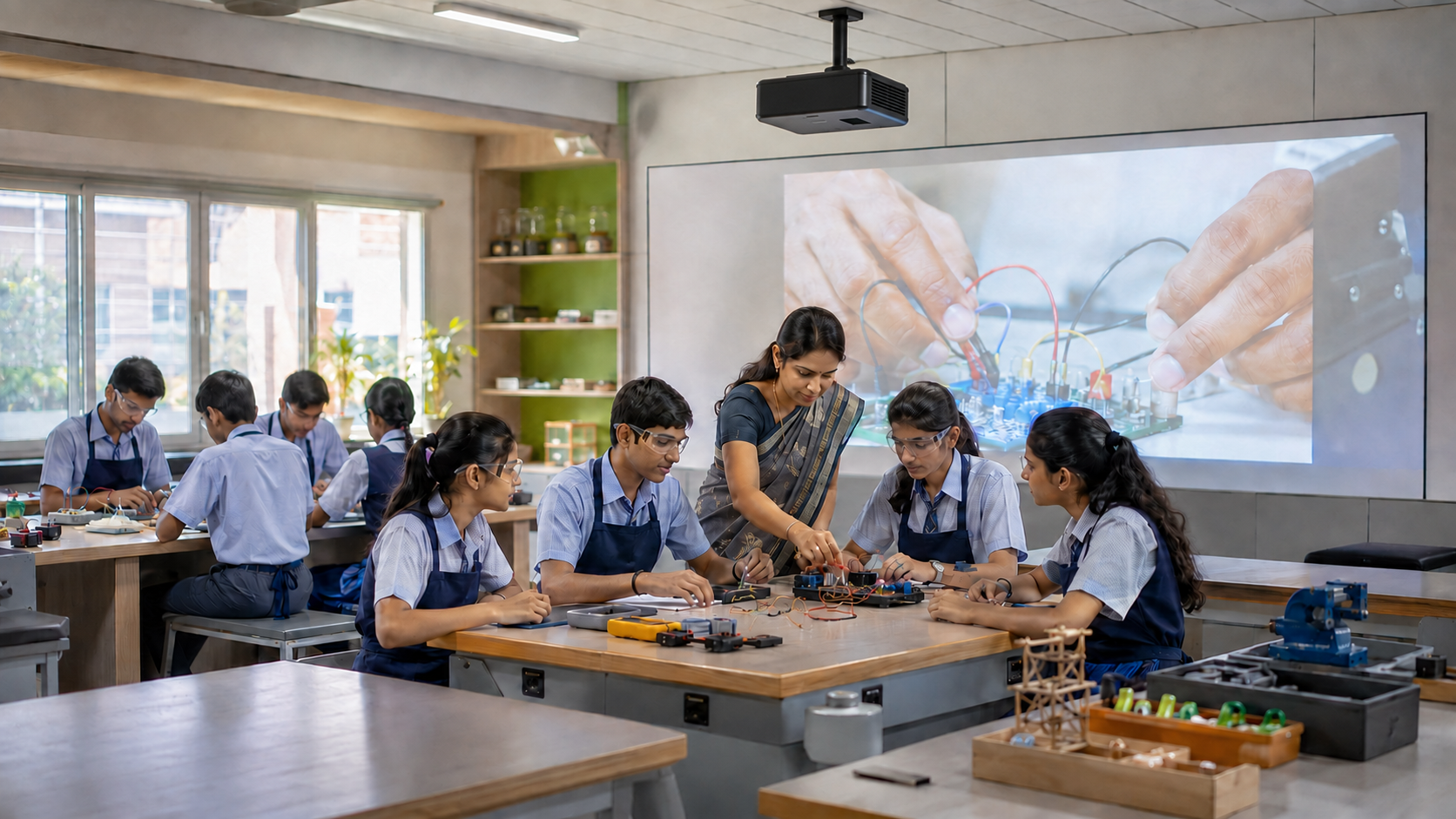
In a traditional lab, half the students are usually struggling to see the experiment. In a smart classroom, that same experiment can be projected onto a wall-sized interactive surface. When you can pull up a 3D model of a human heart or a tectonic plate and rotate it with a touch, the logic of STEM becomes a visual reality rather than a paragraph in a textbook.
2. STEAM Thrives on Collaboration
The "Arts" in STEAM require a canvas. When your interactive whiteboard isn't just a screen but a giant collaborative workspace, magic happens. A science teacher and an art teacher can work on the same surface, showing how geometric patterns (Math) influence Islamic architecture (Arts). It turns the classroom from a place of "lectures" into a "studio."
3. Streamlining the Tech Stack
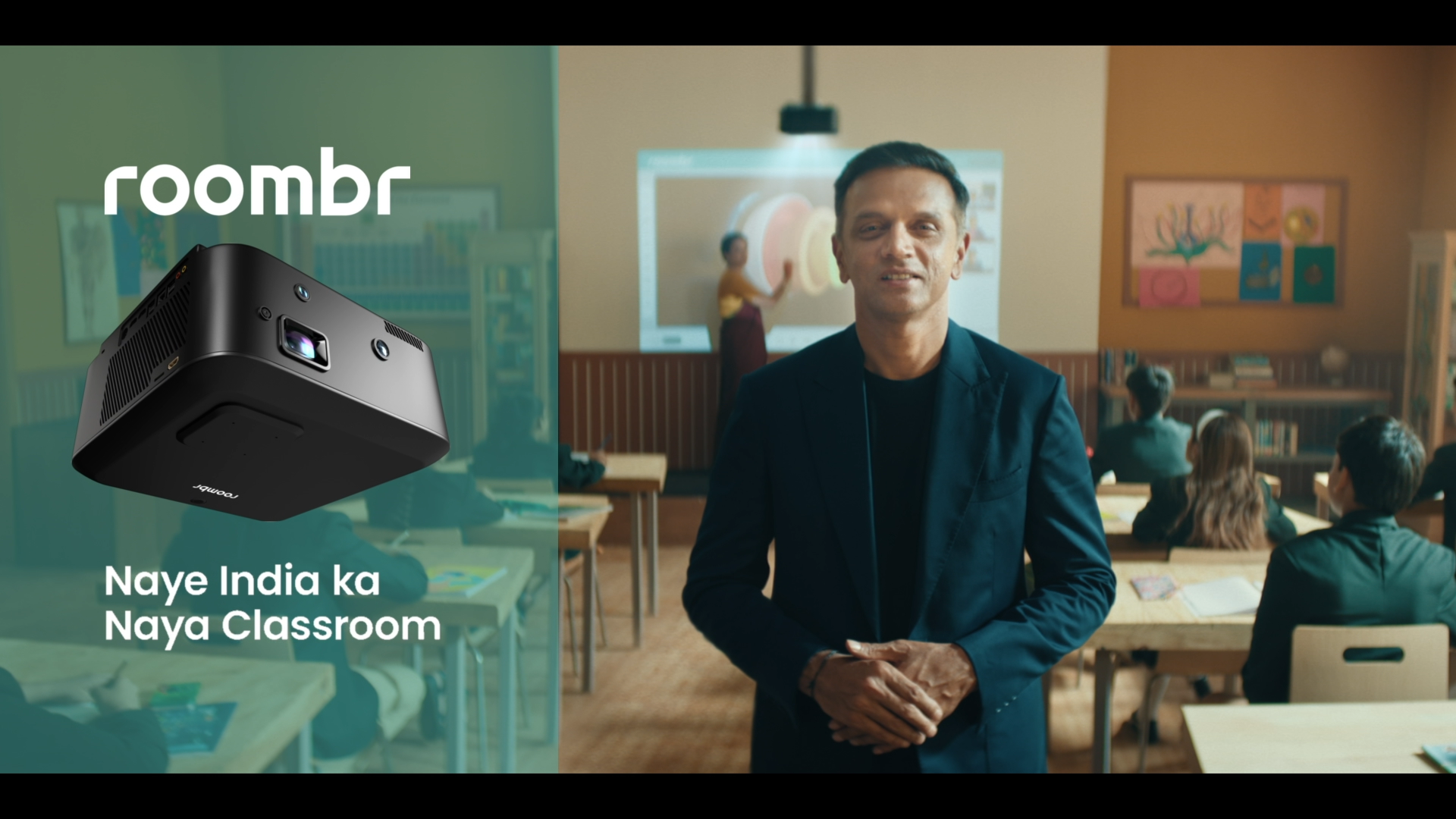
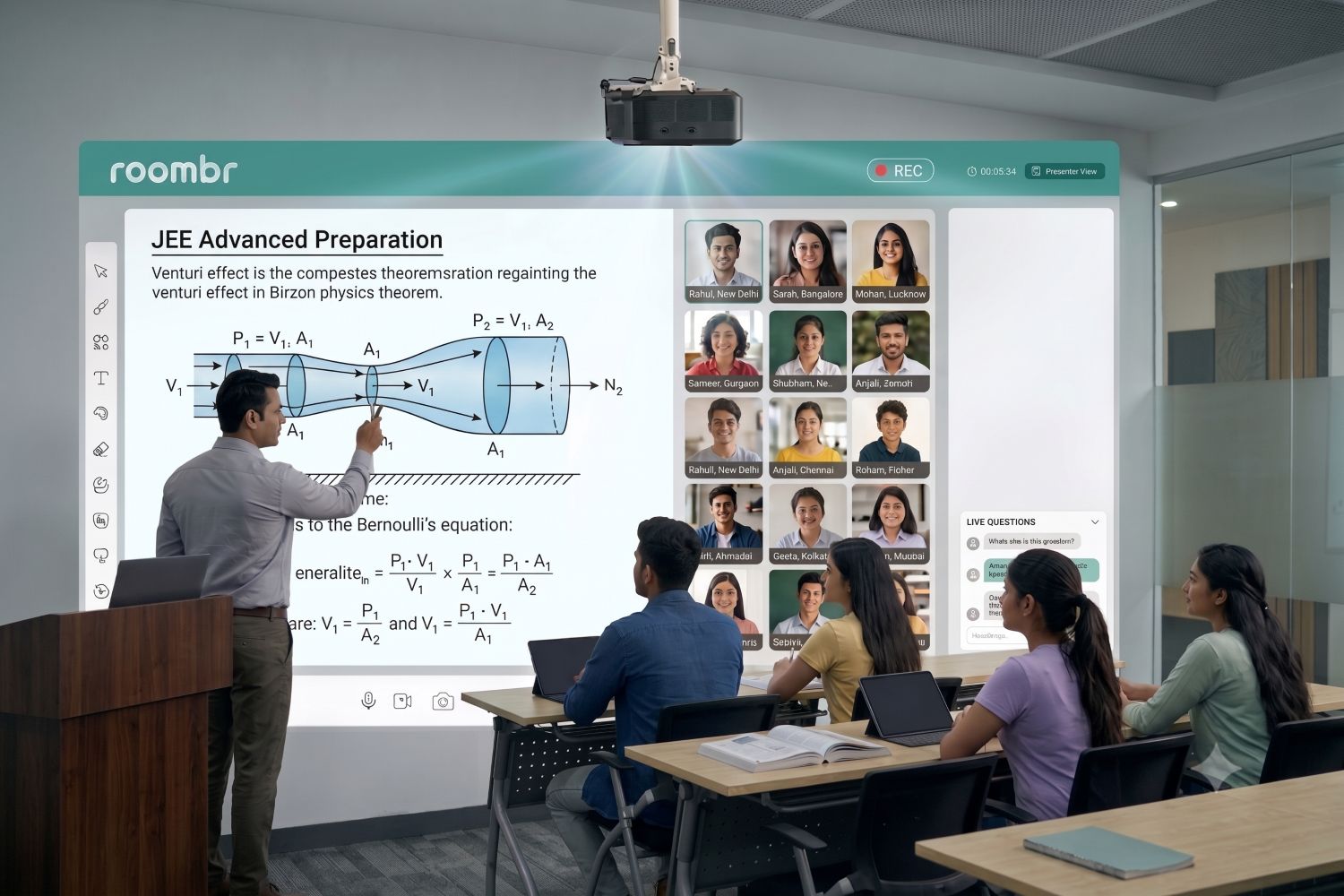
We’ve seen too many schools buy a projector here, a speaker there, and a CPU from somewhere else. This fragmented educational equipment usually fails exactly when the teacher needs it. A holistic solution like Roombr ensures the tech gets out of the way, so the focus remains on the pedagogy, not the "technical difficulties."
Practical Steps for Decision Makers
If you’re looking to upgrade your institution's approach, don't just buy gadgets. Follow these three steps:
- Move Beyond the 'Fancy TV' Mentality: Most smart boards are just glorified televisions. For STEM and STEAM, you need interactivity. If the students aren't coming up to the board to manipulate data or draw designs, it’s not a digital classroom; it’s just a digital movie theater.
- Empower Your Teachers: No teacher wants to feel replaced by a screen. Choose an intuitive solution. The best tech is the kind that a teacher can master in ten minutes, allowing them to focus on the students.
- Integrated Learning: Use your digital learning setup to break down the walls between subjects. Encourage the Physics teacher to use the board's design tools and the Art teacher to use the data-plotting features.
Key Takeaway
At the end of the day, the STEM vs. STEAM debate isn't about which subjects are more important. It’s about how we prepare Indian students to lead on a global stage.
At Roombr, we don't just sell hardware. We provide the environment where these concepts come to life. By turning a standard classroom wall into a massive, interactive, and collaborative "Window to the World," we give your educators the tools they need to teach the 'How' (STEM) and the 'Why' (STEAM) simultaneously. The future of education isn't in a kit. It’s in the space you create for your students to think.
Find out how Roombr Digital Classroom can help your institution.

Foziya Abuwala
Share
Step Into the future of
Education with Roombr