How to Choose the Right Smart Classroom Hardware for Medical Colleges
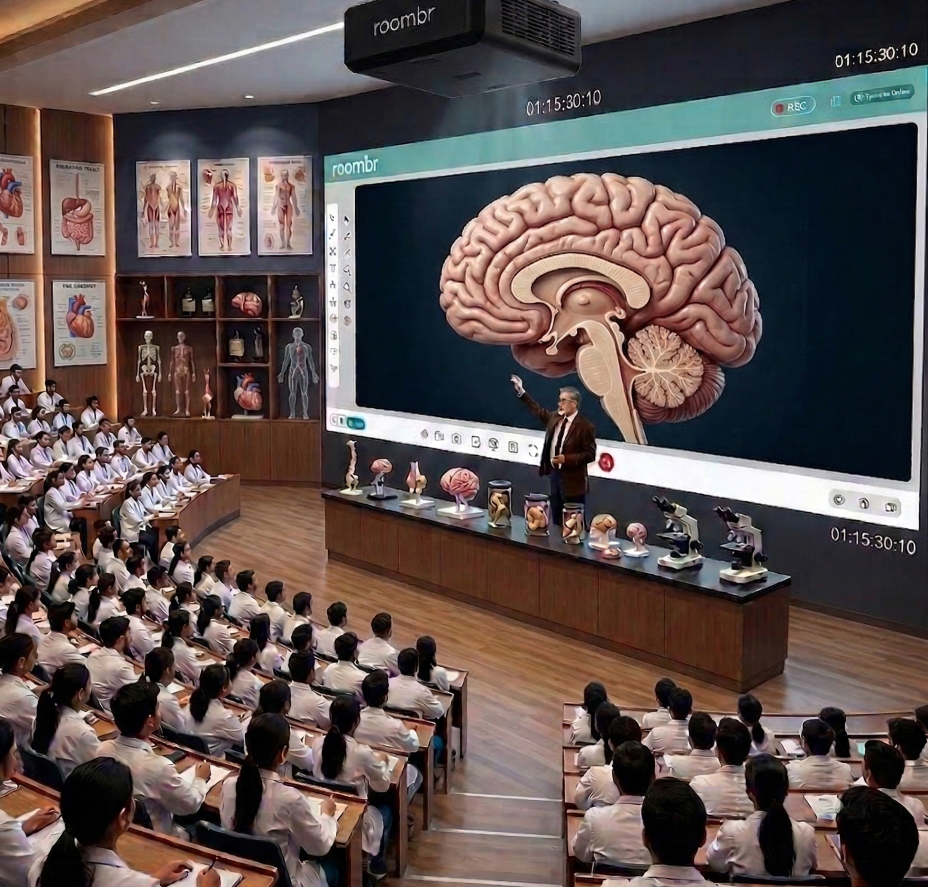
Today, medical education relies heavily on visual accuracy, real-time interaction, and precise detailing. Anatomy professors often face a common and disruptive frustration. They try to load a complex 3D rendering of the human cardiovascular system or a detailed neurological map, and the classroom screen freezes. Basic digital screens lack the heavy computing required for modern medical training.
This guide will help you evaluate enterprise-grade smart classroom hardware designed to handle the rigorous demands of the modern educational system, including healthcare studies.
Why Basic Smart Classroom Setups Fail in Medical Education
Most budget-friendly interactive boards in the market run on basic processors designed strictly for simple whiteboarding and viewing standard PDF documents. When a medical faculty member tries to run heavy interactive medical simulation software or manipulate high-resolution histology slides in real-time, these basic processors may overheat or crash entirely.
A standard interactive flat panel deployed in a classroom does not have the internal computing power or the graphical rendering capabilities to load complex anatomical models without severe lagging. This creates a frustrating experience for the teacher trying to explain a delicate surgical procedure and for the students who miss critical visual details. Institutional decision-makers must look beyond just the physical screen size or basic touch capabilities. You must evaluate the internal engine driving the technology to ensure it can withstand the daily operational load of an advanced medical curriculum.
Essential Hardware Requirements for a Medical Smart Classroom
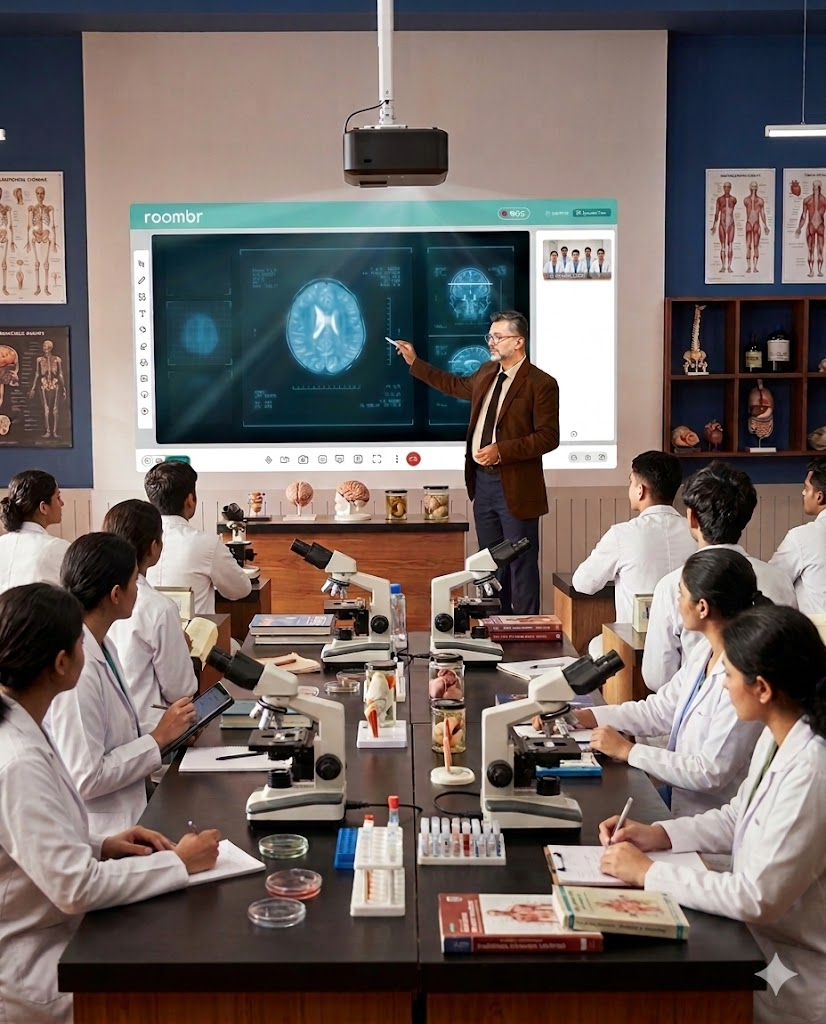
When procuring smart classroom equipment for healthcare studies, institutions must prioritize specifications that handle heavy medical data effortlessly. Here is exactly what procurement officers and IT heads need to demand from their vendors.
1. High Processing Power for 3D Rendering
An integrated Intel i5 or i7 processor with at least 16GB of RAM is completely non-negotiable. Medical simulation software requires heavy computational lifting that only a dedicated and built-in PC architecture can handle. This ensures zero lag during live surgical broadcasts or virtual dissections.
2. Uncompromised Display Clarity and Color Depth
Medical students must clearly distinguish between highly subtle shades of tissue in pathology slides. You need high-lumen and high-contrast projection displays that maintain absolute color accuracy. The display must remain perfectly visible from the last row, even in brightly lit 150-seater lecture halls.
3. Flexible Software Integration
A flexible operating system like Windows 11 is critical for medical colleges. Locked proprietary systems restrict the types of third-party anatomy applications a college can legally and technically use. Open architecture ensures your professors can run the exact 3D learning software they prefer without frustrating compatibility issues.
4. Integrated Spatial Audio for Live Demonstrations
When an anatomy professor moves around a cadaver or a physical 3D model, a standard lapel mic often drops the sound. Intelligent mic arrays that capture the professor's voice clearly from anywhere in the room are essential for large lecture halls to ensure every student hears the explanation clearly.
The Importance of 3D-Enabled Smart Classroom Equipment for Large Lecture Halls
While specialized simulation tools and physical models are excellent for small group learning, they often fail to serve an entire 150-seater lecture hall effectively. When an anatomy professor demonstrates a complex bodily structure, students in the middle and back rows may struggle to see the fine details on a standard interactive flat panel or crowded lab station. Medical institutions need a reliable way to amplify these vital demonstrations so no student misses critical information.
A high-powered and projection-based digital classroom setup serves as the foundation for scaling medical education. Operating as an advanced alternative to the traditional interactive flat panel, Roombr solves this visibility crisis. It runs heavy 3D anatomy software effortlessly and projects the high-resolution interface onto a massive 200-inch vertical surface. This allows every single student in the room to view the complex medical simulation simultaneously with absolute clarity.
Furthermore, because the computing power and high-speed connectivity are built into the smart classroom equipment, this ecosystem seamlessly handles live surgical broadcasts from the operating theatre. It streams high-definition feeds directly to the students without requiring external capture cards or wiring. This approach combines powerful computing, massive high-definition projection, and immersive audio into a single unified device that elevates the entire lecture experience.
How to Meet NMC Standards With Your Smart Classroom Ecosystem
The National Medical Commission sets strict guidelines for medical infrastructure in India. The current Competency-Based Medical Education framework strongly emphasizes interactive learning, objective assessments, and the establishment of dedicated clinical skill labs. Furthermore, digital dissection and 3D anatomical models are now highly recommended supplements to traditional cadaveric studies due to the limited availability of physical specimens.
Investing in robust smart classroom technology helps your institution meet these strict modernization guidelines seamlessly. High-performance hardware ensures that your college can accurately deliver the virtual simulations and interactive case studies mandated by the National Medical Commission. It also ensures that your lecture recordings and student data are processed securely, keeping your institution compliant with modern educational standards while future-proofing your campus for the next decade of medical advancements.
Make the Right Procurement Decision for Your Medical College
Buying fragmented technology or underpowered screens ultimately hurts the student learning experience and wastes institutional budgets. Medical colleges require enterprise-grade solutions that can keep pace with the rigorous, high-stakes demands of healthcare education.
By moving away from basic touch screens and investing in a high-computing Roombr smart classroom, you empower your medical faculty to teach without technical limitations. Build a reliable and immersive medical teaching environment that prepares your students for the future of medicine.
Ready to upgrade your institution with the next generation of medical teaching technology?
Book a Live Demo of Roombr for Your Medical Campus Today.

Foziya Abuwala
Share
Step Into the future of
Education with Roombr



.png)