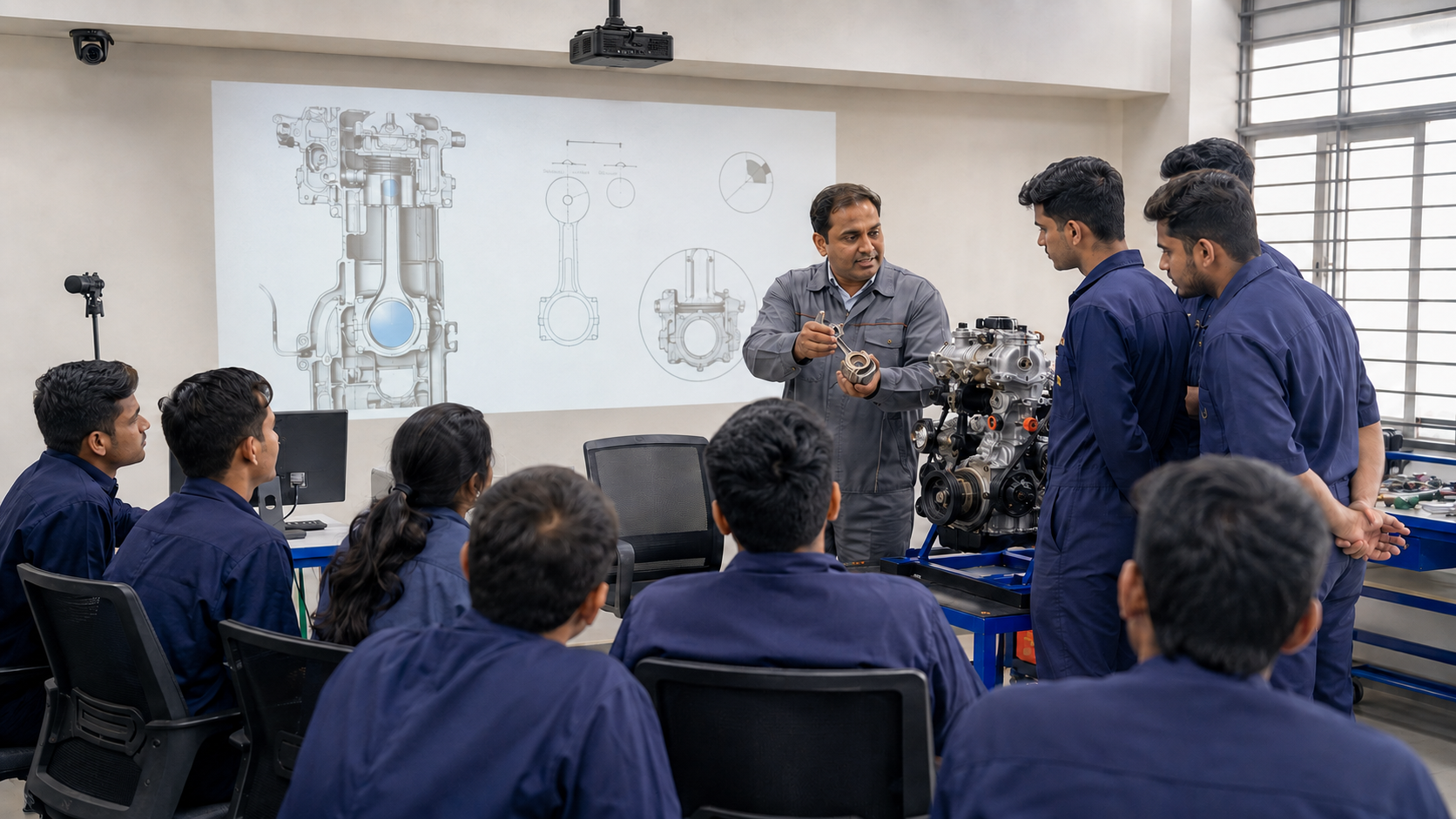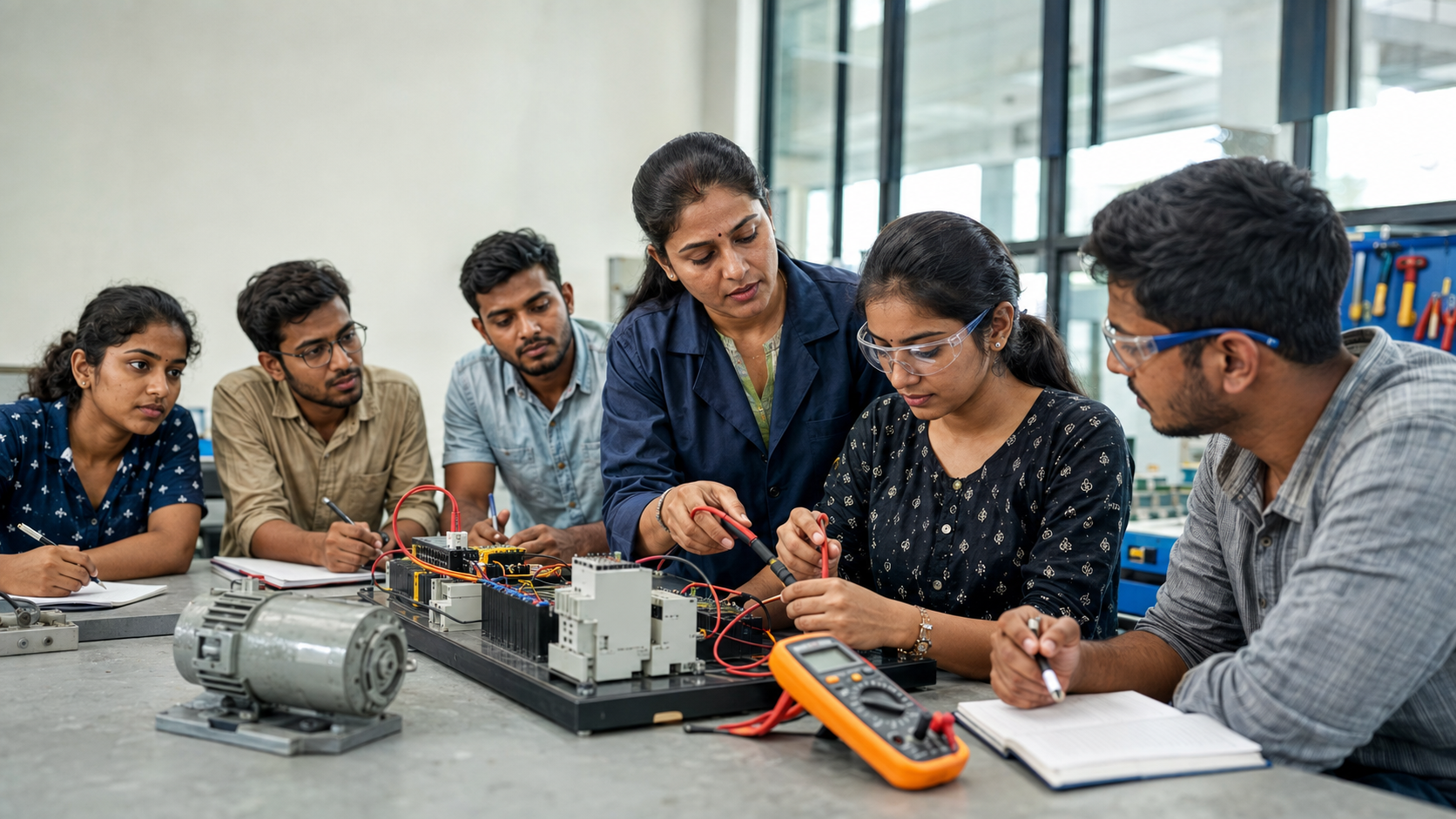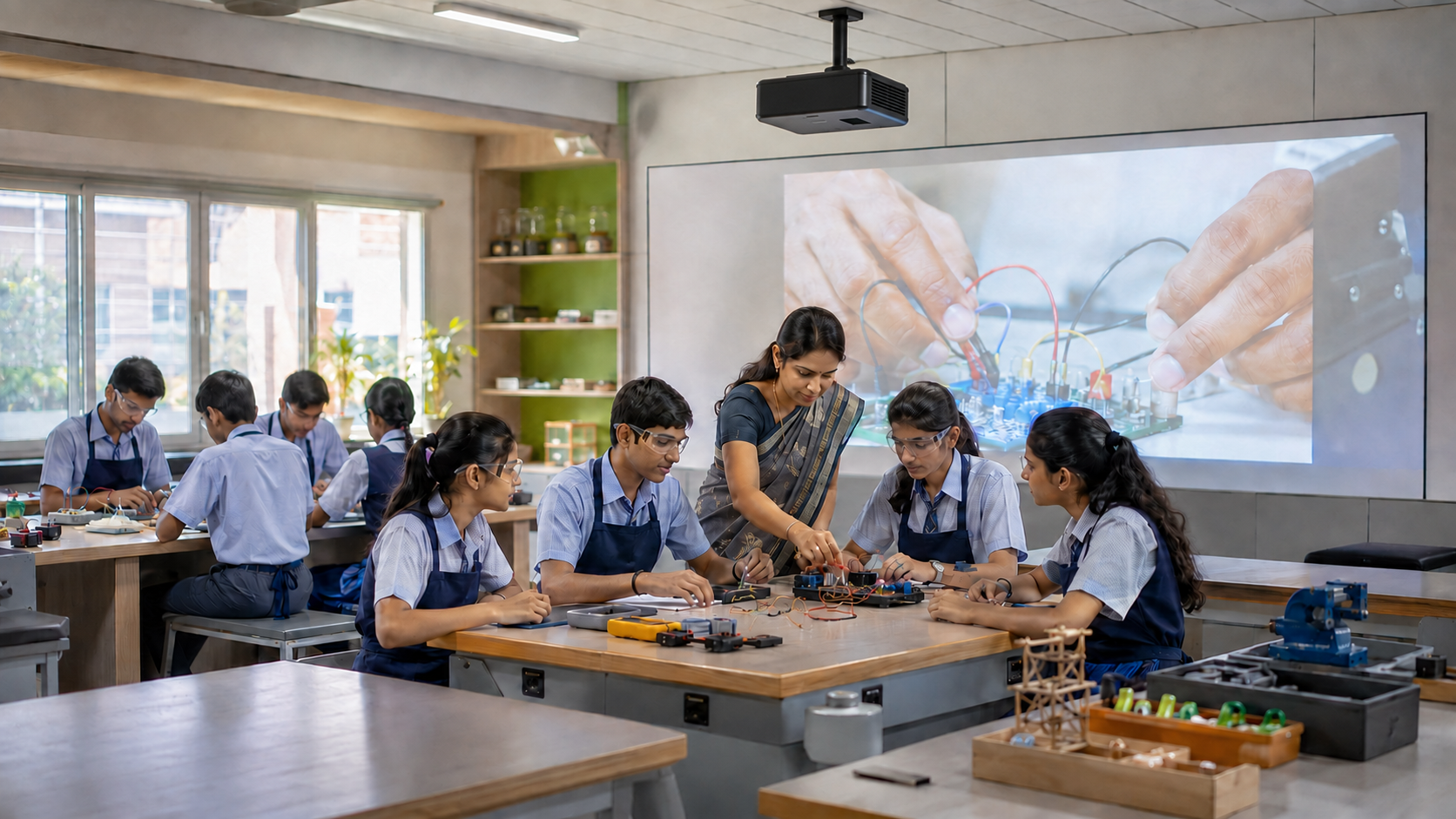

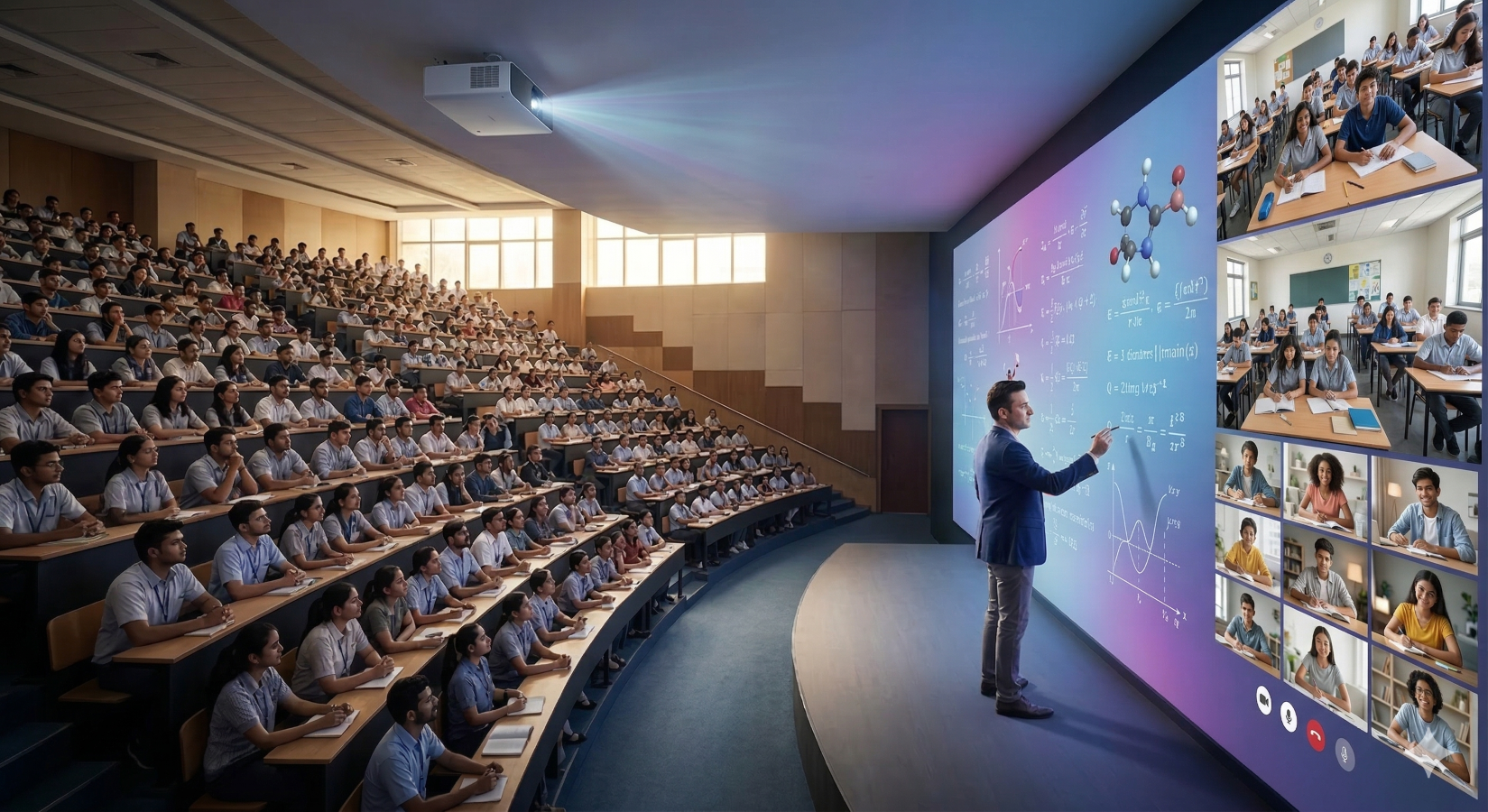
The Indian competitive exam sector operates on a large scale. Institutes in educational hubs like Kota, Hyderabad, and Delhi manage extraordinary student volumes daily. A single NEET, JEE, or UPSC batch often packs 200 to 500 highly competitive aspirants into one large lecture hall. Delivering a flawless and consistent learning experience at this extreme scale presents a huge operational hurdle for directors and franchise owners.
A basic shift toward digital teaching tools is no longer optional in this environment. Modern aspirants expect high-tech environments. Coaching directors need a robust and flawless infrastructure to survive the intense market competition.
This comprehensive guide provides a complete blueprint to build a scalable digital classroom setup that supports aggressive multi-city expansion and high-volume student batches.
Complexities of a Large-Scale Coaching Environment
Handling hundreds of students in a single physical room creates severe logistical bottlenecks. Students sitting in the back rows constantly struggle to see complex calculus equations or detailed organic chemistry diagrams. The instructor’s voice easily gets lost in the crowd of a massive hall.
When you operate multi-branch coaching centers, the operational challenge multiplies instantly. A star physics faculty member in Delhi cannot physically teach students in Patna simultaneously without a highly advanced broadcast system. Basic consumer-grade projectors and standard whiteboards fail under these extreme demands. They cause eye strain, create audio delays, and ultimately hurt your brand reputation. These distinct operational roadblocks demand a highly structured approach to infrastructure planning.
Make Scalability the Core of Your Digital Classroom Setup
Scalability means your technology can grow seamlessly alongside your admission rates without requiring constant, expensive reinvestment. A poorly planned technology stack forces you to rip out wires and buy entirely new screens every time you add fifty new students to a batch. That fragmented, short-sighted approach severely drains your operational capital.
A truly scalable digital classroom setup unifies the high-quality learning experience across all franchise locations. It allows your institute to broadcast a single premium lecture to thousands of remote students with absolute zero latency. It centralizes administrative control so your IT team can manage software updates across twenty regional branches from one central dashboard. When you plan for scale from day one, your technology infrastructure transforms from a recurring financial expense into a powerful, revenue-generating growth engine.
Steps to Execute a Scalable Digital Classroom Setup Across Multiple Branches
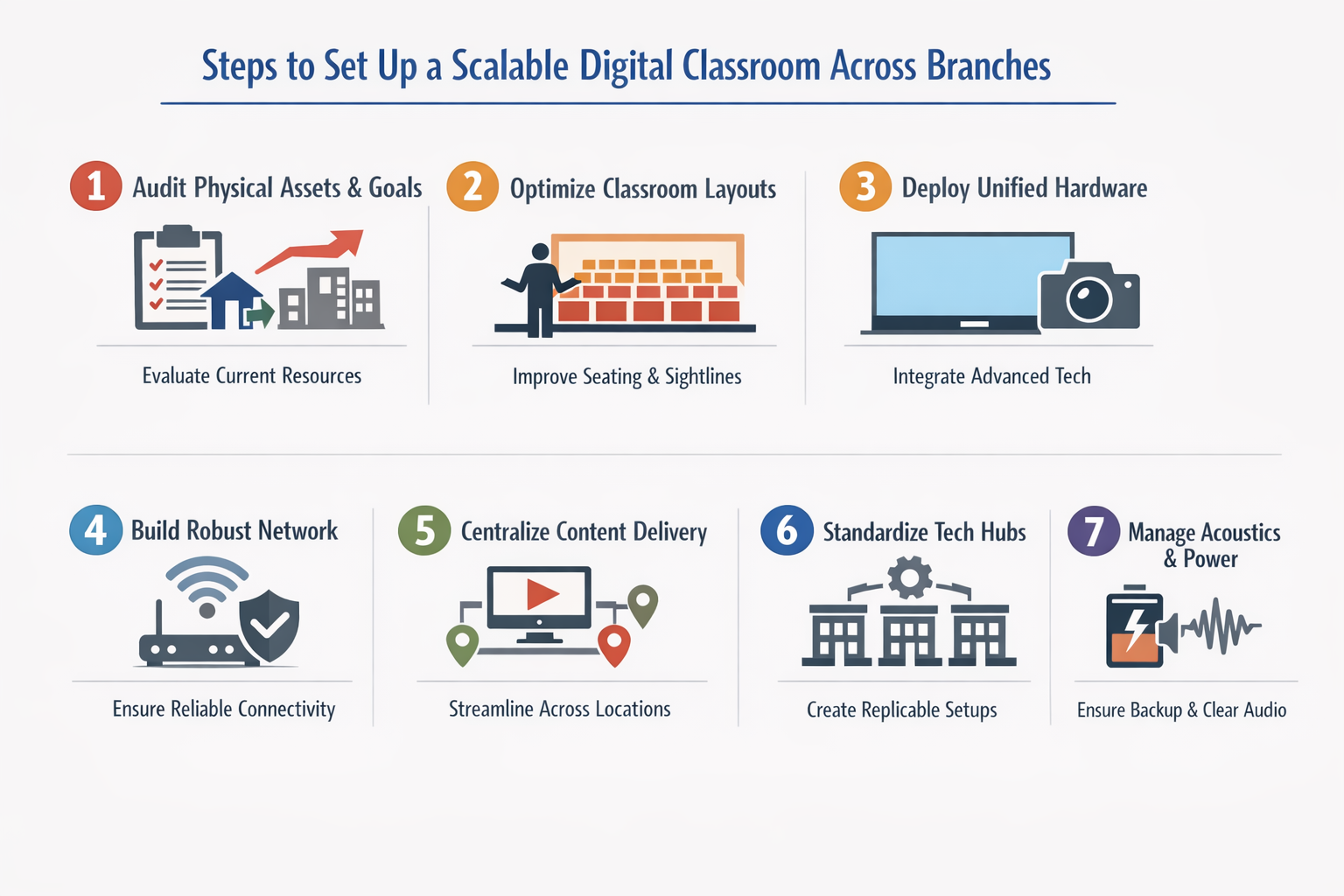
Building a future-ready technology ecosystem requires precise execution across physical and digital environments. Follow these steps to align your physical campus spaces with your digital growth goals.
1. Audit Current Physical Assets and Future Expansion Goals
Before purchasing any new technology, evaluate your current real estate. Measure the exact square footage and depth of your flagship lecture halls. Assess the technical limitations of your existing legacy hardware. Define your admission growth targets for the next three to five years. Calculate how many new offline branches you plan to open and estimate your expected hybrid student volume. This detailed gap analysis dictates the type of smart classroom equipment you need to deploy across your network.
2. Optimize Physical Layouts for Large Student Batches
A huge lecture hall demands perfect visual sightlines. Traditional flat seating arrangements often block the view for aspirants in the back half of the room. Design tiered seating structures or utilize wide-angle room layouts to fix this issue. Eliminate any physical barriers that restrict the teacher's mobility on the stage. An instructor must walk freely around the room to maintain high energy and command attention during a three-hour-long JEE lecture. Your physical layout must accommodate advanced spatial technology rather than forcing the tutor to stand next to a rigid screen.
3. Deploy Unified Hardware Over Fragmented Ecosystems
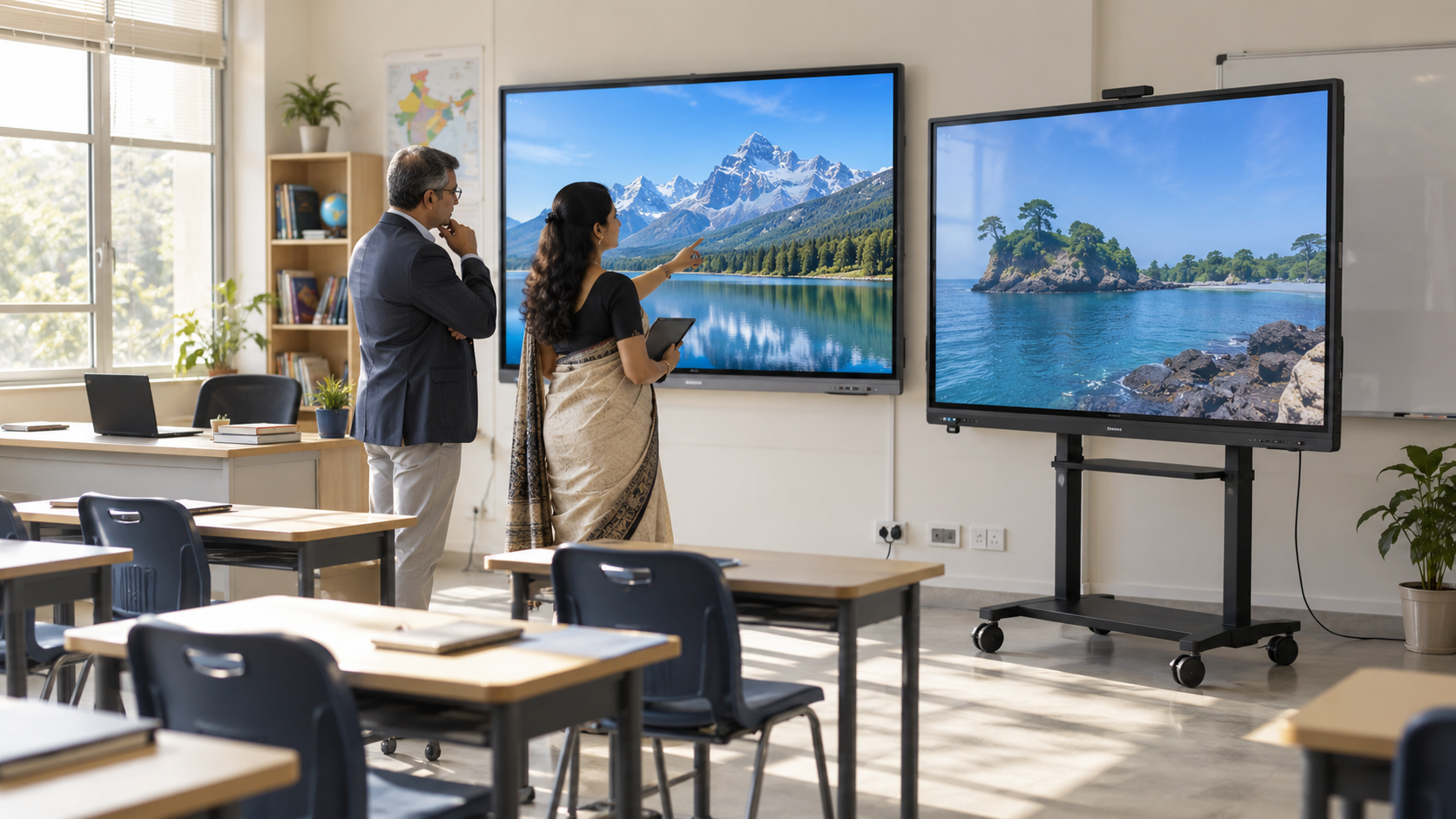
This is where most coaching institutes make a significant financial error. They purchase a basic interactive flat panel and assume to have achieved their digital transformation. However, a standard panel restricts visibility in a room containing 400 students. The screen is too small for the back rows to read complex subscripts in physics formulas.
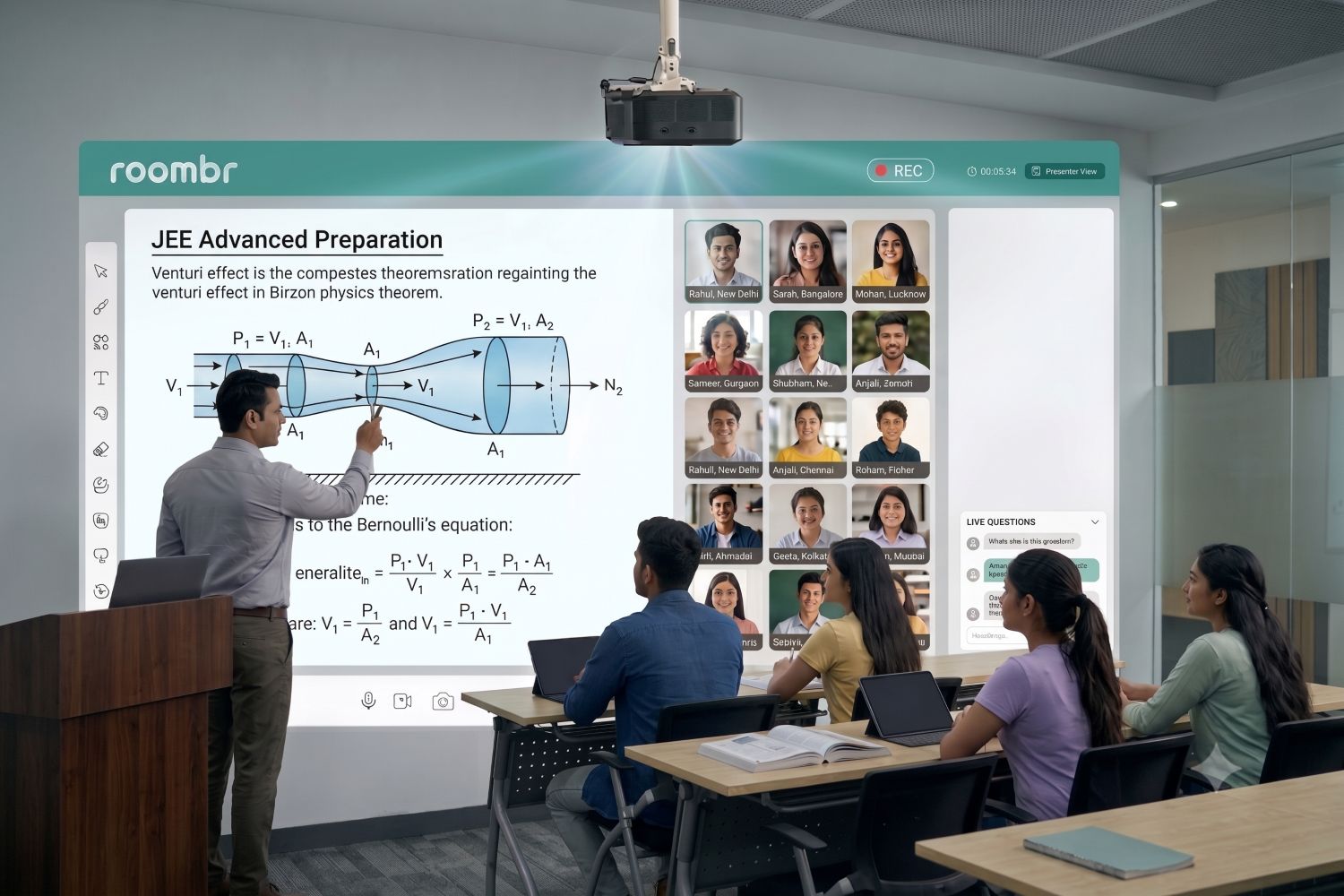
You must move beyond these limitations and deploy a unified, advanced edtech solution. Modern massive-scale classrooms utilize immersive, wall-sized digital spatial projection systems combined with intelligent AI-tracking cameras. This advanced approach completely replaces the restrictive and outdated digital board for classroom setup. It provides a massive interactive canvas that every single student can see clearly, even from eighty feet away. Integrated solutions combine your massive display, ceiling microphone arrays, and lecture capture tools into one seamless device. This eliminates the nightmare of fragmented hardware that disconnects mid-lecture.
4. Build a Fail-Proof Network Architecture
Live streaming high-definition classes to multiple cities requires a powerful internet bandwidth. Standard commercial broadband may crash when 500 students sync their digital devices simultaneously. Install enterprise-grade routers and highly secure firewalls. Segregate your administrative network completely from the public student access points. Always install wired Ethernet connections for the main teaching console to prevent any wireless dropouts during a crucial live broadcast. A rock-solid, high-speed network forms the backbone of any scalable and hybrid digital classroom setup.
5. Centralize Content Delivery Across All Franchises
Quality control remains the biggest risk when expanding a coaching brand across India. A student paying premium fees in a tier-2 city must receive the same study material as a student sitting in your main headquarters. You must integrate robust online teaching platforms directly into your physical classroom hardware.
This deep integration allows teachers to push customized digital notes, 3D anatomical models, and instant quizzes to every connected branch instantly. Tie your daily assessments and weekly mock test results directly into centralized LMS platforms. This crucial step gives your academic directors a real-time, bird's-eye view of batch performance across the country.
6. Standardize Tech Hubs for Rapid Branch Expansion
Opening a new coaching center branch should take a few weeks, not several months. You achieve this rapid speed by creating a strict, replicable infrastructure blueprint. Every new branch must install the same smart classroom solutions. This allows your central IT team to troubleshoot technical issues remotely without ever traveling to the physical site. It also ensures that when a star teacher transfers to a new city, they already know how to operate the room. A highly standardized virtual classroom infrastructure guarantees a consistent, premium brand experience for every enrolled aspirant.
7. Control Room Acoustics and Backup Power Supply
Even the most advanced digital classroom setup fails if the local power grid collapses. Indian coaching hubs face frequent and unpredictable power fluctuations. Install heavy-duty UPS systems and dedicated power conditioning units to protect your expensive hardware from sudden voltage spikes. Furthermore, large concrete lecture halls naturally create terrible audio echo. Install professional acoustic wall panels and ceiling clouds to absorb bouncing sound waves. Crystal clear audio is non-negotiable when broadcasting live lectures to thousands of remote students.
Validate the ROI of an Advanced Digital Classroom Setup
Coaching directors must look far past the initial hardware installation invoice. Advanced infrastructure substantially lowers your long-term operational costs and drives new revenue. A highly scalable digital classroom setup allows one highly-paid faculty member to teach thousands of students across five different branches simultaneously. This capability immediately reduces your reliance on hiring multiple mid-tier teachers to cover the same subject across different cities.
Furthermore, integrated systems allow for automated, high-definition lecture recording. You effortlessly build a massive, monetizable digital library of premium educational content. You can package and sell these recorded modules to remote students year after year with zero extra production effort. When you calculate the reduced hardware replacement costs, the saved salaries, and the massive increase in student intake capacity, the long-term return on investment becomes undeniable.
Avoid These Costly Traps When Upgrading Tech Infrastructure
Leading coaching institutes maximize their investments by taking a strategic, long-term approach to their infrastructure. Planning a scalable digital classroom setup is an excellent opportunity to build a robust, future-ready foundation that confidently supports your expanding batch sizes for years to come.
Consider these key factors to avoid to build a high-impact and sustainable environment:
- Invest in Integrated Systems Over Cheap Hardware: Do not compromise your hybrid broadcast quality by buying basic, consumer-grade webcams for a massive lecture hall. Always prioritize future-proof, unified hardware.
- Prioritize Your Core Network Backbone: Do not ignore your internet infrastructure. The most advanced spatial screens in the world mean nothing if your connection drops every ten minutes.
- Unify Your Educational Tech Stack: Avoid the nightmare of juggling a dozen different software subscriptions that refuse to sync with one another. A clean, singular ecosystem always wins in a high-pressure environment.
Review Your Digital Classroom Setup Readiness Checklist
Use this quick operational audit to verify your infrastructure strategy before you sign any large vendor contracts or begin campus renovations.
- Does your current technology roadmap easily support an influx of 1000 new students next academic year?
- Have you eliminated visibility and audio dead zones in your largest flagship lecture halls?
- Does your hardware provide an immersive visual canvas rather than a restrictive, small flat screen?
- Can your central IT headquarters monitor, update, and troubleshoot branch hardware entirely remotely?
- Do your physical classrooms connect flawlessly and instantly to your proprietary mock testing applications?
- Is your power backup robust enough to support heavy audio-visual equipment during an unexpected grid failure?
Frequently Asked Questions for Coaching Centers
1. How Fast Can a Traditional Lecture Hall Transition to a Smart Space
A complete installation in a 300-seater coaching hall typically takes 48 to 72 hours. To avoid disrupting your rigorous daily timetable, specialized edtech vendors usually execute these transitions over weekends or during scheduled term breaks.
2. What is the Realistic Lifespan of Commercial Edtech Hardware
Enterprise-grade spatial displays and heavy-duty audio arrays reliably operate for 5 to 10 years under continuous daily use. Unlike consumer-grade projectors that require frequent and expensive bulb replacements, unified modern systems demand almost zero hardware maintenance.
3. Will Veteran Offline Faculty Struggle to Operate the New Technology
No. Advanced infrastructure completely removes the technical burden from the educator. Modern digital classroom setups utilize intuitive, zero-touch interfaces and automatic camera tracking, allowing master teachers to walk onto the stage and teach as they always have without intensive software training.
4. How Secure Are Proprietary Mock Tests During Multi-Branch Broadcasts
Highly secure. Enterprise infrastructure uses end-to-end encryption to distribute premium study materials directly from your central server to the branch screens. This architecture completely prevents local unauthorized downloads, USB transfers, or content leaks by franchise staff.
5. Do Wall Structures Need Reinforcement for Large Interactive Displays?
Yes. Deploying large, multi-screen digital classroom setups or heavy spatial display units in older coaching buildings requires structurally sound, load-bearing walls. Professional vendors will conduct a strict structural audit prior to delivery to ensure the heavy equipment remains safely anchored in a crowded student environment.
Equip Your Coaching Franchise for Limitless Scale with Roombr Digital Classroom
Standard flat panels restrict your growth. When hundreds of competitive aspirants pack into a single lecture hall, they deserve an uncompromised view of every complex formula. Roombr completely redefines the educational space by replacing outdated screens with an immersive, wall-sized digital spatial projection system. We eliminate the hardware fragmentation that causes mid-lecture tech failures.
Our unified advanced edtech solution empowers your star faculty to teach naturally while broadcasting crystal-clear, zero-lag sessions to every regional branch. You instantly solve visibility issues, enhance your teaching quality, and future-proof your multi-city expansion strategy.
Build a highly profitable, scalable hybrid learning environment today. Connect with our infrastructure specialists to schedule a live demo of the Roombr Digital Classroom. We will help you audit your current lecture halls and design a flawless deployment blueprint.

Foziya Abuwala
Share
Step Into the future of
Education with Roombr