
Medical education requires absolute precision. Flawless visual clarity is non-negotiable for training future doctors. The National Medical Commission (NMC) has set incredibly strict infrastructure guidelines for 2026. Upgrading a medical lecture hall is no longer just about buying a new screen to replace a whiteboard. You need a fully integrated digital ecosystem to confidently pass the Medical Assessment and Rating Board (MARB) audits.
The recent shift to Competency-Based Medical Education (CBME) demands that campus technology directly serve specific clinical learning outcomes. Many medical college trustees and deans assume that investing in a large interactive flat panel makes their campus fully compliant. This is a risky assumption that can easily lead to negative audit remarks. You need a comprehensive digital classroom setup to effectively bridge the gap between physical diagnostic labs and theoretical lecture halls.
This guide breaks down what the NMC expects from your infrastructure. We will also explore why traditional touch screens frequently fall short of these demanding enterprise standards.
The NMC Mandate for Modern Lecture Halls
The National Medical Commission is clear about its modern infrastructure expectations. The specific term “ICT-enabled” means your lecture halls must function as a deeply connected communication hub. Assessors look for a functional technological ecosystem rather than a standalone hardware purchase.
1. The Requirement for Gallery Type Connectivity
Medical lecture halls are massive physical spaces. They are uniquely designed to seat anywhere from 150 to 250 students at a single time. The NMC strictly mandates gallery-type seating for these large medical cohorts. Your chosen technology must ensure the student sitting in the very last row has the same visual access as the student sitting in the front row. A standard screen often creates a visibility gap in these large rooms. This causes severe eye strain for the backbenchers and reduces their clinical learning capability.
2. The Direct Relay Necessity
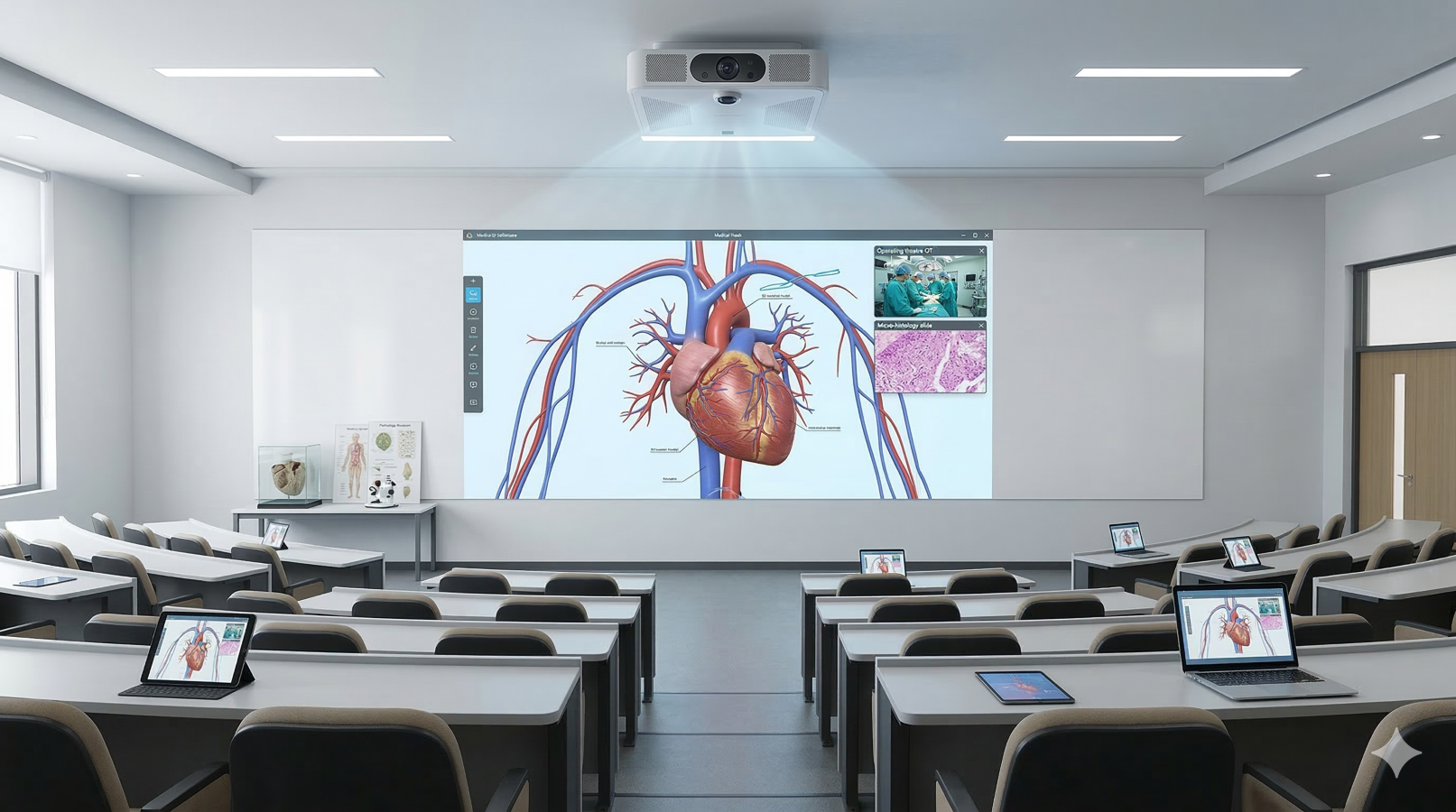
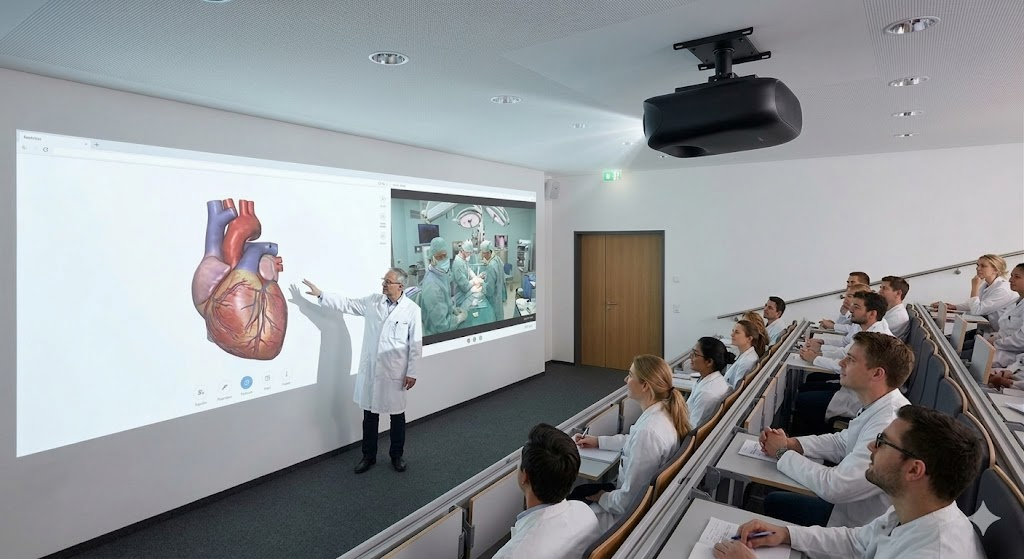
Modern medical training relies heavily on real-time clinical observation. The NMC strongly requires lecture halls to feature a direct relay system connected to in-house Operation Theatres (OTs) and diagnostic labs. You must be able to stream live surgical procedures directly to the medical students. This operational mandate requires robust networking and high-speed processing capabilities built right into the room infrastructure.
3. Digital Linking of Teaching Areas
Your campus lecture halls cannot operate in total isolation. The 2026 guidelines require the seamless integration of pathology museums, seminar rooms, and clinical skill labs into a single digital network. An isolated display cannot achieve this mandatory digital linking without you spending thousands on expensive third-party networking tools. Building a true digital classroom setup connects all these isolated rooms effortlessly.
Why an Interactive Flat Panel Fails the Medical Audit
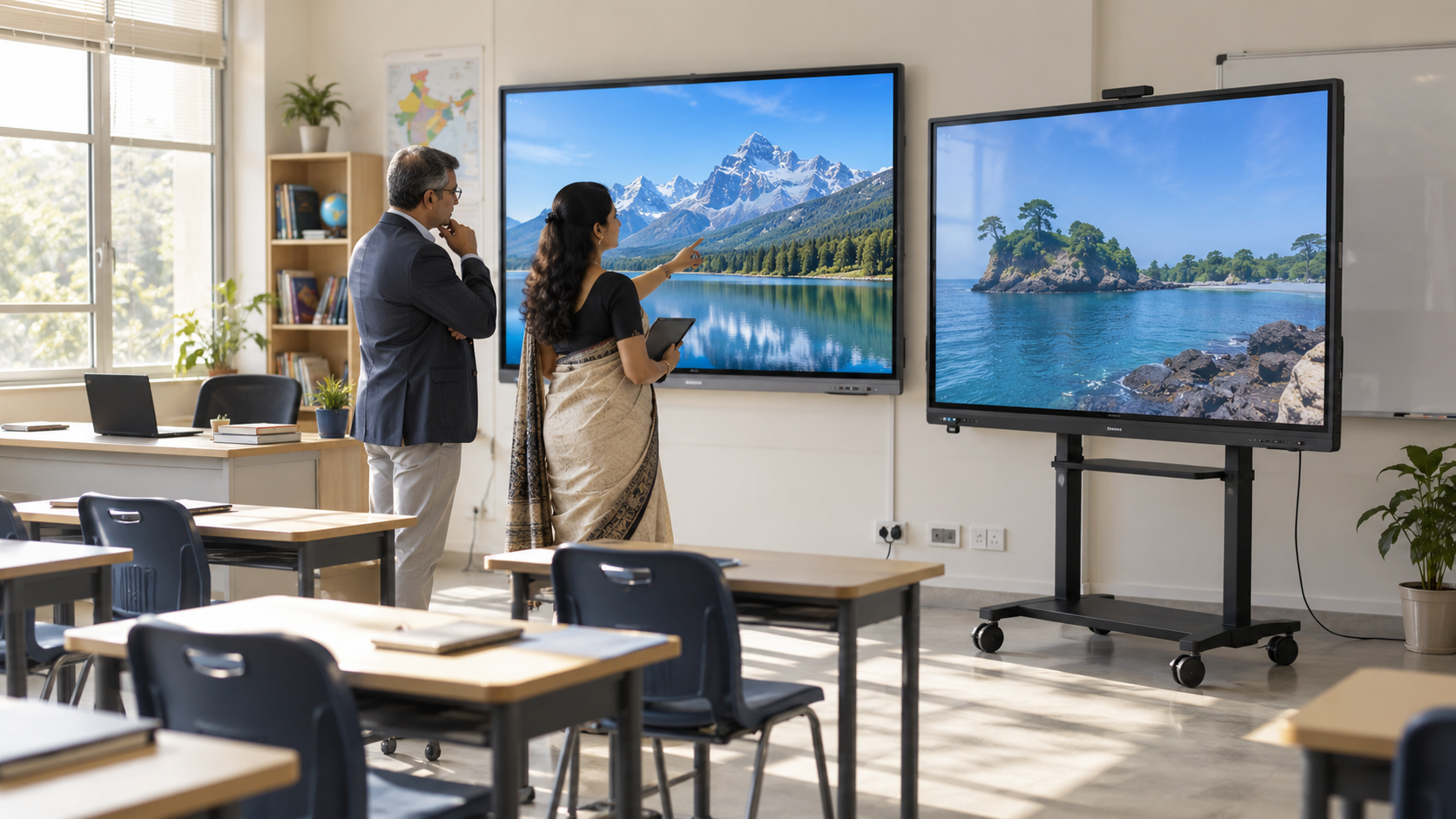
Medical colleges frequently fall into a costly hardware trap during their procurement cycles. They purchase a basic interactive flat panel, thinking it solves all their NMC compliance needs. This is often the biggest functional bottleneck during a rigorous medical accreditation audit. A basic interactive flat panel display simply lacks the foundational computing power to handle enterprise-grade medical education workloads.
1. The Processing Power Deficit
Medical education in 2026 relies heavily on heavy 3D anatomical rendering and detailed virtual dissection software. The mobile-grade Android processors found inside a standard interactive flat panel usually crash or freeze when loading complex neurological or cardiovascular maps. Medical simulation software requires heavy computational lifting. An underpowered panel will stutter during a crucial anatomical demonstration. This frustrating lag completely ruins the student learning experience.
2. The Scale and Visibility Crisis
An 86-inch screen is generally the largest standard size available for an interactive flat panel. This physical size is mathematically insufficient for a massive 150-seat NMC-mandated lecture hall. Students sitting beyond the fifth row simply cannot read the fine cellular details on a high-resolution histological slide. This strict size limitation leads to digital inequity for the students sitting in the gallery seating area. A flat panel practically forces the back row to miss out on critical visual information.
3. The Live Relay Networking Nightmare
As mentioned earlier, direct relay from the OT is absolutely mandatory. Standard touch panels require external encoders and third-party streaming hardware to receive a live surgical feed. This creates an unstable connection that may frequently drop during critical surgical broadcasts. Trying to force an interactive flat panel to act as a secure broadcasting hub usually ends in total technical failure.
4. Fragmented Ecosystems and Cable Clutter
A traditional interactive flat panel requires multiple external components to function as a complete teaching system. You have to buy a separate tracking camera and a separate dedicated computer just to run Windows-based medical software. This fragmented approach fails the NMC preference for well-equipped and seamlessly integrated media rooms. Buying a flat panel also creates a nightmare of cable clutter for your institutional IT department to manage.
How Holistic Smart Classroom Solutions Solve the Infrastructure Gap
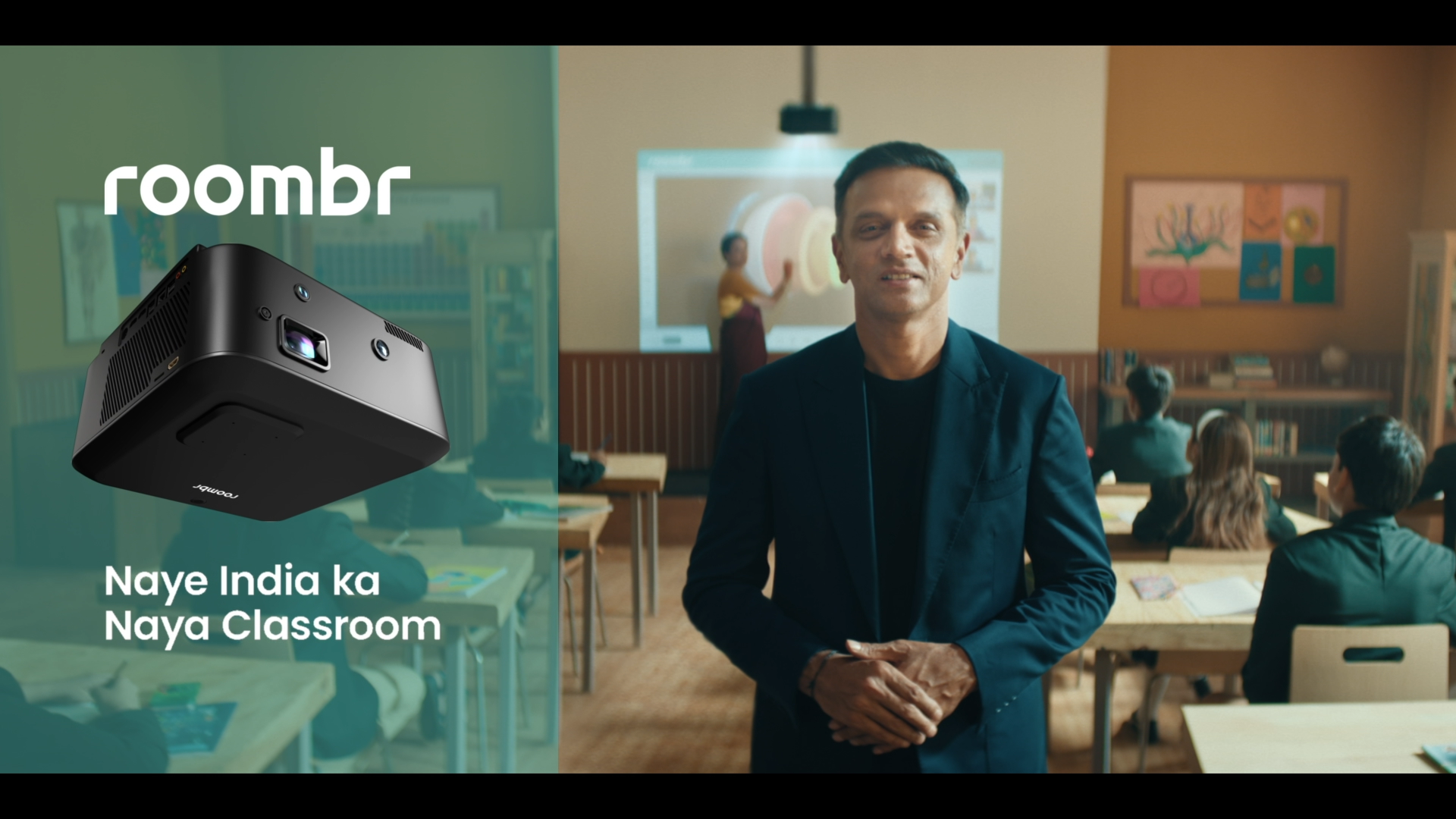
You must move away from fragmented hardware to build a truly NMC-ready digital environment. Holistic smart classroom solutions provide a wonderfully unified teaching ecosystem. Systems like Roombr offer an advanced upgrade over the traditional interactive flat panel. They brilliantly integrate the computer, the camera, and the interactive display engine into one powerful ceiling-mounted unit.
1. Workstation Grade Computing for 3D Dissection
A holistic system naturally includes integrated Intel i7 or i5 processing power built into the core unit. This workstation-grade computing handles 2026-era virtual dissection software incredibly smoothly. Your anatomy professors can rotate high-fidelity 3D cadavers in real-time without relying on external laptops. This native computing power eliminates the frustrating lag typically associated with a standard interactive flat panel.
2. Scaling Visibility to 200 Inches
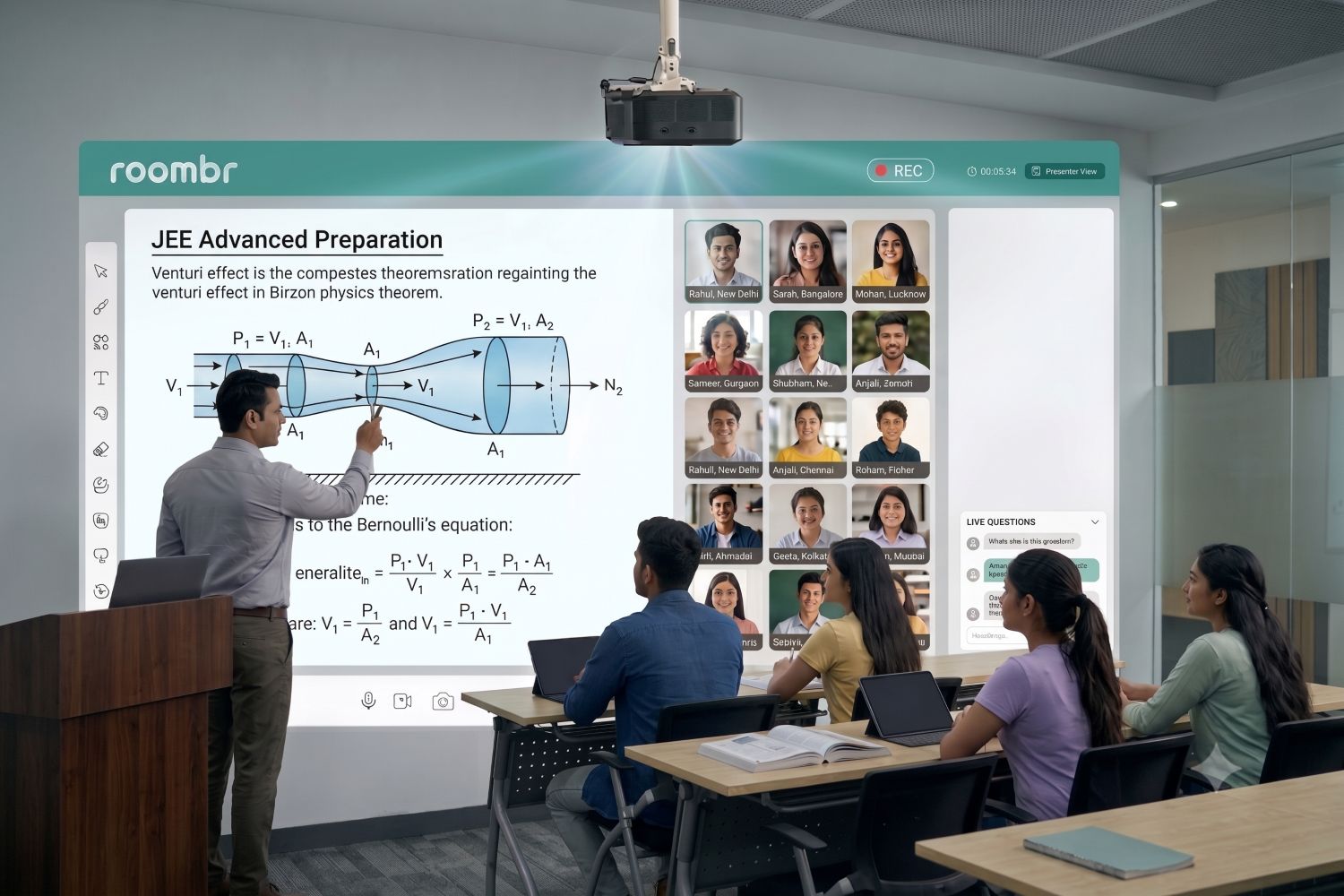
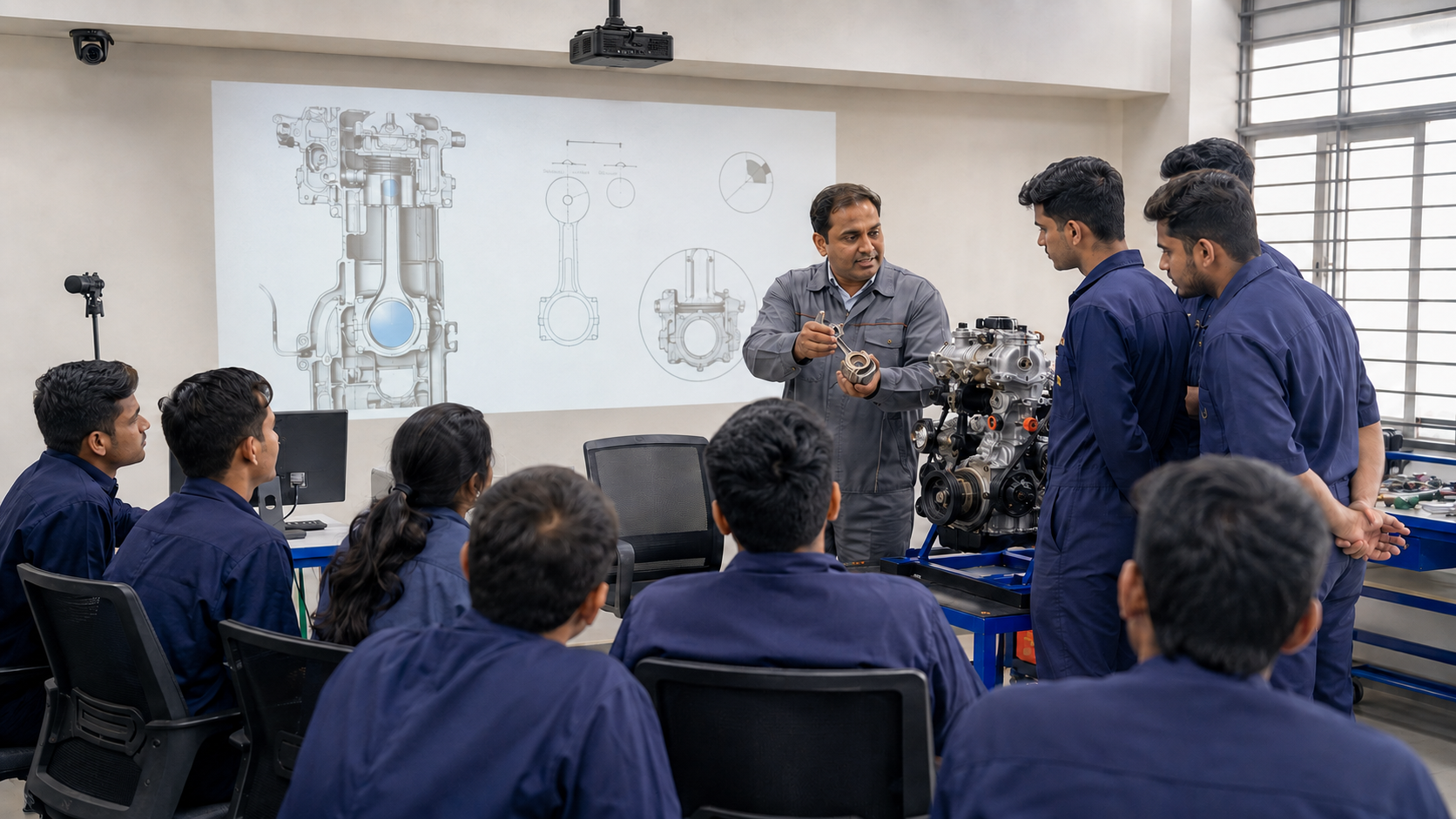
Holistic smart classroom solutions such as Roombr Pro solve the backbencher visibility problem entirely. Advanced projection technology transforms the entire front wall of the lecture hall into a medical-grade interactive surface. You can effortlessly scale the vibrant display up to 200 inches. This massive size ensures that a microscopic tissue slide is perfectly legible to the 150th student in the room. They never need to squint or strain their eyes to see the teaching material.
3. Native Integration for Surgical Broadcasting
A complete digital classroom setup comes with a built-in Windows 11 operating system and high-speed Wi-Fi 6 connectivity. This internal architecture enables a flawless OT-to-classroom relay right out of the box. You can broadcast a live open-heart surgery directly to the massive 200-inch wall surface. You do not need to hire specialized AV teams to make this work.
Your Smart Classroom Equipment Requirements for 2026
Deans and IT Heads must ensure their annual capital expenditure budget is spent on fully compliant technology. You need a comprehensive smart classroom equipment to safely guide your institutional procurement process. Premium equipment requires specific integrated components that go far beyond what a simple touch screen provides.
High Fidelity Audio Capture for Cadaver Demonstrations
Stunning visuals are only half the clinical equation. You need highly intelligent spatial mic arrays to capture the professor's voice perfectly. An anatomy professor constantly moves around a physical specimen or a 3D model during a fast-paced lecture. The best smart classroom equipment must pick up the voice clearly from anywhere in the room. This ensures the entire large gallery can hear the complex medical explanation without any audio drops.
Open Architecture Software Flexibility
You must prioritize open-architecture software flexibility when drafting your institutional smart classroom equipment list. Locked proprietary operating systems restrict the specific types of third-party anatomy applications your college can legally use. An open Windows-based environment ensures your faculty can smoothly run advanced tools. They can freely use BioDigital or Complete Anatomy without facing frustrating compatibility walls on an interactive display.
The Financial Reality of Upgrading Medical Education Infrastructure
Trustees and financial officers look closely at the total cost of ownership before approving any large campus upgrades. Buying cheaper and fragmented hardware often leads to massive hidden expenses over five years. You must carefully evaluate long-term financial stability.
Avoiding the Hidden Costs of Panel Maintenance
An interactive flat panel contains fragile glass that can easily crack or malfunction. Repairing a massive 86-inch glass screen is incredibly expensive. Furthermore, you have to pay for separate annual maintenance contracts for the panel, the external computer, and the external tracking cameras. A holistic system offers a single point of service and zero fragile glass components. This significantly lowers your long-term maintenance costs and provides total peace of mind.
Protecting Your Long-Term Capital Investment
Medical educational technology evolves incredibly rapidly. A modular computing system is much easier to upgrade over time than a heavy and fixed-hardware interactive flat panel. As the NMC undoubtedly updates its strict guidelines over the next few years, an integrated and easily scalable solution ensures your campus remains fully compliant. Future-proofing your campus architecture protects your prestigious institutional ranking and secures your long-term operating budget.
Proving Operational Readiness to MARB Assessors
NMC assessors look very closely at how your teaching facilities operate during a campus inspection. They want concrete proof that the purchased technology actually improves the medical educational standard. Showing them a basic interactive flat panel is no longer enough to impress an auditing board.
NMC guidelines heavily emphasize the vital ability to formally document and review clinical teaching sessions. You need a highly native lecture recording solution built directly into the room hardware. A holistic system automatically records the professor's lecture, captures the digital screen annotations, and saves the high-definition surgical feed simultaneously. A reliable lecture recording solution turns every single teaching session into a highly searchable digital asset for student exam review. It ensures you meet strict documentation guidelines effortlessly.
Furthermore, a holistic teaching system offers centralized digital dashboards and clear usage analytics. You can quickly show the visiting assessors how often the 3D medical software is utilized by the faculty. This hard data proves that your digital classroom setup is an active pedagogical tool.
Make the Smart Choice for Your Medical Campus
Meeting the strict NMC compliance standards is just the absolute baseline for modern medical education in 2026. True student engagement and flawless surgical visual clarity represent the actual ceiling of excellence. Relying on an isolated and underpowered interactive flat panel puts your medical accreditation and your student outcomes at severe risk.
A holistic digital ecosystem like Roombr is a powerful strategic institutional asset. It beautifully connects your busy operating theatres directly to your eager students. It removes technological friction from the classroom and allows your esteemed medical faculty to focus entirely on teaching. Review your smart classroom equipment list today and upgrade to a comprehensive solution that prepares your medical college for the bright future of healthcare education.
Upgrade to an NMC Ready Medical Classroom with Roombr
Stop wasting your institutional budget on fragile screens that fail critical MARB audits. A standard interactive flat panel simply cannot deliver the gallery-type visibility or the 3D processing power your medical faculty needs.
Roombr offers a fully integrated digital classroom setup designed specifically for high-stakes healthcare education. Our holistic system combines workstation-grade computing, intelligent spatial audio, and a massive 200-inch interactive projection into one secure ceiling-mounted unit.
Ensure your lecture halls are perfectly linked to your operation theatres without the IT headache.
Book a live Roombr demo today and future-proof your medical campus.

Foziya Abuwala
Share
Step Into the future of
Education with Roombr