
India is facing a significant challenge in its education sector today. Despite a growing focus on literacy and modern infrastructure, the country is battling a severe shortage of qualified educators. Recent data from the Ministry of Education paints a very clear picture of this ground reality. According to the UDISE+ 2024-25 report, there are exactly 1,04,125 single-teacher schools operating across India. These specific schools are responsible for the academic future of over 33.7 lakh students.
For school principals and institutional administrators, this is a daily operational nightmare. Constantly searching for substitute teachers and managing concerned parents takes time away from institutional growth. When a single person is tasked with teaching multiple subjects to different age groups at the same time, the overall quality of education may naturally drop.
The Right to Education Act mandates a strict 30 to 1 pupil-teacher ratio for primary schools. Yet in states like Uttar Pradesh, Jharkhand, and Karnataka, the numbers drift far beyond this legal limit. Rural and semi-urban areas feel this pressure the most. This is where a smart classroom comes as a proven solution to overcome this challenge. In fact, it has become a necessity to bridge this widening gap and bring quality education to every corner of the country.
Rethinking Education With a Smart Classroom Setup
Traditional hiring processes are simply too slow to catch up with the mounting vacancies and rising retirement rates across the nation. Schools need a solution that works right now to prevent a total collapse in learning outcomes. This is where upgrading from outdated blackboards and basic projectors to a fully integrated digital classroom changes everything.
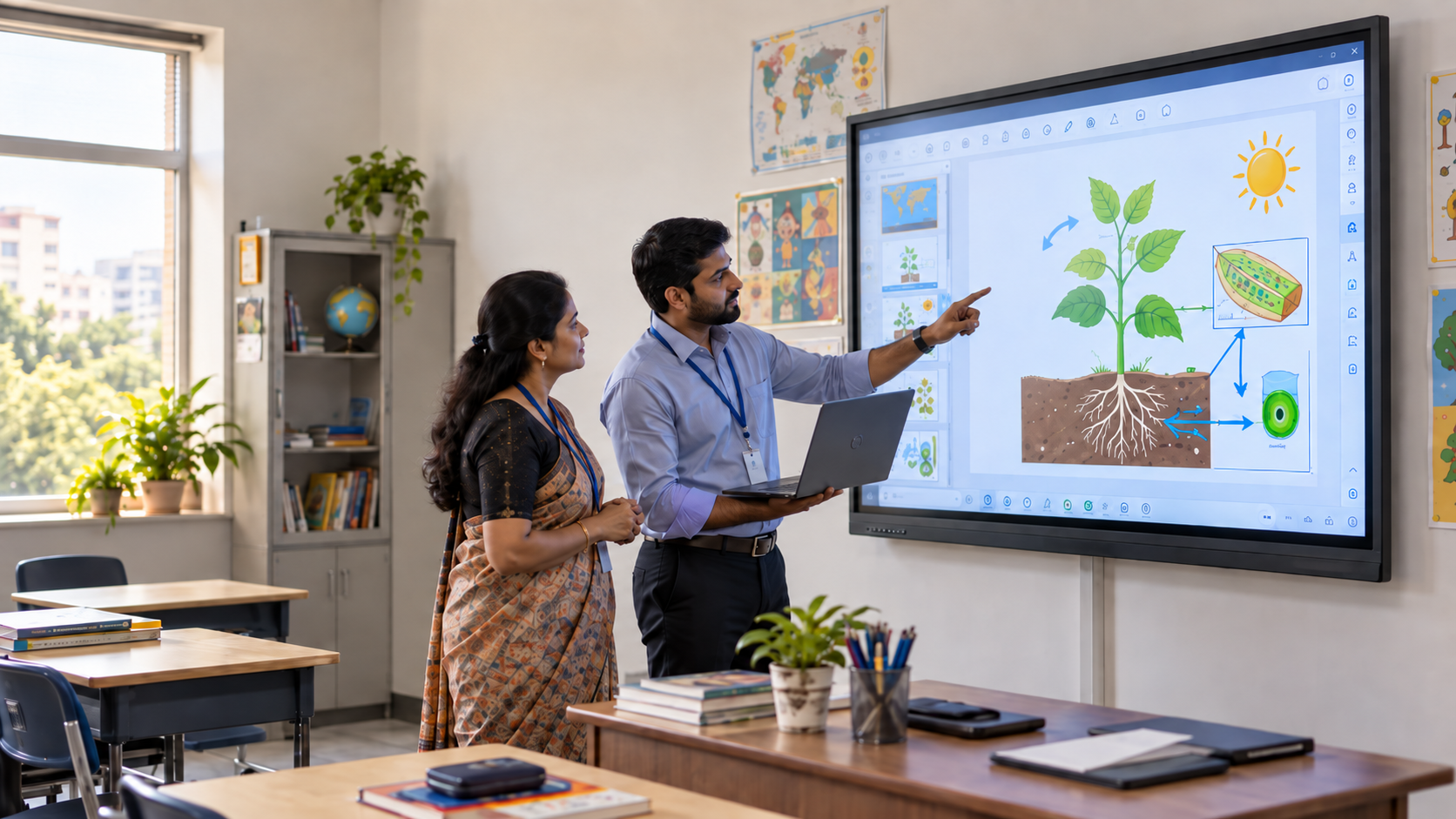
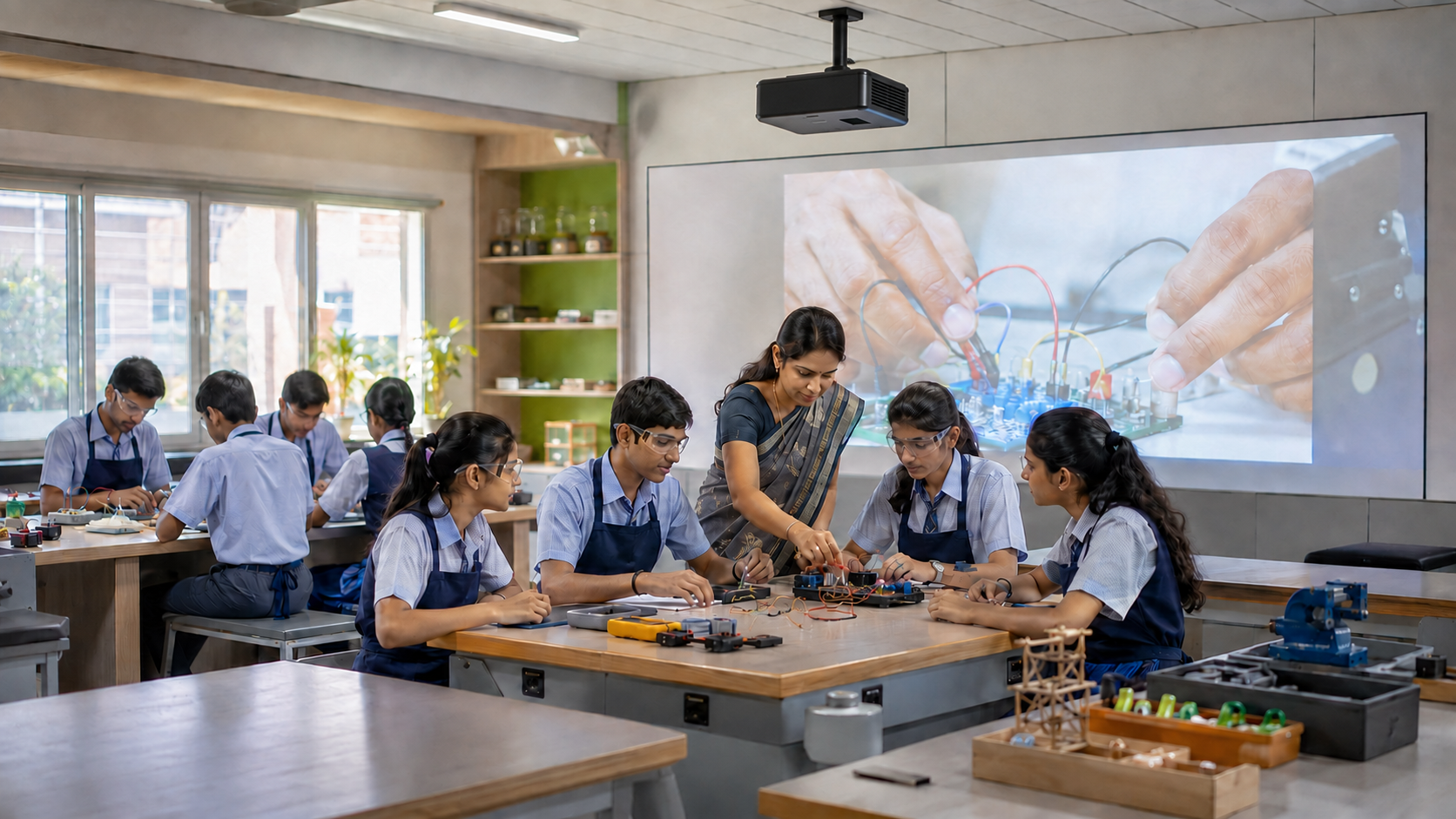
A modern smart classroom uses connected technology to multiply the impact of the teachers we already have. Instead of relying on a physical body in every single room, educational institutions can use interactive hardware and software to distribute knowledge across vast distances. This modern approach ensures that a student sitting in a remote village receives the same high-quality instruction as a student in a major metropolitan city. It shifts the focus from aggressively hiring more bodies to empowering the existing workforce with the best possible digital tools.
Proven Smart Classroom Strategies to Maximize Educator Reach
Technology alone cannot replace the human touch of a great teacher. However, a well-implemented smart classroom ecosystem gives educators the tools they need to overcome physical limitations and heavy daily workloads. Here is how modern school administrators are using these setups to solve the staffing crisis head-on.
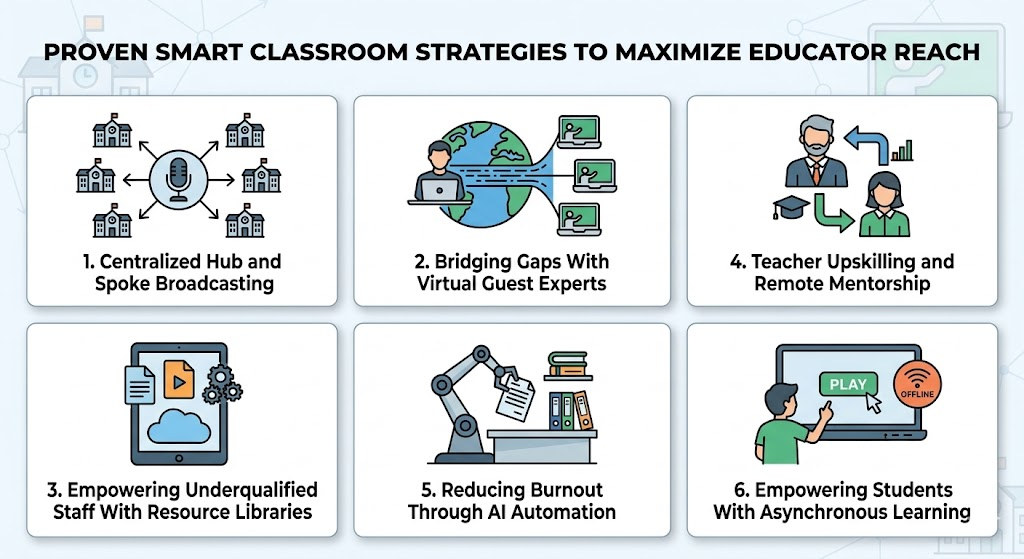
1. Centralized Hub and Spoke Broadcasting
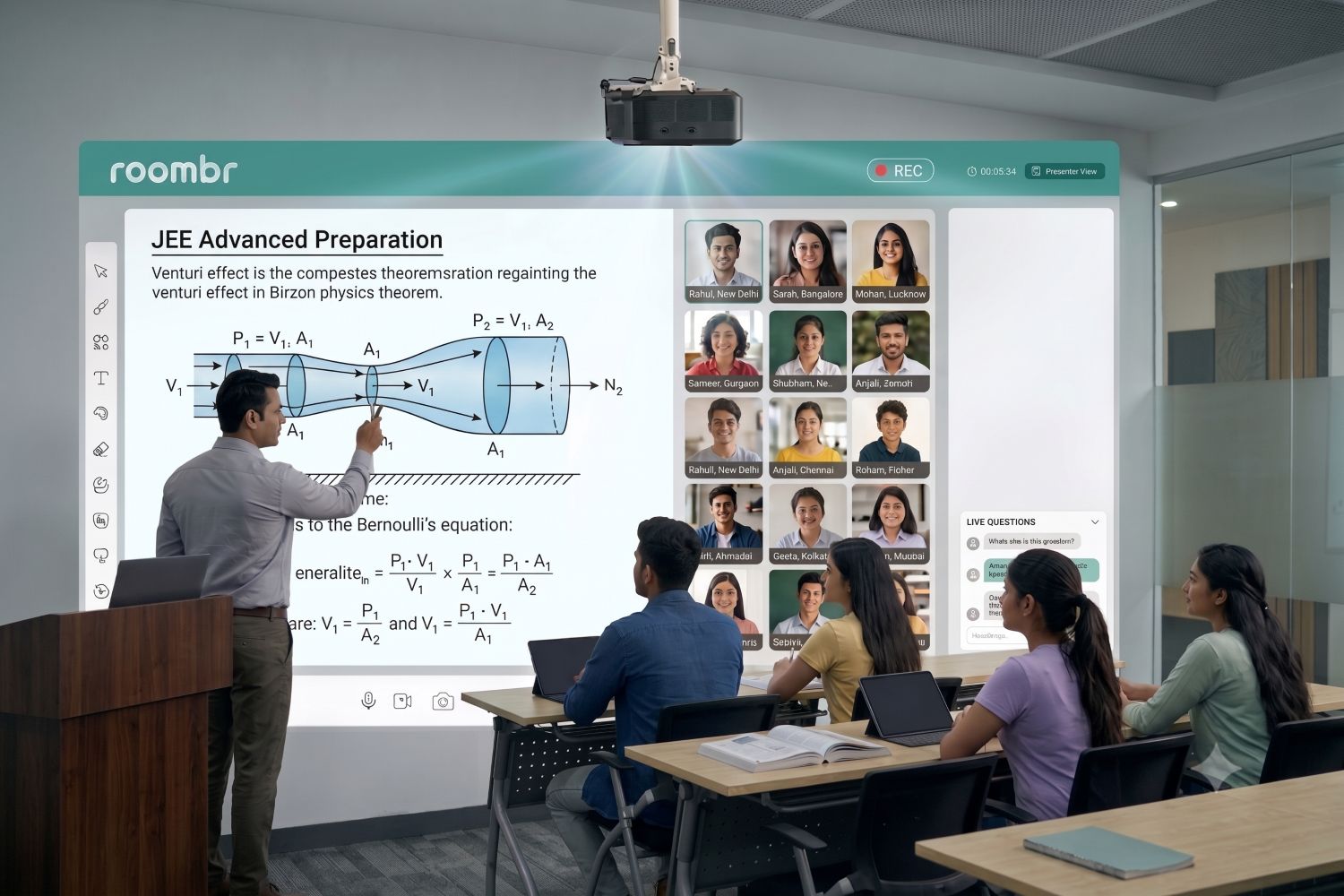
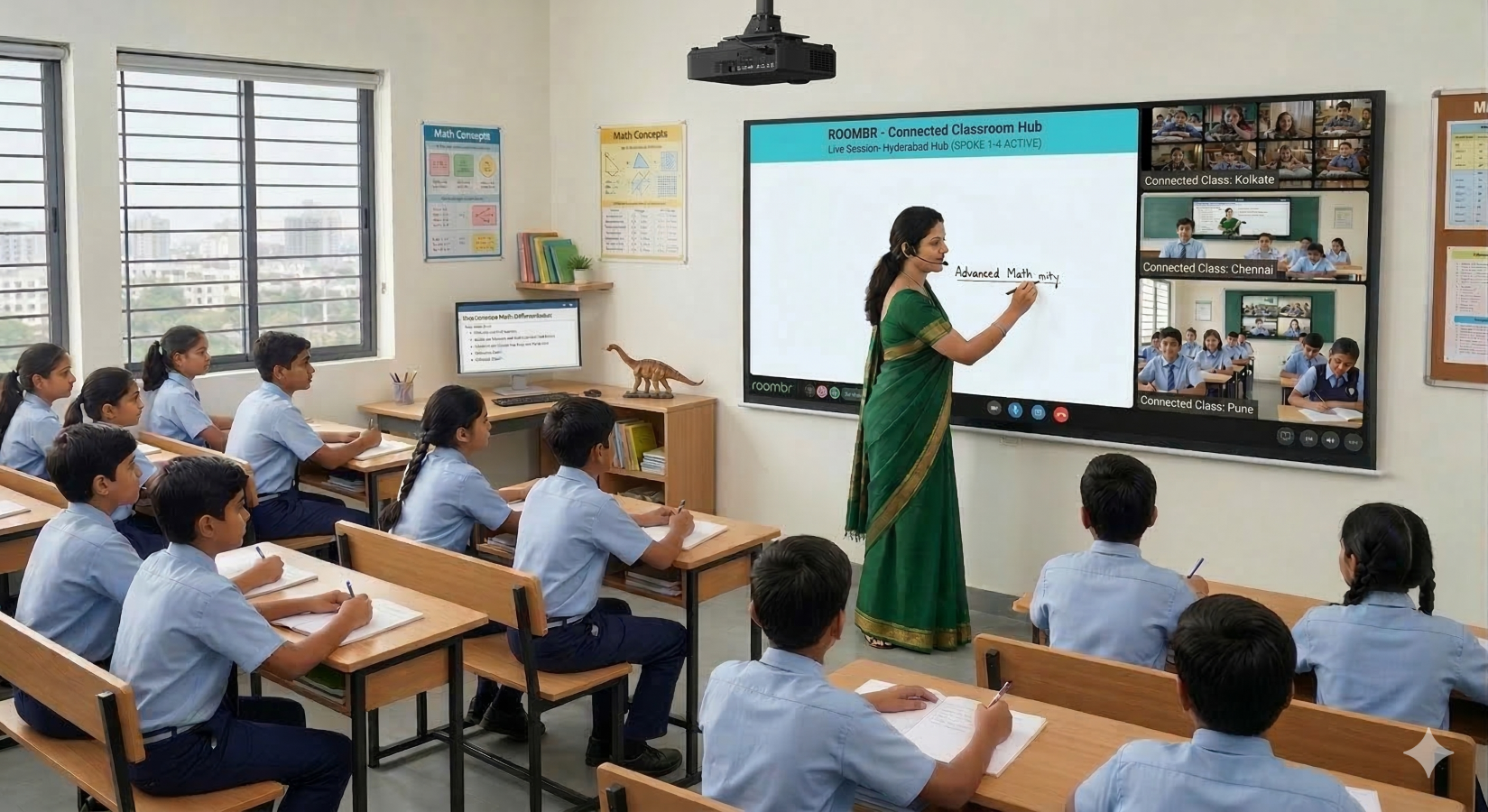
The hub and spoke model is a practical game changer for regions with zero-teacher or single-teacher schools. In this setup, one highly qualified subject expert conducts a live session from a central city studio. This lesson is then broadcast simultaneously to multiple remote schools.
The student experience is completely seamless. They look at a large interactive display and hear crisp audio, making the virtual teacher feel completely present in the room. Because the technology is two-way and highly interactive, students in remote areas can ask questions and participate just as if the teacher were standing right in front of them. This single smart classroom feature instantly brings expert-level teaching to thousands of students who would otherwise go without proper instruction.
2. Bridging Gaps With Virtual Guest Experts
Finding teachers for specialized subjects like advanced physics, coding, or mathematics is incredibly difficult in Tier 2 and Tier 3 cities. A virtual classroom allows administrators to invite retired educators or urban subject matter experts to deliver specialized K-12 guest lectures. Physical location is no longer a barrier to hiring top educational talent for specific weekly sessions. This is highly cost-effective as well. Instead of five different schools hiring five separate part-time experts, they can pool their budgets to hire one premium educator who reaches all their students at once.
3. Empowering Underqualified Staff With Resource Libraries
Newly hired or underqualified teachers often struggle with daily lesson planning and curriculum delivery. A modern smart class comes equipped with pre-loaded educational content, 3D models, and interactive animations. Even if a teacher lacks deep subject expertise, they can use these standardized digital libraries to deliver an engaging and factually accurate lesson without spending hours preparing material from scratch. This creates a baseline of high-quality education across all classrooms regardless of the teacher's experience level.
4. Teacher Upskilling and Remote Mentorship
A dedicated smart classroom benefits the teaching staff just as much as the students. After school hours, administrators can use the same connected displays to host live training workshops. Senior educators from top institutions can mentor regional teachers and help them upgrade their pedagogical skills. This continuous remote training helps build a stronger and more confident local workforce without requiring expensive travel or off-site training days.
5. Reducing Burnout Through AI Automation
We cannot solve the teacher shortage without retaining the educators we currently have. Teacher burnout is a massive driver of the current crisis across Indian schools. Imagine a teacher who has to manually grade forty notebooks every single evening. That cognitive drain ruins their passion for teaching.
An advanced smart classroom uses artificial intelligence to automate these tedious tasks. By cutting grading time, managing attendance, and reducing administrative overhead, schools give teachers their evenings back. Happy and well-rested teachers are far less likely to leave the profession.
6. Empowering Students With Asynchronous Learning
Internet connectivity can be highly unreliable in rural and semi-urban India. When a live teacher is absent or the internet drops, learning should not stop. High-quality smart classroom hardware includes local server capabilities. Schools can store premium recorded masterclasses directly on the device. Students can access this asynchronous learning material offline and continue their education without any daily disruptions. This offline-first approach is critical for maintaining consistency in Indian education.
Building a Sustainable Smart Classroom Ecosystem
Implementing educational technology requires careful planning and a clear vision. School leaders must look beyond the initial hardware purchase and focus on long-term sustainability. The chosen infrastructure must align with the latest NEP 2020 digital guidelines to ensure it supports activity-based and hybrid learning models perfectly.
Decision-makers must also consider the total cost of ownership. The cost of a fully equipped smart classroom is much lower than the financial drain caused by constant teacher turnover, endless recruitment drives, and lost student enrollments.
Institutions must choose intuitive and user-friendly technology. If a digital classroom is too complicated or requires constant IT support, teachers simply will not use it. Investing in an easy-to-use setup ensures high adoption rates among the staff. Additionally, choosing an offline-first smart class solution guarantees that network failures do not interrupt the daily timetable. Schools must look for holistic providers that offer end-to-end support, from initial installation to regular teacher training.
Transforming the Future of Indian Education With a Smart Classroom
The ongoing teacher shortage is a complex problem that requires an immediate and innovative approach. We cannot wait for millions of government vacancies to be filled over the next decade. By embracing connected technology today, we can maximize the reach of our best educators and deliver high-quality education to every single student in India.
A holistic virtual classroom does not replace the teacher. It empowers them completely. It removes heavy administrative burdens, breaks down geographical barriers, and provides the exact interactive resources needed to deliver world-class lessons. For institutional decision-makers, investing in a robust smart classroom is the most effective way to future-proof a school and ensure that no student is left behind due to a lack of teaching staff.
Roombr has everything you need to deploy a fully connected digital classroom that maximizes your best educators' reach across any distance. Explore our plug-and-play solution here or contact our team to schedule a live demo.
Build a sustainable, offline-first educational infrastructure today.

Foziya Abuwala
Share
Step Into the future of
Education with Roombr