

Imagine this scenario: You have successfully upgraded one classroom with state-of-the-art technology. The students are engaged, the teacher is empowered, and the feedback is positive. But now, you face the real challenge—how do you replicate that success across 50 classrooms? Or an entire campus? Or three different branches of your institution spread across the city?
Scaling smart classroom design isn't just about buying 50 screens instead of one. It’s a logistical beast. It involves retrofitting old buildings, battling with network bandwidth, managing budget constraints, and, the hardest part, getting dozens of teachers with varying levels of tech comfort to actually use the new tools.
For principals, trustees, and IT directors, the pressure is real. You are tasked with implementing sustainable solutions that provide a uniform learning experience. A piecemeal approach, where every classroom has different equipment, different interfaces, and different maintenance schedules, is a recipe for administrative chaos.
In this guide, we will move beyond the basics. We will provide a strategic blueprint on how to scale smart classroom design across multiple spaces using a modular, phased implementation strategy. This approach maximizes Return on Investment (ROI), minimizes technical debt, and ensures your institution is future-ready.
Why Scaling Smart Classrooms is Essential
A few years ago, having a "smart class" was a marketing point for the brochure. Today, it is a necessity. But why is scaling it across the entire institution so critical? Why not just keep it to the labs and libraries?
1. Shifting Educational Needs
Imagine being a student who has History in a fully equipped digital room at 10:00 AM, where the teacher pulls up interactive maps and 3D artifacts on a digital board in the classroom. Then, at 11:00 AM, you walk into a Math class that is stuck in 1990 with chalk dust, static diagrams, and zero interactivity.
This disconnect creates a jarring learning experience. Scaling ensures equity. It means every student, regardless of their subject choice, gets access to the best learning tools. It signals that the institution values the Arts student just as much as the Computer Science student.
2. Increasing Importance of Hybrid Learning
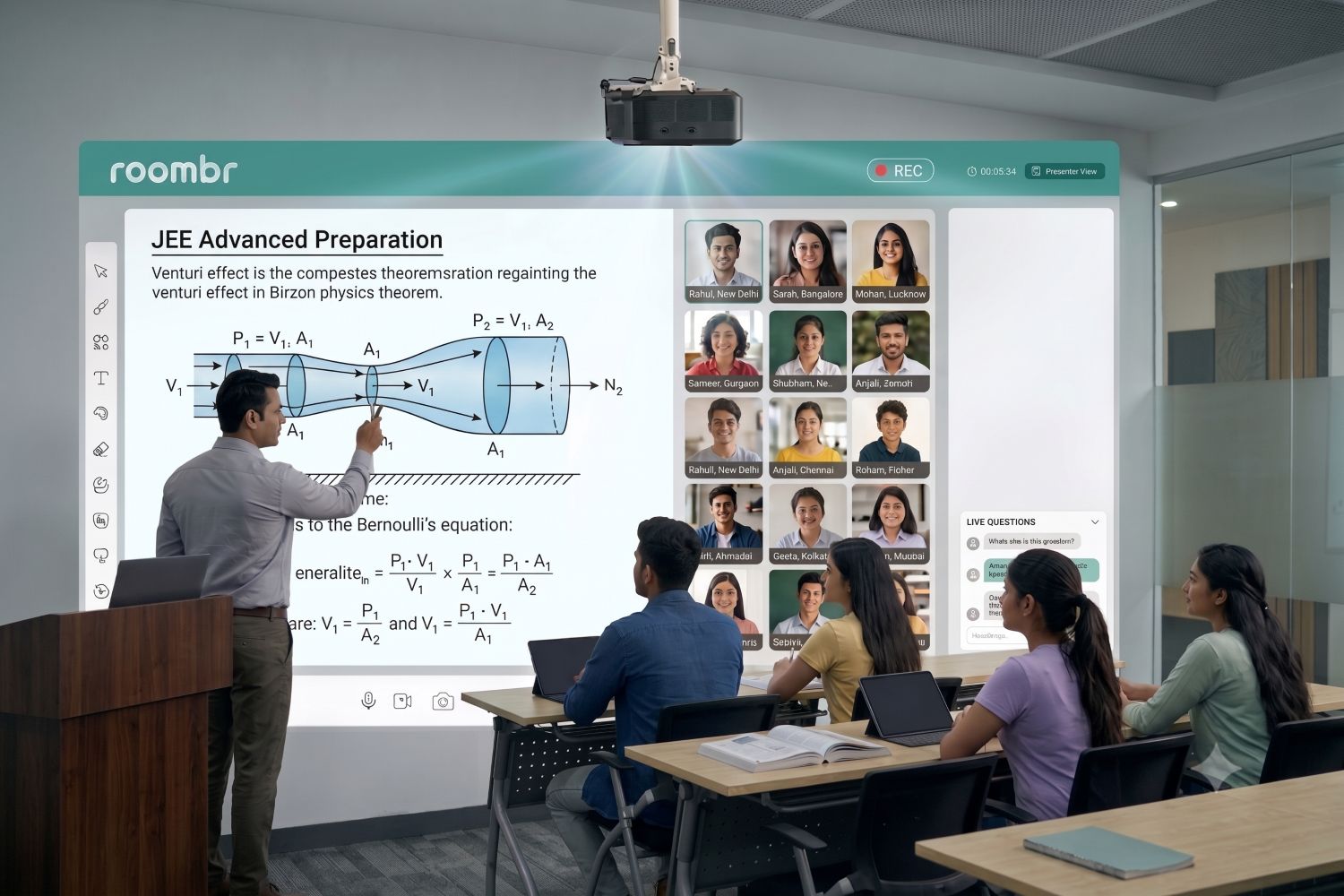
Hybrid learning is here to stay. Whether it’s a guest lecturer joining online from London or a sick student catching up from home, your classrooms need to be portals to the world. A scalable smart classroom design ensures that any room can host a hybrid session instantly, without dragging in a portable AV cart.
3. Institutional Agility
Your institution is growing. Maybe you are adding a new wing next year. If you have a scalable, standardized design blueprint now, equipping that new wing becomes a copy-paste job rather than a new procurement nightmare. Scaling now prepares you for the enrollment numbers of the future.
Modular Smart Classroom Design

If you take only one thing away from this guide, let it be this: Do not custom-design every single room.
Efficiency lies in Modularity.
Think of modular design like a franchise model. When you walk into a Starbucks in Delhi, it looks and functions exactly like a Starbucks in Mumbai. The layout might differ slightly due to the building, but the machines, the workflow, and the experience are identical.
You need to apply this logic to your campus.
What Does a "Classroom Module" Look Like?
Instead of shopping for random parts, you define a "Standard Classroom Unit" (SCU). This unit contains a pre-validated set of smart classroom equipment that works perfectly together.
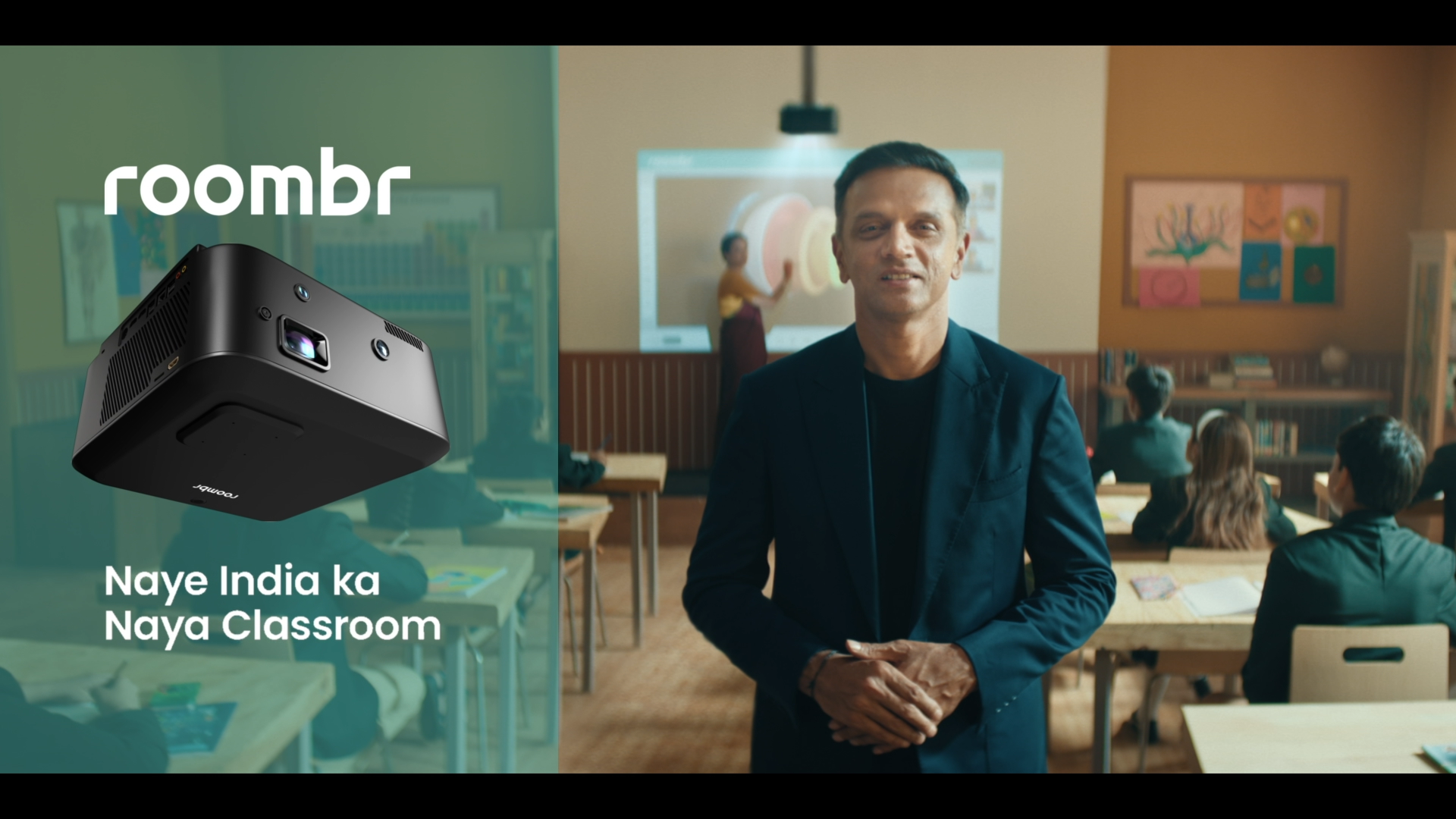
A Roombr Digital Classroom solution looks like this:
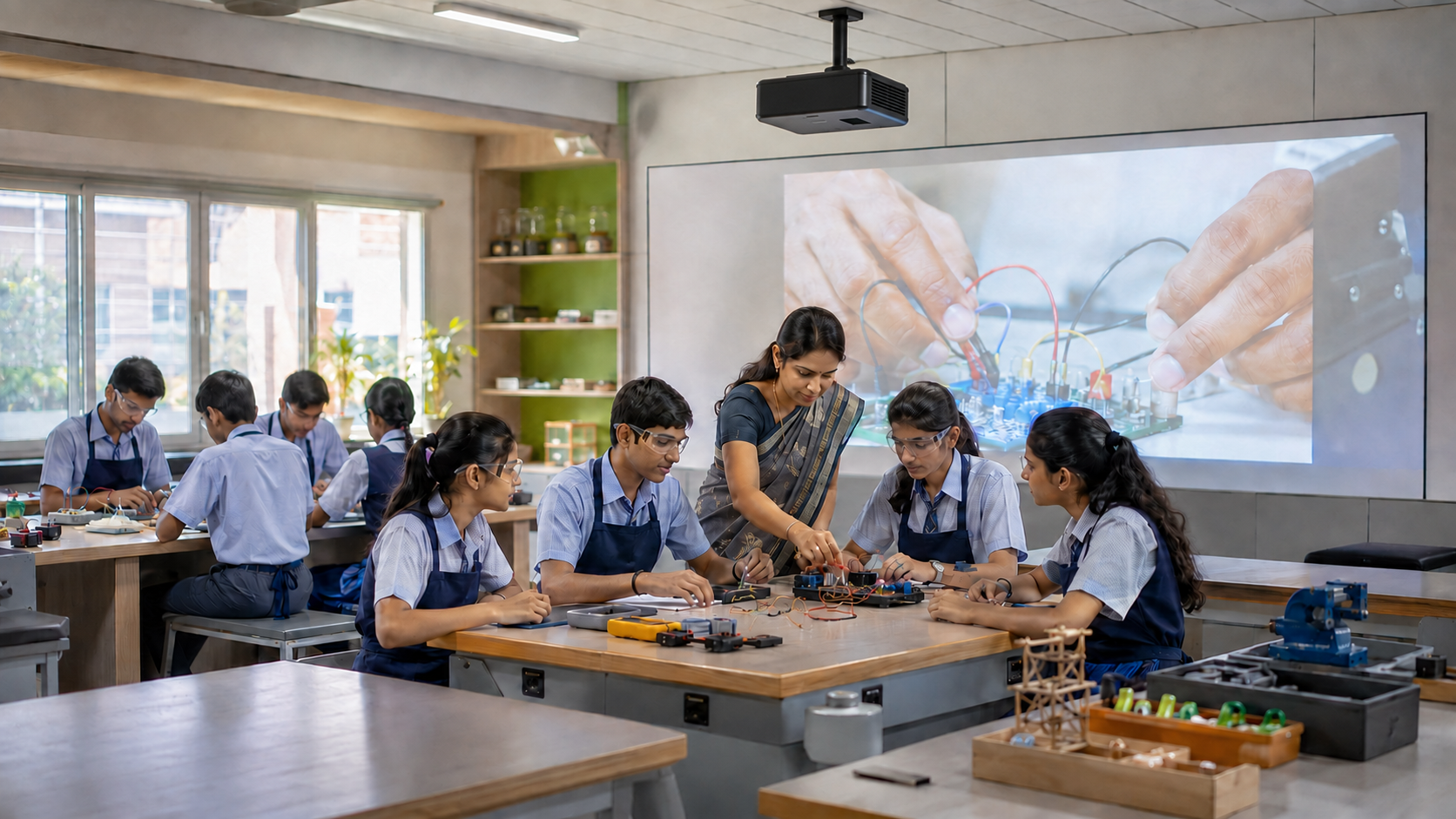
- Visual Core: Roombr transforms your existing classroom wall into a massive 120 to 200-inch HD interactive display. This DLP-based technology ensures immersive visibility for every student in the room.
- Compute Core: There are no messy wires, separate laptops, or under-desk towers. Roombr packs a powerful built-in computing unit running Windows 11, powered by Intel i5/i7 processors. It’s a simple plug-and-play device.
- Audio/Video Hub: The unit features an 8MP dual-camera setup with wide-angle HD recording for full-room capture. Crystal-clear audio is delivered via built-in 20W Harman speakers, a noise-canceling mic array, and a comprehensive RF microphone system with hand and lapel options.
- Interactivity & Connectivity: The wall becomes a multi-touch interactive surface using advanced IR technology. It supports robust connectivity with Wi-Fi 6, Bluetooth 5.1, and even a 4G LTE SIM module, ensuring you are always online.
- The Software Ecosystem (The Roombr App): The hardware is powered by an integrated app ecosystem that enables:
- One-Touch Recording: Record live classes with AI-enabled enhanced editing.
- Content Management: Share recordings, tests, and assignments directly with students for anytime, anywhere access.
- Hybrid Collaboration: A collaborative whiteboard and screen sharing that connects in-class and remote participants instantly.
Why Modularity Wins
- Teacher Confidence: If a teacher moves from Room 101 to Room 205, they don't need to relearn the system. The button to turn on the interactive whiteboard software is in the same place. Familiarity breeds adoption.
- Maintenance Speed: If a power supply fails in Block A, your IT team knows exactly which part to swap because they stock one standardized spare.
- Buying Power: You aren't buying 50 random screens; you are buying 50 identical units. This gives you massive leverage to negotiate better prices and extended warranties.
The Phased Rollout
The biggest mistake we see institutions make is the "Summer Rush" which is trying to upgrade 100 classrooms in the two months of summer vacation. It rarely works. Cables get crossed, networks crash, and teachers return in June to chaos.
We recommend a three-phase approach.
Phase 1: The Pilot (The "Sandbox")
Duration: 2–3 Months
Scope: 2–5 Classrooms
This is your R&D phase. Do not skip this.
- Pick Your Rooms: Choose one large lecture hall and one standard classroom.
- Pick Your People: Don't just pick the tech-geeks. Select one "tech-hesitant" teacher. If they can use the interactive flat panel comfortably after two weeks, your design is solid.
- Test the "Boring" Stuff: This is where you find out that the glare from the afternoon sun makes the screen unreadable in the west wing, or that your current WiFi access points choke when 30 tablets connect at once.
- Iterate: Fix the glare (blinds), upgrade the router, and tweak the height of the mount.
Phase 2: The Departmental Expansion (The "Beta")
Duration: 6 Months
Scope: One full building or Department (e.g., The Science Block)
Now that you have a "proven module," you apply it to a specific zone.
- Network Stress Test: This phase will test your backbone infrastructure. Can your switchgear handle 20 rooms streaming video simultaneously?
- Peer-to-Peer Training: By now, your Phase 1 teachers are experts. Use them to train the Phase 2 teachers. Teachers listen to colleagues more than they listen to outside trainers.
- Refining the Workflow: You will start to see how the digital board for classroom usage impacts lesson timing and breaks.
Phase 3: Campus-Wide Rollout (The "Scale")
Duration: 12–18 Months
Scope: Remaining Classrooms, Libraries, Common Areas
This is simply repeating the success of Phase 2, but on a larger scale.
- Standardization: By this point, your IT support ticket system should be streamlined because every room has the same setup.
- Future-Proofing: Since this phase takes time, ensure your vendor guarantees that the hardware installed in Month 1 is compatible with the hardware installed in Month 12.
Budgeting and ROI
Let’s address the elephant in the room: Cost.
Scaling smart classroom design is a significant capital expenditure (CAPEX). But if you frame it correctly, it’s an investment that pays off in Operational Expenditure (OPEX) savings and institutional reputation.
The Hidden Costs You Must Budget For
When you are pricing this out, avoid just looking at the price tag of the device. You need to budget for:
- Infrastructure: Electrical upgrades (UPS backup is non-negotiable in India) and Cabling (Cat6 or Fiber).
- Mounting & Civil Work: Reinforcing old walls to hold heavy displays (a requirement you can skip entirely by opting for Roombr that transforms a wall into an interactive display)
- Software Licensing: The annual costs for the learning management systems or collaboration tools.
- Professional Development: Budget for training sessions. The best hardware is useless without trained humans.
Optimization Strategies
- The "Core" First Strategy: If the budget doesn't allow for a full campus rollout, prioritize "high impact" rooms—the rooms that are booked 90% of the day.
- Leasing Models: You may consider leasing smart classroom equipment. This shifts the cost from a massive upfront CAPEX to a manageable annual operating cost, often including maintenance and upgrades.
Measuring ROI
How do you know it’s working?
- Reduction in Consumables: Track the drop in spending on markers, paper, and printed handouts.
- Enrollment Boost: Market your "Smart Campus" status. Parents are comparing you to the school down the street. Superior infrastructure is a tie-breaker.
- Faculty Retention: Good teachers want to teach in modern environments. Reducing administrative friction for them increases retention.
The Roadblocks (And How to Handle Them)
It won’t be smooth sailing. Here are the three most common challenges we see when scaling, and how to beat them.
1. The "Network Nightmare"
The Problem: You install 50 smart boards, and suddenly the internet crawls to a halt.
The Fix: You need to segment your network. Create a dedicated VLAN (Virtual Local Area Network) specifically for your teaching hardware. This ensures that a student downloading a movie in the cafeteria doesn't lag behind the teacher’s interactive whiteboard in the Math class.
2. The "Reluctant Teacher"
The Problem: "I've used a chalkboard for 25 years. I don't need this."
The Fix: Empathy, not force. Don't frame it as "new tech." Frame it as a "time saver." Show them how they can save their board work as a PDF and email it to absent students with one click (saving them from re-teaching the lesson). Once they see the utility, the resistance fades.
3. The "Space Constraint"
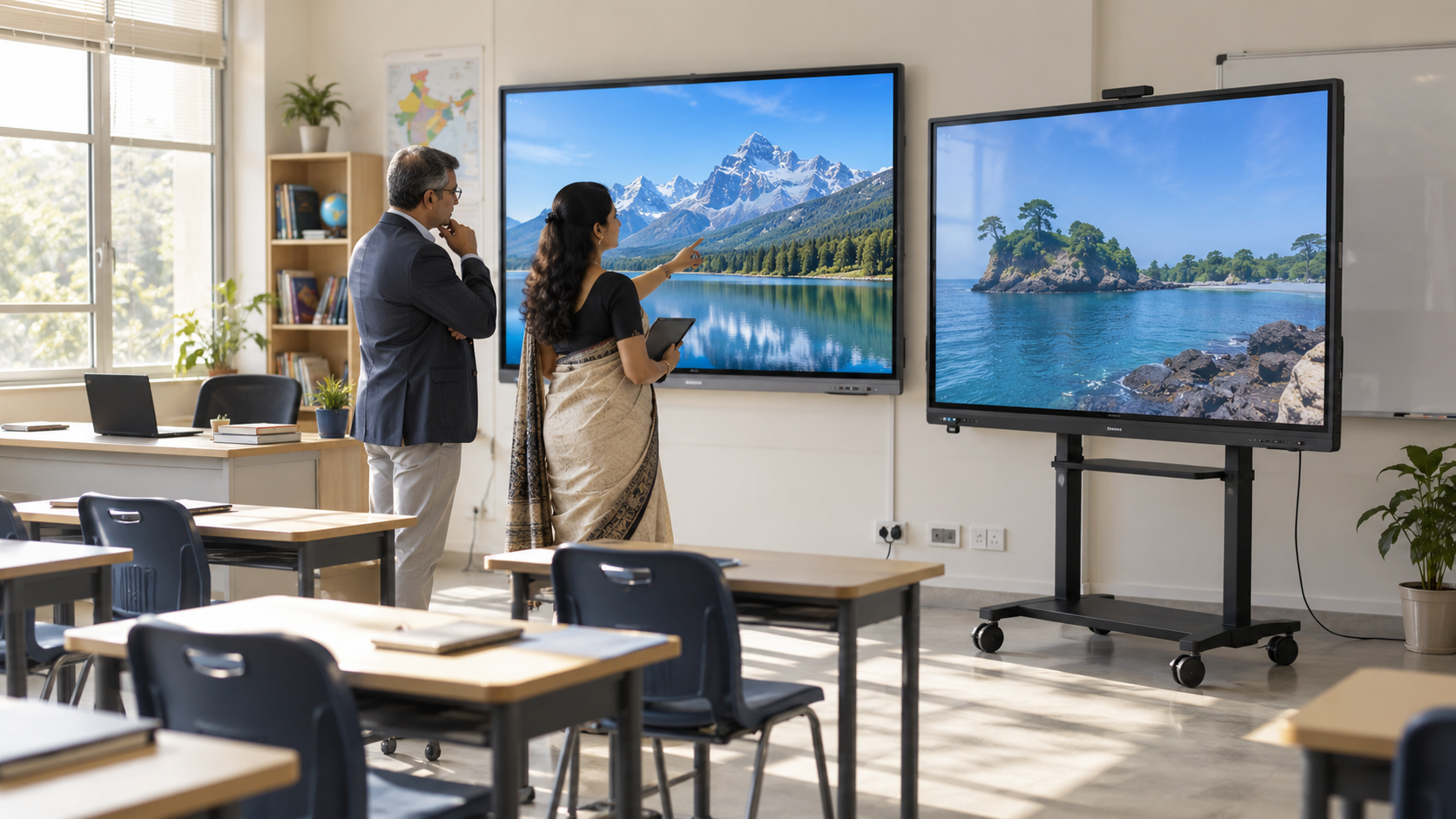
The Problem: The classroom is too wide, or deep, for back-benchers to comfortably see a standard 75-inch panel.
The Fix: Forget complicated multi-screen setups or "repeater monitors." Because Roombr transforms the existing wall into a massive 120 to 200-inch interactive display, a single unit provides wall-to-wall visibility, ensuring every student has a front-row view regardless of the room's dimensions.
Future-Proofing: Building for 2030, Not Just 2025
The technology you install today will likely be in use for 5 to 7 years. Think about how much phones have changed in the last 5 years. How do you survive that?
Upgradeable Computing
Don't let underpowered processors kill your long-term ROI. Instead, prioritize integrated solutions with significant computational "headroom" right from day one by choosing powerful desktop-grade specs (like Intel i5/i7 processors) rather than basic mobile chips. This ensures your hardware can handle future software updates and demanding AI tools without needing expensive mid-cycle swaps—a design principle engineered directly into high-performance integrated systems like Roombr.
The Rise of AI in the Classroom
AI is coming. Soon, cameras will be able to automatically take attendance, or software will analyze which part of a lesson confused students based on engagement data. By ensuring your smart classroom design includes high-quality cameras and microphones now, you are hardware-ready for these software updates later.
Universal Connectivity
Ensure your setups have USB-C ports. It’s becoming the universal standard for power, data, and video. If you install hardware that only relies on HDMI and USB-A, you’re already behind the curve.
Key Takeaway
Scaling smart classroom design across a campus is a journey, not a transaction. It requires planning, patience, and the right partner.
You are moving your institution from a collection of isolated classrooms to a unified, intelligent learning environment. It’s a move that saves money in the long run, retains the best talent, and, most importantly, gives your students the education they deserve.
Don't let the scale of the project slow down the progress of your institution. Start with the module. Start with the pilot.
Summary Checklist:
- Audit: Have you assessed the power and network capacity of your target buildings?
- Standardize: Have you defined your "Classroom Module" (Screen + Compute + Mount + Audio)?
- Pilot: Have you identified 2 rooms and 2 teachers to test the concept?
- Budget: Have you accounted for hidden costs like cabling and training?
- Partner: Are you working with a vendor who understands phased implementation?
Frequently Asked Questions
1. Is a standard 75-inch screen enough for a large classroom?
Often, no. Students in the back rows frequently struggle to read small text on 75-inch panels. Roombr solves this by turning the wall itself into a 120 to 200-inch interactive display. This ensures 100% visibility and readability for every student, regardless of room depth.
2. Does Roombr require us to replace our current Learning Management System (LMS)?
No. Roombr offers a flexible hybrid approach. It comes with its own robust, built-in LMS for seamless content management. However, it also integrates effortlessly with your existing platforms (like Google Classroom, Teams, or Canvas), so you don't have to migrate data unless you want to.
3. How does a wall display compare to a traditional interactive flat panel?
Traditional panels are heavy, fragile, and capped at smaller sizes. Roombr offers a seamless, immersive experience by projecting directly onto the wall. This eliminates the risk of glass breakage, removes the need for heavy reinforced mounts, and provides a significantly larger digital canvas for teaching.
4. Can we install Roombr displays in classrooms with limited space?
Absolutely. Because Roombr utilizes the existing wall surface rather than adding a bulky physical screen on a stand, it actually saves floor space. The setup is unobtrusive, allowing teachers to maximize the physical classroom area while still accessing a massive 200-inch digital workspace.
Ready to Build the Ultimate Smart Campus?
At Roombr, we specialize in helping institutions like yours navigate this transition. We don't just drop off boxes; we help you plan the power, the network, the layout, and the training.
Roombr is the only solution built for true scalability. We solve the "back-bench visibility" problem instantly while integrating effortlessly with your current LMS. Whether you are upgrading a single department or an entire university, our modular approach ensures a seamless, future-proof rollout.
Contact Roombr Digital Classroom. Let’s walk your campus together and build a roadmap that works for your budget and your vision.
Schedule Your Free Demo Today.

Foziya Abuwala
Share
Step Into the future of
Education with Roombr