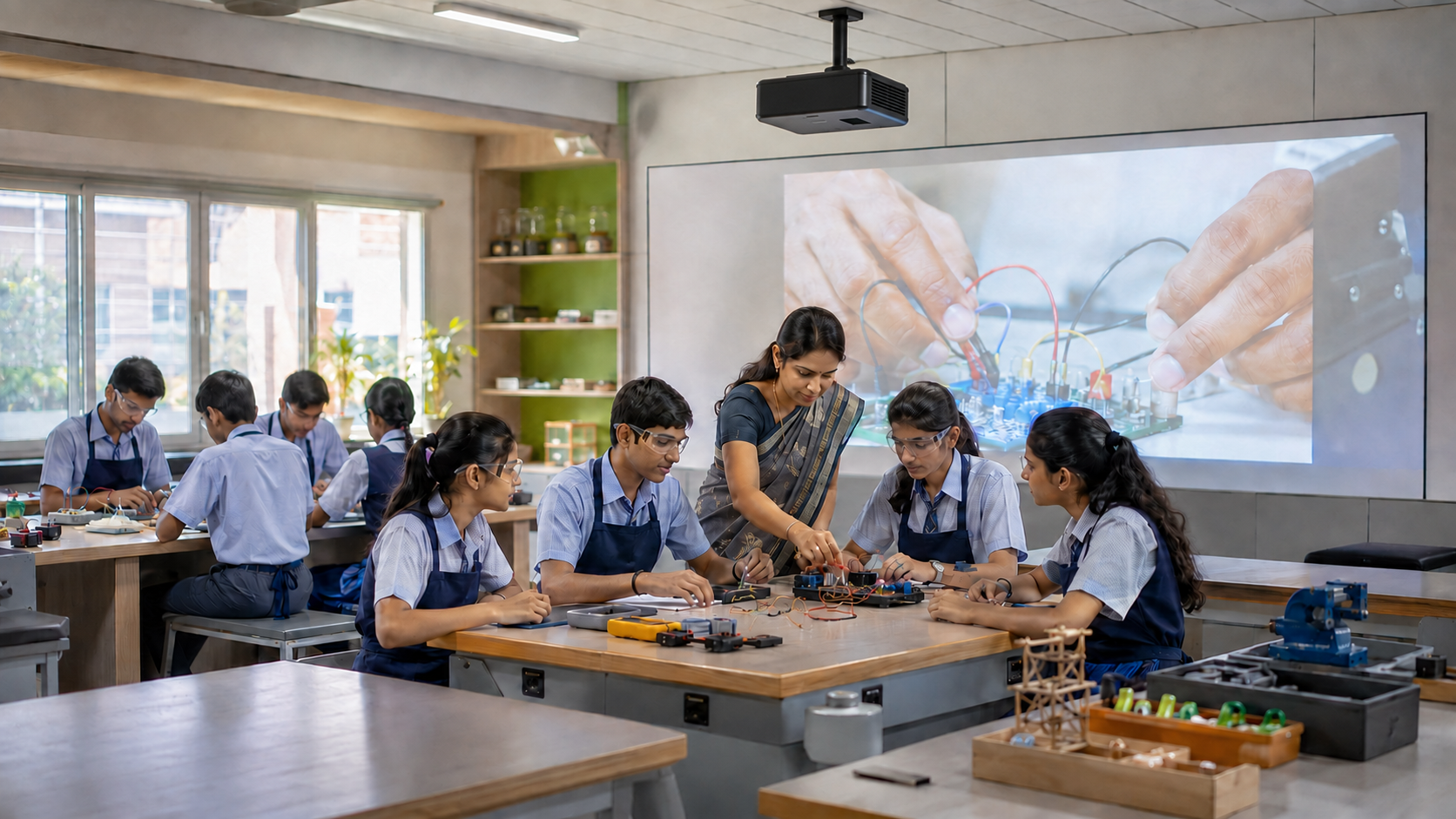


Most campus technology guides focus heavily on one specific space. They picture a massive 200-seat lecture hall built for one-way broadcasting. But advanced degree programs operate entirely differently.
A university classroom built for postgraduate scholars demands a highly specialized approach.
Why Research Spaces Demand a Unique Approach
Undergraduate teaching relies on large audiences and standardized curriculum delivery. Master's and PhD programs thrive on debate and peer review. When you force a standard university classroom setup into a small seminar room, you instantly kill that collaborative energy.
Scholars usually sit in circular or U-shaped arrangements. Everyone needs to make eye contact to keep the academic dialogue flowing naturally. A modern digital classroom designed for research must support this intimate dynamic perfectly.
Massive front-facing screens force students to turn their backs on their peers. A single podium microphone completely fails to capture the quiet researcher debating a critical point from the back corner.
An Engageli Active Learning Impact Study indicates that structured active learning environments increase student participation from 5% to 62.7%, generating 13 times more student talk time compared to traditional setups. This significant shift toward active dialogue underscores the importance of upgrading higher education AV infrastructure to support advanced degree programs.
Essential Upgrades for Advanced Academic Spaces
Postgraduate students require tech that handles heavy data analysis and intensive group work. Here is how to set up a smart classroom for research scholars without wasting your budget on the wrong hardware.
1. Choose the Right Display Size
You absolutely do not need a theater-sized screen in a room built for fifteen people. A massive display in a tight space causes severe eye strain. It also creates intense glare that disrupts the learning process.
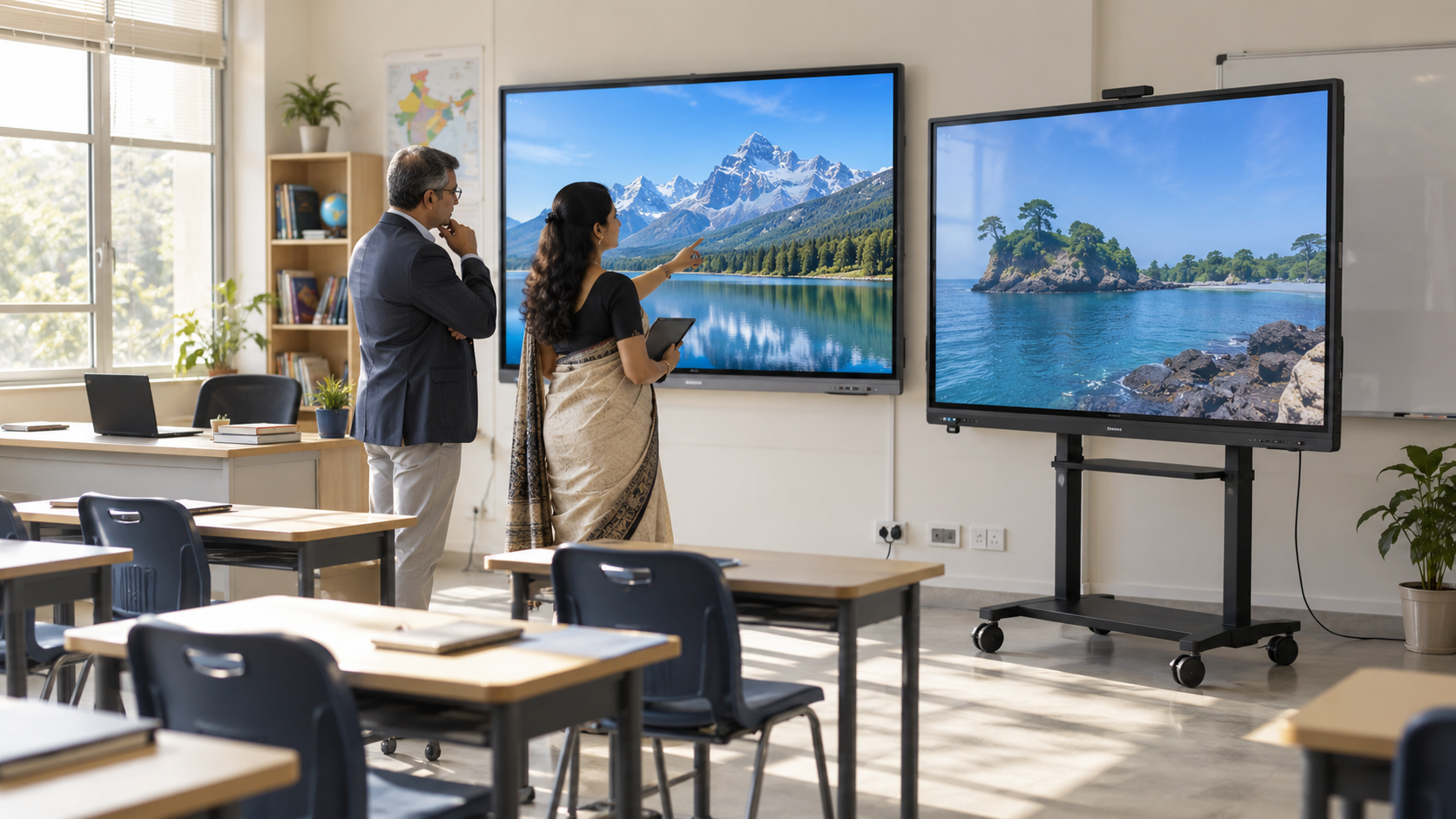
The best interactive display for university seminar rooms scales perfectly to the wall size. This approach allows researchers to pull up complex statistical models or academic journals comfortably.
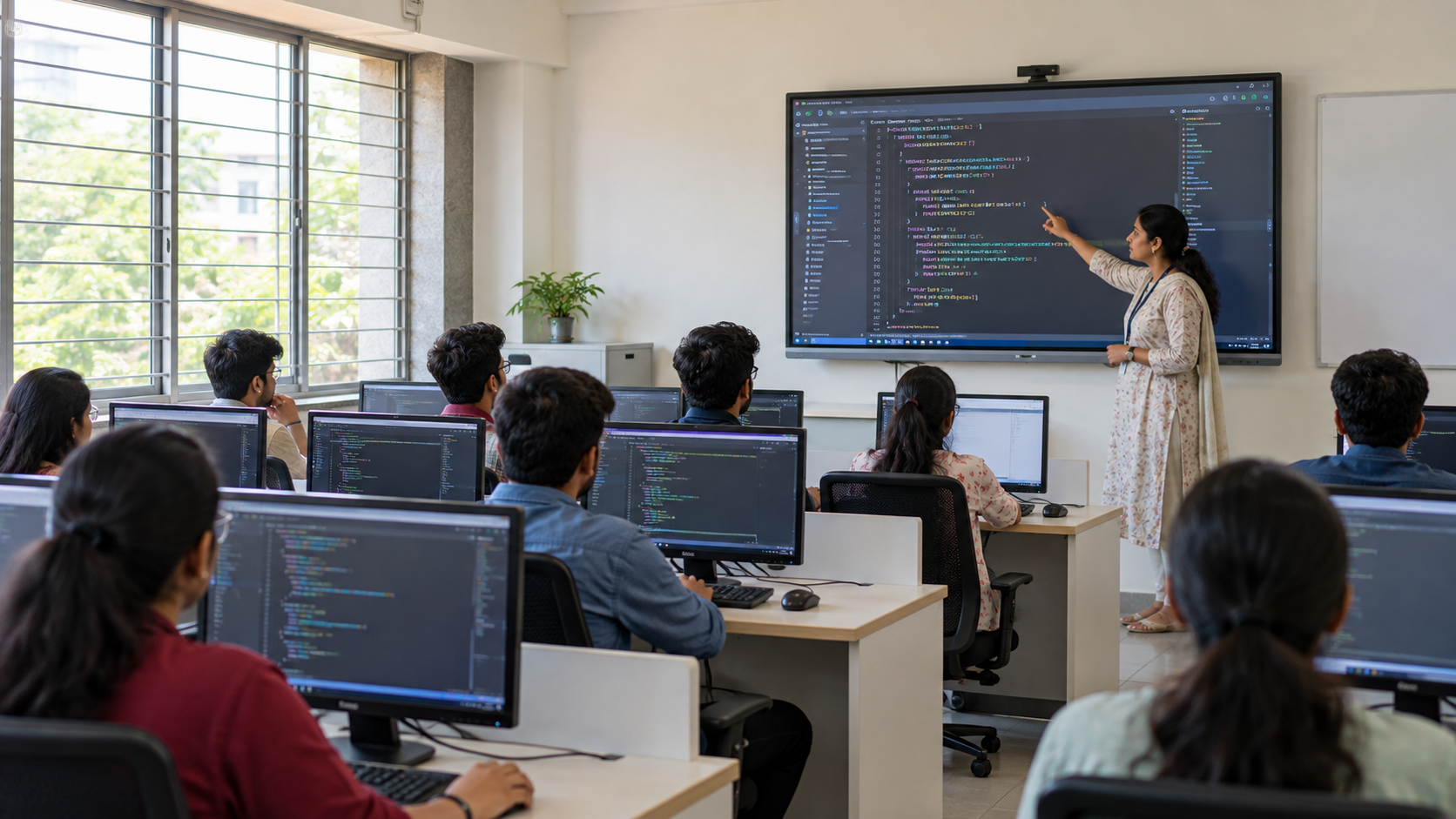
The screen acts as a shared digital notebook instead of a cinematic billboard. Scalable smart classroom equipment keeps the focus on the actual research data. Medical students can view detailed X-rays while engineering scholars can collaboratively edit 3D CAD models.
2. Guarantee Perfect Viewing Angles
Because seminar seating is rarely linear, visibility is a challenge. Students sitting at the sharp edges of a U-shaped table often struggle to see traditional flat panels.
A proper university classroom demands high-contrast visuals from every single chair. When a researcher points out a minor anomaly in a data chart, peers should spot it instantly.
They should never have to leave their seats to read small text. This is why a highly adaptable digital board alternative for higher education outperforms basic glass screens. It removes the physical boundaries that restrict natural academic flow.
3. Record the Entire Group Dialogue
Standard AV setups only record the professor standing at the front. This is entirely useless for a master's seminar where the real value comes from peer debate.
You need a reliable classroom recording system that captures every voice in the room. Omnidirectional microphones pick up natural conversation effortlessly across large seminar tables.
As students review the recorded session later, they can listen to the complete academic dialogue. Finding the right lecture capture software for group discussions protects the intellectual property generated during these vital brainstorming sessions.
4. Enable Seamless Global Collaboration
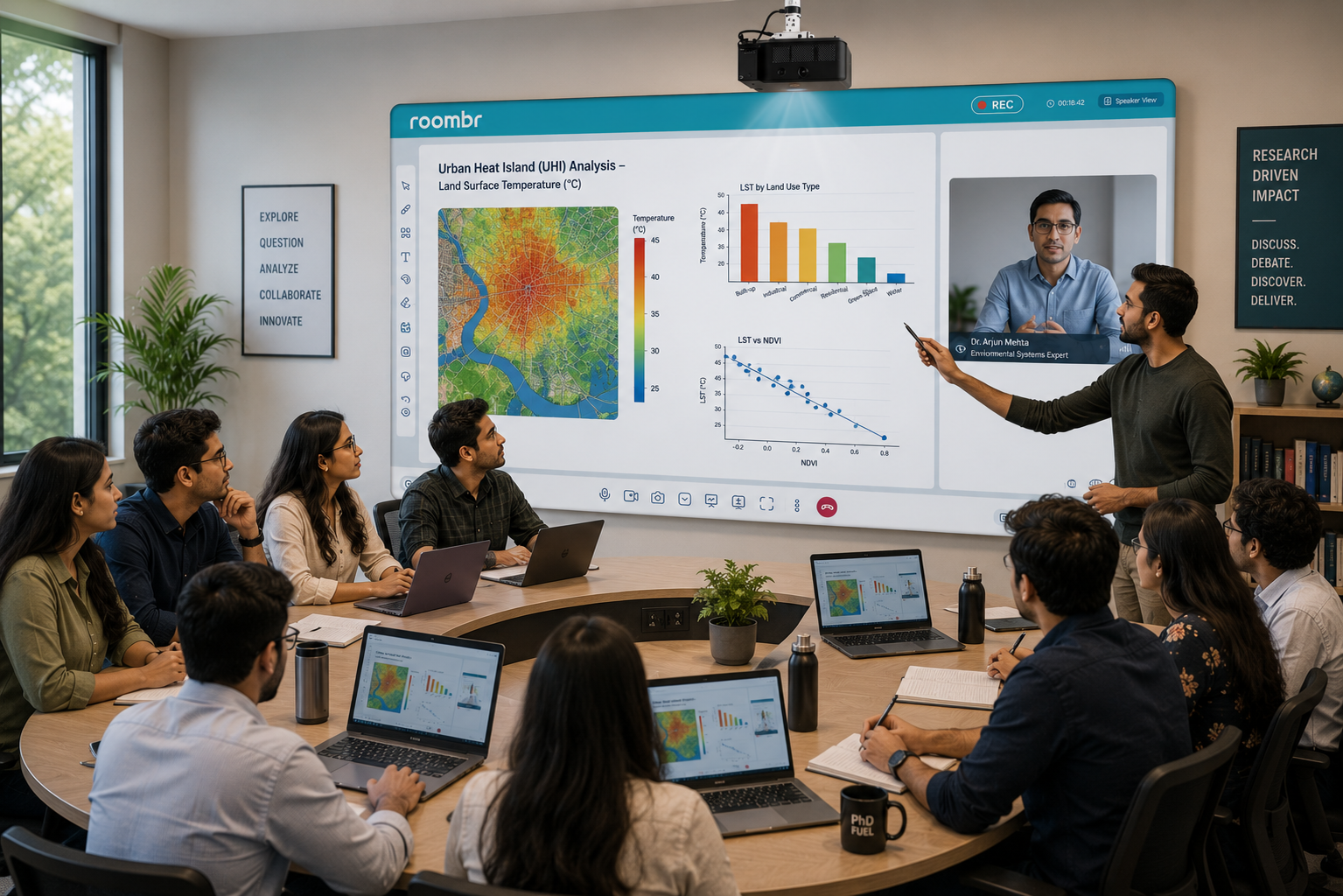
Research is no longer confined to a single campus. Advanced researchers regularly partner with global academic institutions and remote industry specialists.
A robust hybrid classroom technology setup is mandatory for modern higher education. The system must integrate dual cameras and advanced noise cancellation. This ensures that a remote speaker feels like they are sitting right inside the room.
Proper group discussion capture bridges the geographical gap perfectly. It allows local students and global experts to review data sets together in real time without technical delays.
5. Build Flexible Furniture Layouts
Advanced spaces host everything from casual literature reviews to formal defenses. The room layout must adapt rapidly to these changing needs.
Rigid podiums and fixed cables limit movement and block natural interaction. When planning your smart classroom equipment list for your university, prioritize ultimate mobility.
Faculty must have the freedom to rearrange tables quickly for small group work. Proper thesis defense technology should never dictate how a professor physically arranges the room.
The Most Common IT Budget Mistake
Many higher education institutions make a costly error during campus upgrades. They buy the same oversized hardware for every single room on campus.
They force massive panels and rigid digital podiums into tiny collaborative learning spaces. This strategy destroys the intimate atmosphere required for postgraduate study.
Bulky podiums create an unnecessary physical barrier between professors and scholars. Huge fixed screens waste valuable wall space and overwhelm small rooms completely.
More importantly, this mistake drains your IT budget fast. Paying for high-capacity hardware in a small university classroom means less money for specialized tools. You lose the budget needed to equip other vital campus departments.
Scalable Tech for Future-Ready Campuses
Advanced programs require technology that actively supports complex debates and thesis work. Your postgraduate seminar room setup needs to be smart, flexible, and deeply integrated.
Comparison of Campus Technology Needs
Equip Your Scholars with a Future-Ready University Classroom
This is where Roombr steps in to transform your institution. We provide NEP 2020-compliant university tech designed specifically for versatile academic environments.
Rather than forcing a rigid product onto your campus, we provide an interactive display solution that can scale seamlessly from 50 to 200 inches. Our systems deliver crystal-clear visuals and reliable performance without clunky hardware clutter.
You can easily transform any standard room into a powerful university classroom built for high-level research. Every single student gets a front-row experience regardless of where they sit.
Give your postgraduate scholars the focused environment they truly deserve. Book a free on-site demo today to see how seamlessly you can upgrade your advanced university classroom spaces. Our team will help you design classrooms that guarantee long-term academic excellence.

Foziya Abuwala
Share
Step Into the future of
Education with Roombr